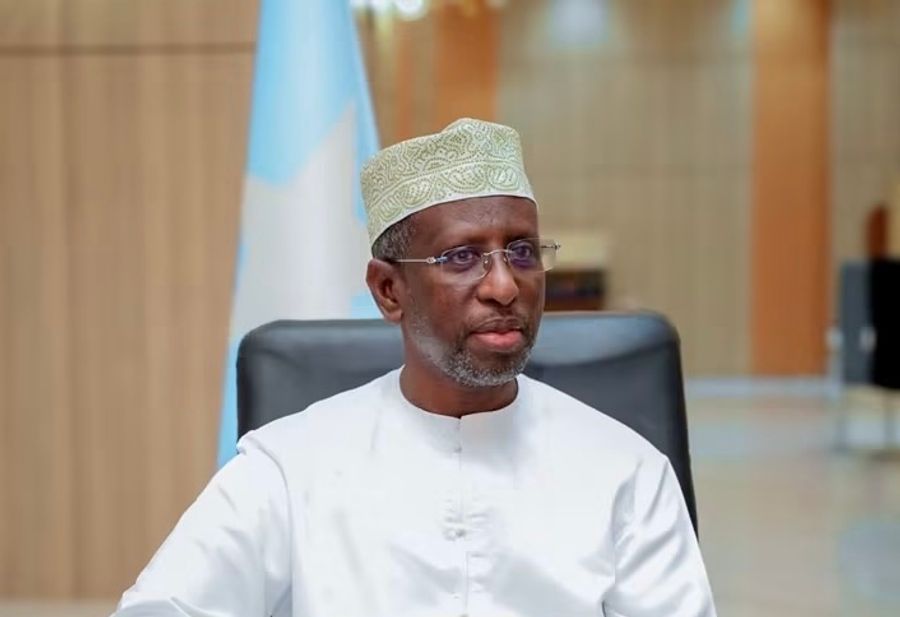
MOGADISHU — Former Somali President Sharif Sheikh Ahmed has accused Villa Somalia of preparing attacks against opposition figures, including himself, warning that the alleged plans would deepen political divisions and threaten Somalia’s statehood amid a prolonged dispute over elections and presidential authority.
Sharif, Somalia’s seventh president, said President Hassan Sheikh Mohamud’s administration was preparing to intimidate its opponents through military force. He alleged that the authorities were treating the shedding of opposition figures’ blood as permissible, presenting the purported preparations as a threat to political participation.
“Hassan Sheikh’s administration is making preparations for war, and we are aware of it,” Sharif said in remarks supplied for this report.
He also condemned the alleged intention to use weapons acquired for national defence and operations against Al-Shabaab but now been used against political rivals.
“It is unfortunate that weapons intended to defend the Somali people and fight Al-Shabaab are being presented as a means to eliminate the opposition,” he said.
Separate information supplied for this report alleges that Mohamud discussed a possible disarmament operation with security officials before announcing an electoral process prepared by Villa Somalia. It claims preparations for that process are complete and compares the approach with elections in Jowhar, Dhuusamareeb and Baidoa.
Sharif separately accused Mohamud of diplomatic misjudgment through dealings with two groups fighting each other.
The accusations follow actual fighting earlier this year. On June 4, between government troops and opposition-aligned militias in Mogadishu before planned protests over Mohamud’s continued tenure. Residents described property damage and civilians fleeing. Sharif alleged that government forces attacked his home, while former Prime Minister Hassan Ali Khaire also alleged an assault.
On June 5, the information ministry said order had been restored and opposition militias disarmed and removed. fighting stopped following mediation by clan elders rather than disarmament. The ministry accused Sharif and Khaire of putting civilians at risk by deploying militias in residential areas and attacking police.
The confrontation has unfolded against a constitutional dispute. Parliament approved amendments in March 2026
Efforts to negotiate a settlement also encountered difficulties. The African Union Commission said talks between the federal government and the opposition Somali Future Council, held in Mogadishu from May 13 to 15, ended without consensus. It urged genuine negotiations, compromise and respect for constitutional order.
Regional voting has meanwhile continued. Somalia Today reported on October 4 that Mohamud’s Justice and Solidarity Party won 78 of 99 seats in HirShabelle’s regional assembly following September 30 voting. The outlet described continuing disagreements over the national electoral model, seat allocation, political parties and management of elections.
Mohamud has defended direct elections as a way to move beyond indirect political selection. Opposition objections, as described in the regional election report, concern the framework and administration of the transition. The dispute therefore involves both the rules governing elections and whether competing political actors can agree to those rules.
Somalia experienced a similar confrontation in 2021. On February 19, government troops and opposition supporters exchanged gunfire during protests over delayed elections. Sharif accused forces loyal to then-President Mohamed Abdullahi Mohamed, known as Farmajo, of attacking a hotel where he was staying. The security minister blamed armed opposition militias for initiating the fighting.
On April 25 that year, Mohamud, then an opposition politician, accused Farmajo’s forces of attacking his residence as armed factions clashed over a two-year mandate extension. The internal security minister denied that government forces had raided the property. Mohamud warned at the time against politicising the security services.
The United Nations subsequently described how the extension dispute mobilised militias and exposed divisions within the security forces. Parliament reversed the extension on May 1, 2021, easing tensions and allowing renewed electoral talks. That sequence illustrates how disagreements over political mandates have previously escalated into armed confrontation before negotiations resumed.
International partners invoked that history again this year. In a June 4 statement, the UN said earlier warnings about a repeat of the 2021 electoral crisis had gone unheeded. It urged Somali leaders to prioritise the national interest and resume the talks that ended in May.