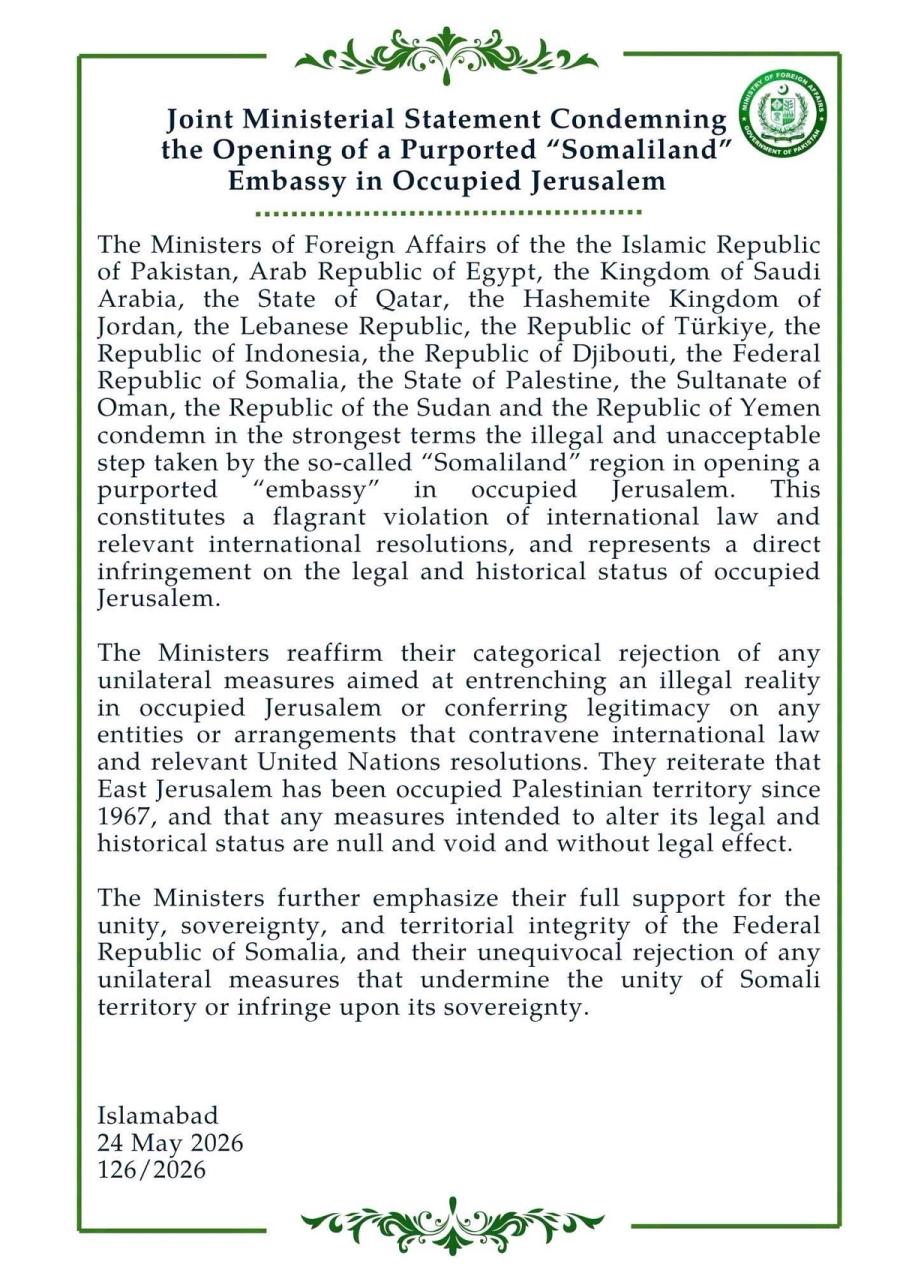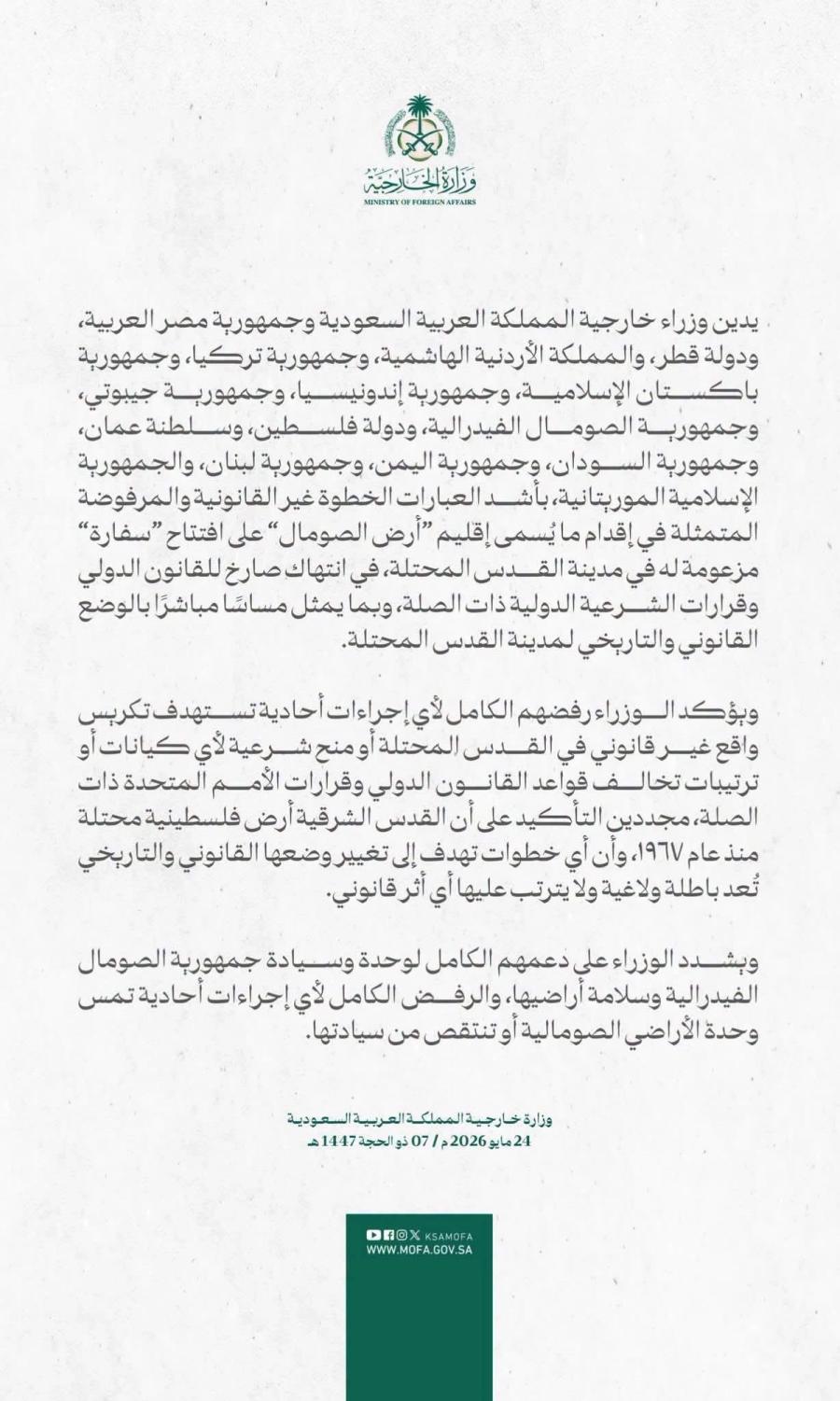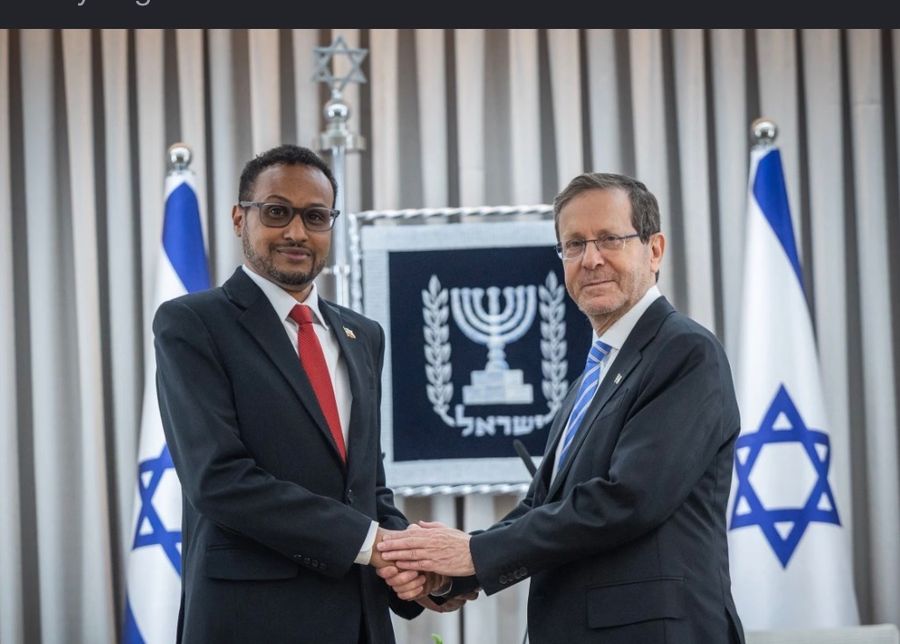
Hargeisa, Somaliland — May 24, 2026 —The foreign ministries of Saudi Arabia and Pakistan, together with 15 Muslim-majority countries, have issued a joint diplomatic statement expressing concern over Somaliland’s recent opening of a representative office in Jerusalem, according to the statement released by participating governments.
The coordinated declaration reaffirmed the countries’ commitment to international resolutions and existing diplomatic positions regarding the status of Jerusalem, calling for adherence to internationally recognized legal and diplomatic frameworks governing the city.
According to the joint statement, the participating countries emphasized the importance of maintaining established international agreements concerning Jerusalem’s political and diplomatic status.
The statement, supported by Saudi Arabia, Pakistan, and 15 other Muslim-majority nations, highlighted the need for diplomatic actions to align with internationally recognized frameworks and United Nations resolutions related to the city’s status.
Diplomatic observers say the timing and scale of the coordinated response reflect continued sensitivity surrounding Jerusalem-related diplomatic activities across the Islamic world.
According to diplomatic sources, the statement was intended to reinforce a unified position among participating countries regarding foreign diplomatic representation linked to Jerusalem.
Somaliland Response Pending
Authorities in Somaliland have not yet issued a comprehensive official response to the joint statement at the time of publication.
According to political observers, Somaliland’s establishment of a representative office in Jerusalem has drawn increased international attention, particularly among countries that maintain longstanding positions on the status of the city.
No formal clarification has been provided by Somaliland officials regarding the diplomatic implications raised in the joint declaration.
Jerusalem remains one of the most sensitive political and diplomatic issues in international relations, with its status subject to competing claims and longstanding geopolitical disputes.
According to international diplomatic frameworks referenced in the statement, many countries maintain positions aligned with United Nations resolutions regarding the final status of the city.
Somaliland’s foreign policy engagements in recent years have drawn attention from regional and international actors as it expands diplomatic outreach efforts.
Regional and International Reactions
According to diplomatic analysts, the joint statement reflects coordinated engagement among Muslim-majority countries on issues related to Middle Eastern diplomatic developments.
Observers note that such collective statements are often used to signal unified positions on sensitive geopolitical matters.
The development has also generated renewed discussion in diplomatic and policy circles regarding evolving relations between the Horn of Africa and the Middle East.
Officials from the countries involved have not announced any further diplomatic measures following the statement.
Attention is now focused on whether Somaliland will issue an official response or clarification regarding its representative office in Jerusalem.
Diplomatic observers expect continued international discussion on the issue in the coming weeks, particularly among regional and multilateral forums.
The joint statement underscores the continued global sensitivity surrounding Jerusalem’s diplomatic status and its impact on international relations.
The coordinated position by Saudi Arabia, Pakistan, and other Muslim-majority countries reflects efforts to maintain unified diplomatic messaging on contested geopolitical issues.
For Somaliland, the development places its foreign policy activities under increased international scrutiny, particularly as it expands external representation.