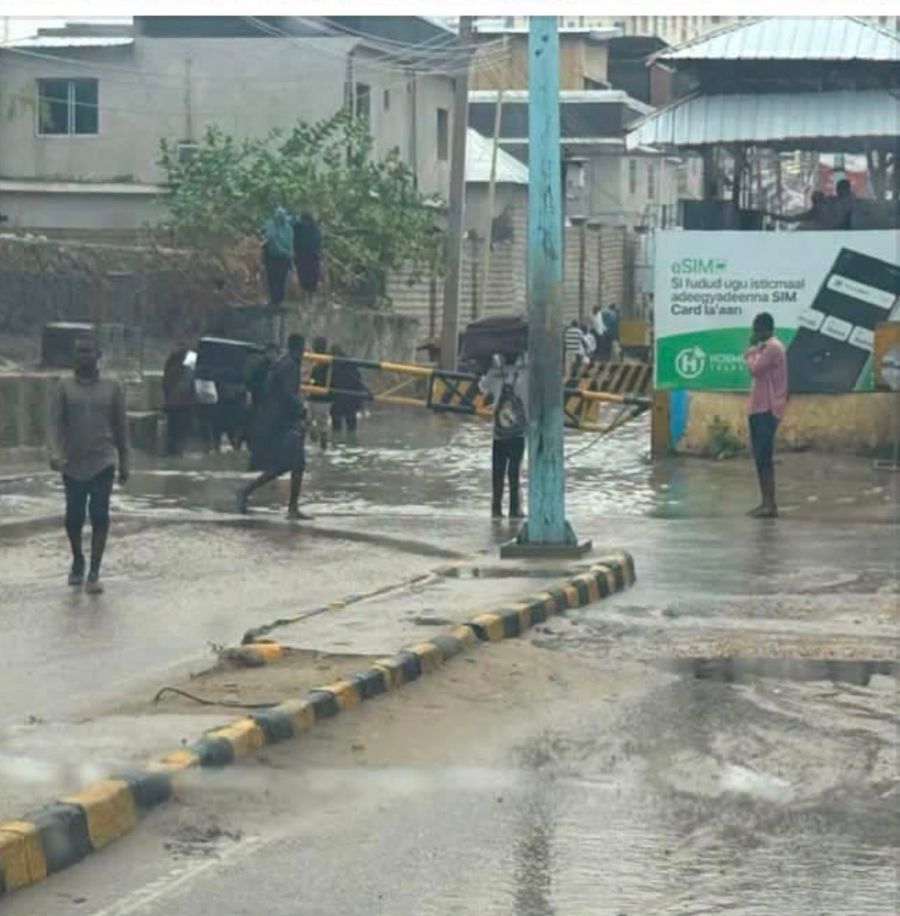
MOGADISHU, Somalia — July 15, 2026 — Former Somali Minister of Public Works and current Member of Parliament Eng. Saadaq Cabdullaahi Cabdi has called for Somalia to establish a newly planned national capital, arguing that constructing a modern city from scratch would be more cost-effective than investing billions of dollars to rehabilitate Mogadishu’s aging drainage and sewerage infrastructure.
The proposal came after Deputy Prime Minister Saalax Axmed Jaamac said during remarks on Tuesday evening that resolving Mogadishu’s drainage and stormwater management challenges would require investments amounting to billions of dollars.
Referring to those comments, Eng. Saadaq said the scale of the government’s estimated costs demonstrates the need to consider a different long-term approach to national urban development.
The lawmaker proposed that Somalia build a new capital city through a broad national consensus, describing it as a strategic investment that could serve future generations while addressing the country’s administrative and infrastructure needs.
According to Eng. Saadaq, a purpose-built capital could be developed for less than half a billion dollars. He said such a city could include a comprehensive master plan, modern transport networks, reliable drainage systems, public utilities, government institutions, residential areas, and other essential infrastructure designed to meet future population growth.
He argued that retrofitting Mogadishu’s existing drainage and sewerage network would likely be more expensive and technically challenging because much of the city’s infrastructure has expanded over decades without comprehensive urban planning.
Eng. Saadaq said Somalia should use long-term planning when making major infrastructure decisions and suggested that a new administrative capital could provide a sustainable solution rather than repeatedly addressing structural problems in the existing city.
His proposal reflects his personal policy position and has not been adopted or announced as official government policy.
The debate follows renewed public discussion over Mogadishu’s infrastructure after recent periods of heavy rainfall exposed weaknesses in the capital’s drainage system.
Flooding has repeatedly affected roads, residential neighborhoods, businesses, and public services in several districts of Mogadishu during seasonal rains, disrupting transportation and economic activity.
Government officials have acknowledged the need for major investments in drainage and flood management infrastructure as part of broader urban development efforts.
Deputy Prime Minister Saalax Axmed Jaamac’s remarks highlighted the scale of the financial resources that authorities believe would be required to modernize the city’s drainage network.
The federal government has not publicly responded to Eng. Saadaq’s proposal for a new national capital.
Government Response
As of Wednesday, no official statement had been issued by the Federal Government of Somalia regarding the lawmaker’s proposal.
Officials have continued to emphasize the need to improve Mogadishu’s infrastructure, although they have not indicated that relocating the national capital is under consideration.
Mogadishu has served as Somalia’s capital since independence in 1960 and remains the country’s political, economic, and administrative center.
The city has experienced rapid population growth over several decades while recovering from years of conflict that damaged roads, drainage systems, government buildings, and other public infrastructure.
Urban planners have long argued that Mogadishu requires substantial investment in drainage, sanitation, transportation, and land management to support its expanding population and reduce the impact of seasonal flooding.
Heavy rainfall has repeatedly overwhelmed existing drainage channels in recent years, leaving many roads submerged and interrupting public services. Infrastructure experts have frequently cited the need for comprehensive urban planning and modern stormwater management systems.
Several countries around the world, including Brazil, Nigeria, Kazakhstan, and Egypt, have built or developed new administrative capitals to address overcrowding, improve governance, or support long-term urban planning. Somalia has not announced any similar national initiative.
Eng. Saadaq’s proposal has added a new dimension to the national discussion over Somalia’s infrastructure priorities. Rather than focusing solely on rehabilitating existing systems, the proposal raises broader questions about long-term urban planning, public investment, and future population growth.
The discussion also reflects the financial challenges facing Somalia as authorities seek to modernize infrastructure while balancing competing demands for investment in security, education, healthcare, transportation, and public services.