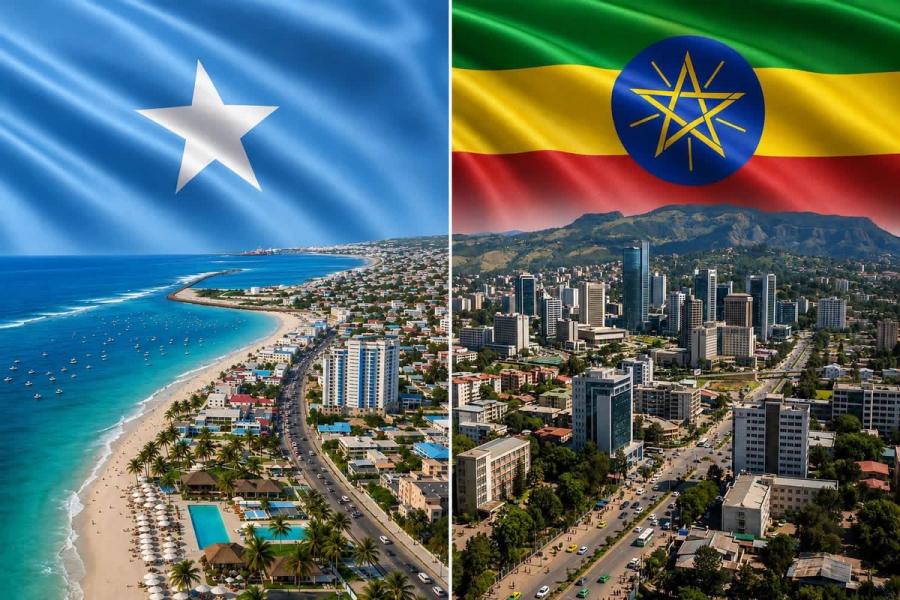
MOGADISHU, Somalia — OCT,19,2026-Somalia’s relations with Ethiopia are facing renewed pressure amid reports that Egypt is encouraging Mogadishu to sever diplomatic ties with Addis Ababa, as the political and military confrontation in Southwest State increasingly draws in regional interests.
The reported tensions follow disagreements over Ethiopia’s role in Baidoa, where Somali federal authorities are confronting forces loyal to former Southwest State President Abdiaziz Hassan Mohamed Laftagareen.
Claims of Egyptian pressure and a breakdown in discussions between Somali representatives and Ethiopian officers have not been independently confirmed. Nevertheless, the accounts point to growing friction over how neighbouring countries should respond to Somalia’s internal political disputes.
Mogadishu Criticises Neighbouring Countries
According to remarks attributed to the Speaker of Parliament, Somalia’s Federal Government has accused neighbouring countries of hosting individuals it considers threats to national security.
The government has also reportedly requested the handover of individuals it describes as terrorists. However, the available accounts do not clearly identify everyone concerned, the countries receiving those requests or the legal arrangements under which any transfer would take place.
The accusations suggest increasing frustration within Mogadishu over the response of regional partners to the Southwest confrontation.
President Hassan Sheikh Mohamud has reportedly sought support from neighbouring governments for the Federal Government’s position. Those diplomatic efforts are said to have fallen short of securing the level of backing Somali authorities wanted.
Ethiopian Forces Reportedly Decline Military Role
The latest accounts suggest that discussions between Villa Somalia representatives and Ethiopian military officials in Baidoa ended without agreement over a proposed federal military operation.
Ethiopian officers reportedly declined to commit their troops, arguing that forces serving under an African Union mandate should not participate in Somalia’s domestic political disputes.
They instead urged Somali political actors to settle their differences through dialogue.
Laftagareen Forces Make Gains Around Baidoa
The diplomatic concerns coincide with a changing military situation in Bay region.
Recent reporting indicates that Laftagareen-aligned Darawish forces have advanced into several district centres and strategic locations, placing additional pressure on federal troops and the administration holding Baidoa.
Reported gains include Qansaxdheere, Buurhakaba, Bardaale, Diinsoor and Awdiinle. These advances occurred across early and mid-October, rather than entirely within a single three-day period.
Residents described heavy fighting in Buurhakaba, while several other locations reportedly changed hands following withdrawals by government-aligned forces.
Control of Buurhakaba is particularly significant because the town lies along the main road connecting Mogadishu and Baidoa. Fighting there could complicate transport, supplies and the movement of security personnel.
The federally backed Southwest administration announced plans on October 18 to recover the lost towns. That raises the possibility of further clashes around the regional capital, although the timing and scale of any operation remain uncertain.
Egypt’s Reported Role Adds Regional Dimension
Reports that Egypt wants Somalia to cut diplomatic ties with Ethiopia would, if confirmed, mark a significant escalation beyond the immediate dispute over Baidoa.
Egypt and Somalia have strengthened their diplomatic and security relationship, giving Cairo a growing interest in developments affecting the Somali government and regional stability.
That relationship provides a backdrop to the allegations, but cooperation between the two countries does not itself demonstrate Egyptian involvement in the reported disagreement with Ethiopian officers.
The distinction matters because a dispute over military participation in Southwest State would carry different consequences from a formal decision to downgrade or sever interstate relations.
A Relationship With a Recent History of Strain
Somalia and Ethiopia have previously experienced serious diplomatic disagreements, making the latest reports especially sensitive.
Relations deteriorated after Ethiopia’s 2024 agreement with Somaliland over maritime access, which Mogadishu opposed as a challenge to Somalia’s sovereignty.
Turkish mediation subsequently produced the December 2024 Ankara Declaration, in which both governments reaffirmed respect for sovereignty and territorial integrity and agreed to pursue cooperation.
That process demonstrated that diplomatic engagement could reduce tensions even when the two governments held sharply different positions.
The present dispute concerns a different immediate issue, but it again tests whether shared security interests can withstand political disagreement.
Security and Civilian Concerns
A prolonged confrontation around Baidoa could affect more than relations between governments.
Renewed fighting risks disrupting markets, transport and humanitarian access while increasing pressure on families already affected by displacement and insecurity.
It could also divert troops and resources from operations against Al-Shabaab, creating additional challenges for Somali forces and their international partners.
Baidoa’s importance as an administrative and humanitarian centre makes the consequences of escalation particularly serious. Earlier clashes have already demonstrated how quickly fighting between rival forces can expose civilians to danger.