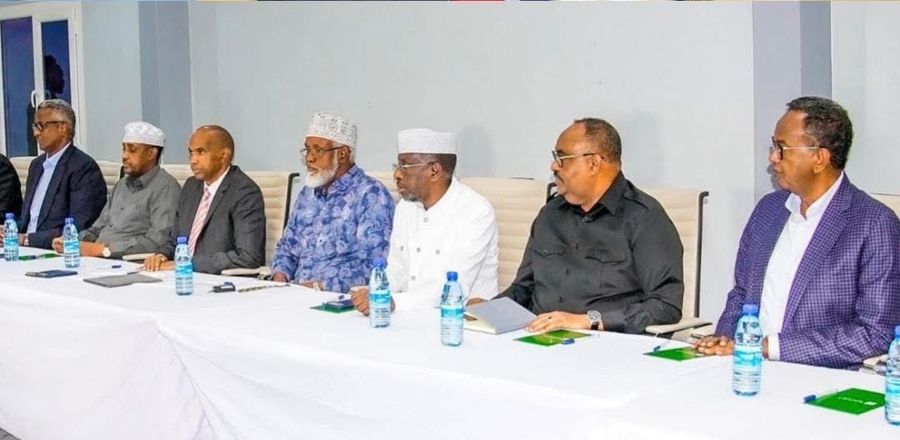
MOGADISHU, Somalia — June 30, 2026 —The opposition-aligned Future Somalia Council has accused President Hassan Sheikh Mohamud’s administration of using national security forces and military equipment for political purposes instead of prioritizing the fight against armed groups such as Al-Shabaab and ISIS.
The allegations were contained in a lengthy statement issued on the occasion of the 66th anniversary of Somalia’s independence, in which the group also raised concerns over governance, security operations, and federal relations with regional states.
The Federal Government of Somalia has not yet publicly responded to the statement.
In its statement, the Future Somalia Council claimed that federal security forces and military resources intended for counterterrorism operations were being used in what it described as politically motivated actions targeting regional administrations and opposition figures.
According to the opposition group, there are ongoing tensions involving Puntland, Jubbaland, and South West state authorities, which it alleges have been worsened by the deployment of security forces and armed units in disputed political contexts.
The statement also accused the federal leadership of escalating political and security tensions instead of focusing on operations against Al-Shabaab and ISIS militants.
Accusations Over Security Operations
The Future Somalia Council alleged that security operations have increasingly shifted away from counterterrorism priorities.
It further claimed that political disputes between the Federal Government and regional administrations have contributed to instability in several parts of the country, including Puntland.
According to the statement, such developments risk undermining joint efforts between Somali forces and international partners in the fight against armed extremist groups.
Call for International Intervention
The opposition group called on international partners, including the United Nations, African Union, IGAD, and countries contributing troops to Somalia, to closely monitor the situation.
It urged the international community to ensure that political, financial, and security support to Somalia is tied to constitutional compliance, institutional neutrality, and accountability within the security sector.
The statement warned that continued political tensions and alleged misuse of security forces could weaken ongoing counterterrorism efforts and create space for armed groups to expand operations.
Somalia continues to face complex political disputes between the Federal Government and several regional administrations over constitutional arrangements, elections, and power-sharing mechanisms.
Tensions between Mogadishu and regional states such as Puntland and Jubbaland have periodically escalated over governance structures and political authority.
Somalia remains engaged in a prolonged conflict with Al-Shabaab and ISIS-linked groups, which continue to carry out attacks in several regions despite sustained military operations.
The Federal Government has consistently maintained that its security operations are focused on counterterrorism and stabilisation efforts, often carried out in coordination with international partners.
The Future Somalia Council has not announced any follow-up actions beyond its statement, but has called for increased international engagement in Somalia’s political and security affairs.
Observers expect further responses from federal authorities and regional administrations in the coming days as political tensions remain high.
International partners have not yet issued public comments on the allegations raised in the statement.
The statement reflects ongoing political tensions between Somalia’s federal government and opposition-aligned groups, particularly regarding the control and use of security forces.
If such allegations continue to escalate, they could further strain relations between Mogadishu and regional administrations, complicating coordination on national security operations.
The claims also highlight broader concerns about trust in Somalia’s security institutions at a time when counterterrorism efforts against Al-Shabaab and ISIS remain a central national priority.