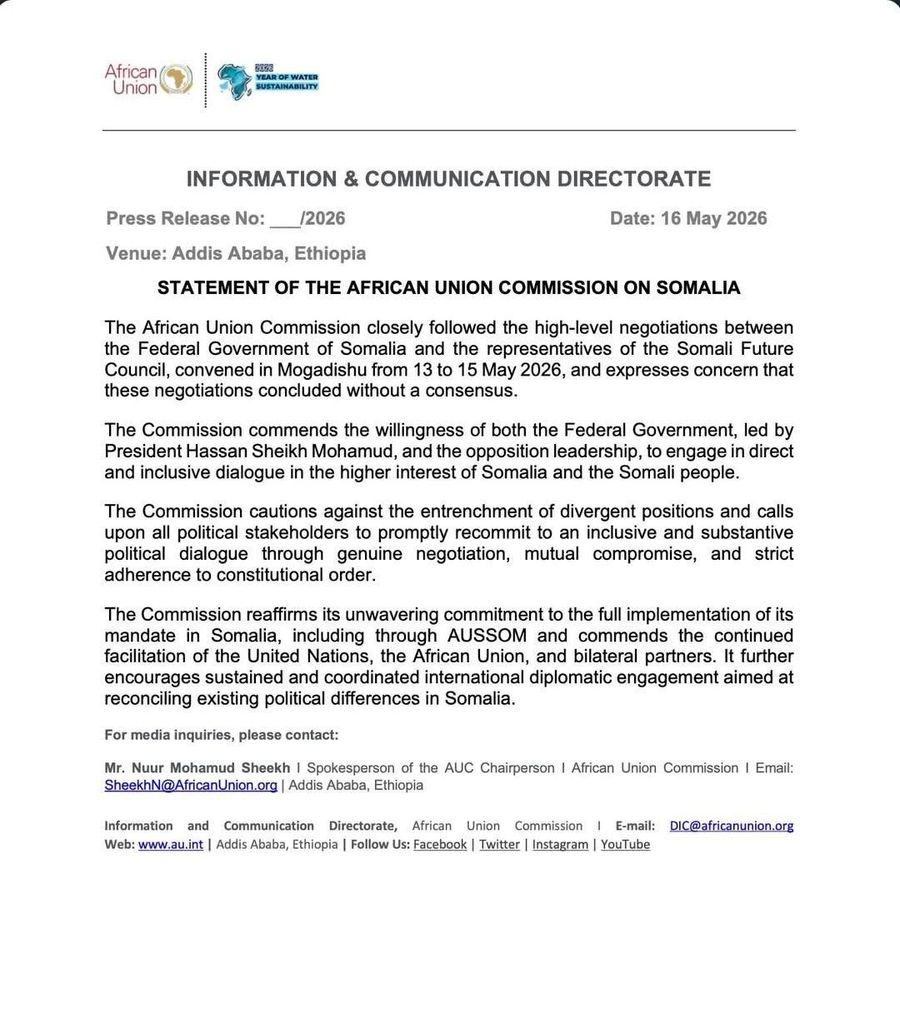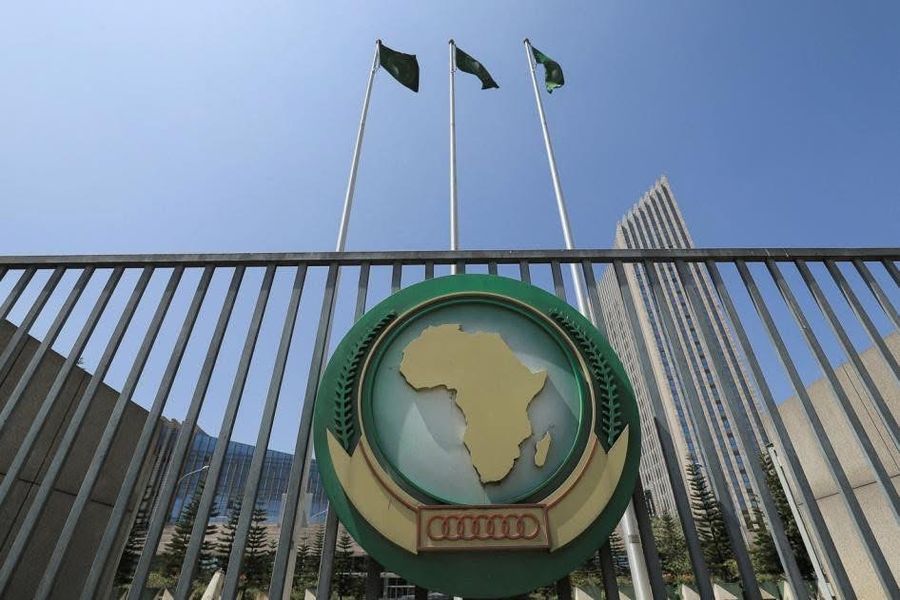
Saturday , May 16, 2026 (Baidoa Online) -The African Union has raised concern over the collapse of high level political talks in Mogadishu between Somalia’s Federal Government and the Somali Salvation Forum opposition coalition. The AU urged both sides to return to dialogue, warning that continued political deadlock could deepen divisions and undermine stability during Somalia’s sensitive transition period.
The African Union Commission said it is closely monitoring the situation in Somalia after negotiations between the Federal Government and the Somali Salvation Forum ended without agreement in Mogadishu.
According to an official statement from the African Union, the talks failed to produce consensus on key political and electoral issues that have been central to ongoing tensions between the two sides. The Commission urged Somali leaders to avoid hardline positions and instead pursue compromise through structured dialogue.
The AU emphasized that respect for the constitutional order, including adherence to term limits, remains essential for maintaining political legitimacy and national stability. It warned that continued disagreement risks widening political divisions at a critical moment for Somalia’s transition process.
According to the statement, the African Union will continue engaging Somali stakeholders in coordination with the United Nations and international partners. It also reaffirmed its commitment to support Somalia through the planned African Union Support and Stabilization Mission in Somalia AUSSOM, which is expected to play a central role in peace and security efforts.
The AU did not assign blame to either side but stressed that both the Federal Government and opposition coalition share responsibility for ensuring dialogue remains active. According to diplomats familiar with regional discussions, the breakdown of talks reflects deep disagreements over electoral frameworks and constitutional interpretation, although no official mediation details were provided.
According to local political observers in Mogadishu, the failure of negotiations has increased uncertainty around the next phase of Somalia’s political roadmap. However, these observations remain interpretations and have not been formally confirmed by the parties involved.
The Federal Government of Somalia has not issued a detailed public response to the African Union statement at the time of reporting. Opposition representatives from the Somali Salvation Forum have also not released an official comment regarding the AU’s warning.
The talks in Mogadishu were part of ongoing efforts to resolve disputes between the Federal Government and opposition groups over Somalia’s electoral process and constitutional arrangements.
In recent months, political tensions have increased following disagreements on how future elections should be conducted and how power sharing mechanisms should be structured. These disputes have contributed to repeated breakdowns in dialogue between the two sides.
The African Union has maintained a long standing presence in Somalia through peace support operations and advisory roles. Its future engagement is expected to transition into the new stabilization mission under AUSSOM, which will replace earlier African Union missions in phases.
Somalia remains in a politically sensitive transition period, with competing political blocs struggling to reach consensus on governance and electoral reforms. International partners, including the United Nations, have repeatedly encouraged inclusive dialogue to avoid further institutional instability.
The collapse of talks highlights continuing fragility in Somalia’s political process. Without agreement between the Federal Government and opposition coalition, key electoral and constitutional decisions risk further delay, increasing uncertainty in governance.
The African Union warning signals growing international concern over the potential for prolonged political deadlock. Such conditions could slow down planned reforms and complicate the transition to new security and stabilization frameworks under AUSSOM.
For civilians, political instability often translates into delayed governance services and reduced focus on economic and security priorities. While no immediate security escalation has been reported, sustained political tension may affect confidence in national institutions.