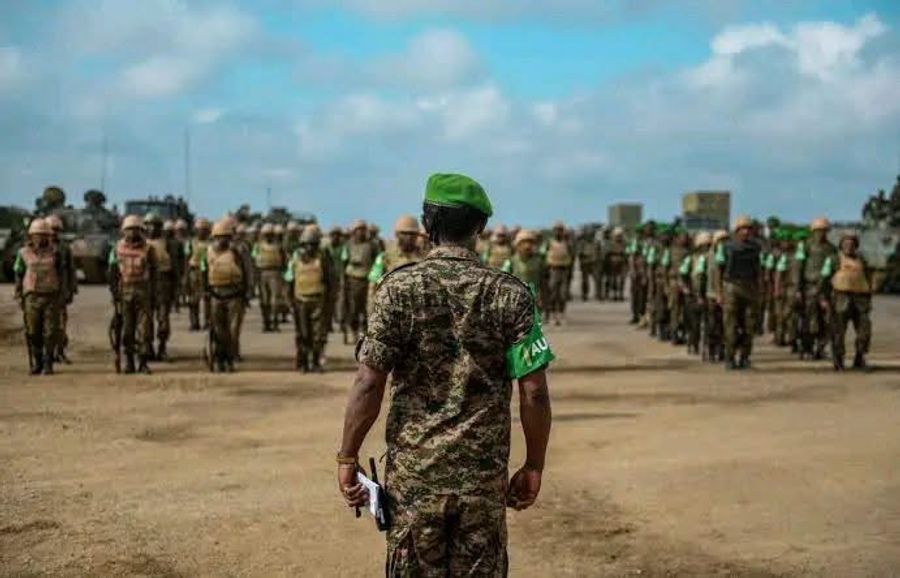
MOGADISHU, Somalia — July 30, 2026 —Somalia’s federal government has acknowledged that it remains dependent on African Union peace support forces despite ongoing efforts to strengthen the country’s own security institutions, according to officials who spoke following regional discussions on the future of the mission. The comments come as the government seeks international backing to extend the African Union deployment until at least 2029 amid uncertainty over funding and concerns about Somalia’s security transition.
Officials familiar with the discussions said the Federal Government of Somalia informed participants at a regional meeting in Kampala that an immediate withdrawal of African Union forces could create significant security challenges at a time when Somali security forces remain engaged in operations against Al-Shabaab.
According to individuals who spoke to Somali media, government representatives said the Somali National Army currently lacks the capacity to simultaneously sustain large-scale offensive operations while maintaining security responsibilities across multiple strategic locations.
The remarks represent one of the clearest acknowledgments by government-linked officials that Somalia’s security transition continues to rely heavily on international support despite years of investment in rebuilding national security institutions.
Government supporters have in recent months publicly argued that Somali forces are increasingly capable of assuming full security responsibilities. However, officials involved in the latest discussions reportedly warned that the current security environment remains fragile and requires continued international assistance.
Government Seeks Mission Extension
According to participants in the Kampala discussions, Villa Somalia requested that the African Union security mission continue until at least 2029 while new financing mechanisms are explored to sustain the operation.
Officials said Somalia also proposed the establishment of an international funding mechanism aimed at mobilizing financial support from a range of international partners, including the United States and Arab countries, to address the mission’s growing budget shortfall.
The African Union mission has faced increasing financial uncertainty after international donors reduced or delayed funding commitments, raising questions over the long-term sustainability of the deployment.
Government officials reportedly argued that ending the mission prematurely could jeopardize security gains achieved over the past decade through joint operations conducted by Somali security forces and African Union troops.
Security Concerns Over Strategic Facilities
According to officials cited by Somali media, several battalions of foreign troops currently contribute to the protection of the heavily fortified Halane compound in Mogadishu, which hosts diplomatic missions, international organizations, and key security partners.
Officials said replacing those forces with Somali units would require a significant redeployment of personnel currently engaged in frontline military operations elsewhere in the country.
Security analysts have long noted that Somalia’s transition from international security support to full national responsibility remains one of the country’s most significant institutional challenges.
Political Debate Intensifies
The government’s latest position comes amid growing political debate over Somalia’s security strategy and broader governance issues.
Opposition politicians have recently called for renewed national dialogue, arguing that Somalia faces both political and security challenges requiring consensus among federal institutions, regional administrations, and other stakeholders.
Government officials have not publicly indicated any change in their overall strategy but continue to emphasize the need for sustained international partnerships during the country’s security transition.
The African Union has supported Somalia’s security efforts for nearly two decades through successive peace support missions, helping Somali forces combat Al-Shabaab and secure major population centers.
The mission has undergone several transitions over the years as responsibility for security has gradually shifted toward Somali forces. International partners have repeatedly stressed that any withdrawal should be conditions-based rather than driven solely by financial considerations.
Despite progress in rebuilding the Somali National Army, security experts continue to point to logistical challenges, limited air support, intelligence capabilities, and funding constraints as major obstacles to a complete transfer of security responsibilities.
The issue has become increasingly urgent following uncertainty surrounding long-term financing for the African Union mission, prompting discussions among regional governments and international partners over possible alternative funding arrangements.
International Funding Challenges
According to reports discussed during the Kampala meeting, African Union officials continue to face significant funding constraints that could affect future operations unless additional financial commitments are secured.
Officials familiar with the discussions said Somali representatives appealed for broader international engagement to help finance the mission, including renewed discussions with Washington and other international partners.
The reported appeal comes as the United States continues reviewing aspects of its broader foreign policy priorities, including security assistance programs across Africa.
No official announcement has yet been made regarding any final agreement on extending the mission or securing additional financial commitments.
Regional and international partners are expected to continue discussions on the future of Somalia’s security transition, including funding options for the African Union mission and the pace at which Somali forces can assume greater responsibility.
Any decision regarding the extension of the mission or the creation of a new financing mechanism is expected to require coordination among the African Union, the Federal Government of Somalia, donor countries, and other international stakeholders.
Analysis: Why This Matters
Somalia’s acknowledgment that it still requires African Union security support underscores the complexity of transitioning from international peace support to full national security responsibility. While Somali forces have expanded their operations in recent years, officials indicate that capability gaps remain in maintaining both offensive operations and nationwide defensive deployments.
The funding crisis affecting the African Union mission also carries wider regional implications. Without a sustainable financial arrangement, both Somalia and its international partners may face difficult decisions over how to preserve security gains while continuing efforts to strengthen Somali security institutions.
The debate also highlights the close connection between Somalia’s security environment and its political landscape. Calls for broader political dialogue alongside discussions on military support reflect growing recognition that long-term stability depends on both security reforms and political consensus.