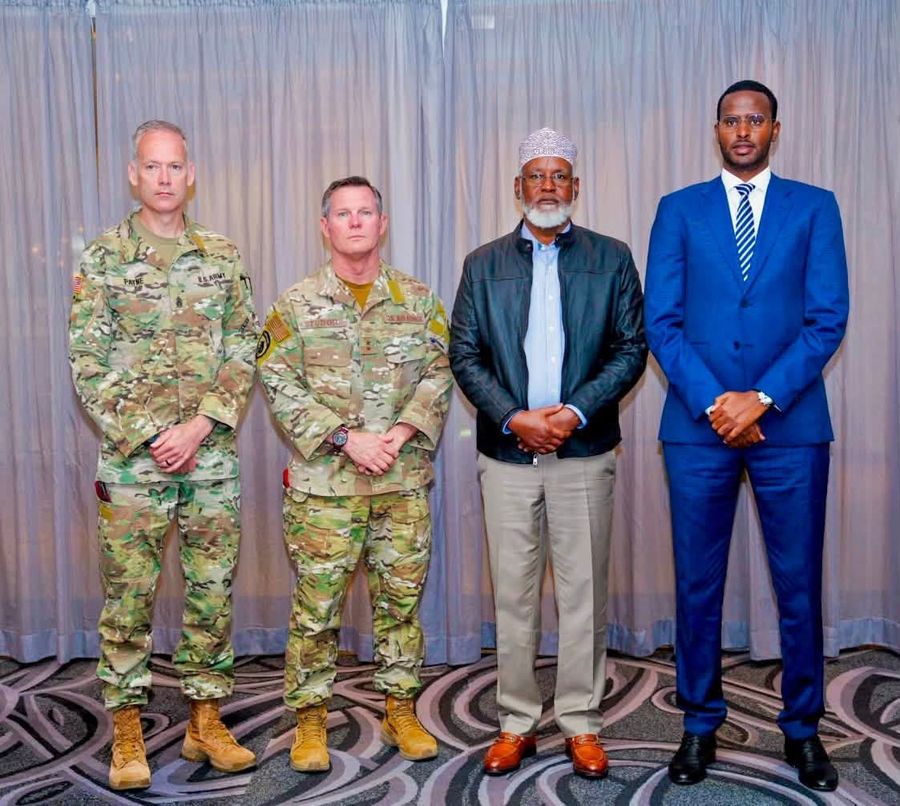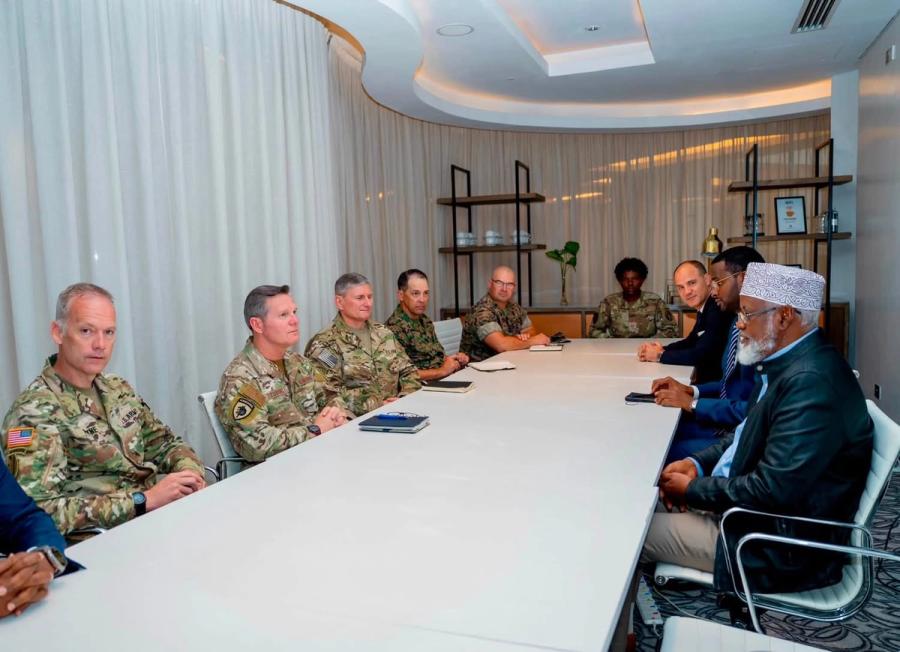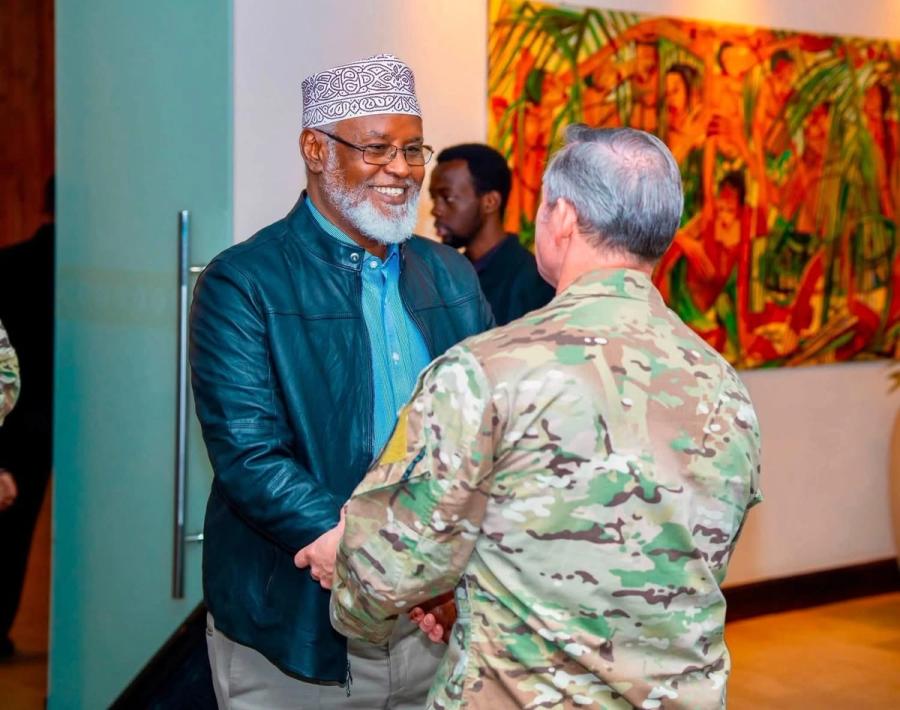
MOGADISHU, Somalia — August 7, 2026 —Jubaland President Ahmed Madobe, held talks with the Commander of Special Operations for the United States Africa Command (AFRICOM), Maj. Gen. Claude K. Tudor Jr., in a meeting focused on strengthening military cooperation and accelerating operations against Al-Shabaab in southern Somalia, Jubaland officials said.
The discussions centered on expanding joint efforts to liberate areas still under militant control in Jubaland and enhancing bilateral cooperation in the fight against terrorism. The meeting comes as Somali authorities and international partners continue to intensify counterterrorism operations across several regions of the country.
According to the Jubaland Presidency, President Ahmed Madobe met Maj. Gen. Claude K. Tudor Jr. alongside other U.S. officials during high-level security discussions aimed at reinforcing cooperation between Jubaland and AFRICOM.
Officials said the meeting focused on speeding up military operations intended to recover territory from Al-Shabaab while strengthening security coordination between the Jubaland administration and the United States.
The talks also reviewed ongoing counterterrorism efforts and explored ways to improve operational cooperation, intelligence sharing, and support for security forces engaged in operations across Jubaland.
President Madobe was accompanied during the meeting by Jubaland Intelligence and Security Agency Director Mohamed Ahmed Sabriye, underscoring the importance of intelligence coordination in the campaign against Al-Shabaab.
Neither Jubaland nor AFRICOM immediately released additional operational details or announced new military initiatives following the meeting.
Jubaland officials described the discussions as part of continuing efforts to strengthen cooperation with international partners supporting Somalia’s campaign against Al-Shabaab.
According to the regional administration, expanding security partnerships remains essential for sustaining military pressure on the militant group and improving stability in areas recovered from insurgent control.
The meeting reflects ongoing engagement between Jubaland authorities and international security partners as operations continue across southern Somalia.
Jubaland has remained one of Somalia’s key frontlines in the fight against Al-Shabaab for more than a decade. The extremist group continues to maintain a presence in parts of Lower Juba, Middle Juba, and neighboring regions despite repeated military offensives by Somali forces and allied regional troops.
The United States has been one of Somalia’s principal security partners, providing intelligence, training, logistical support, and precision air support to Somali security forces and partner units conducting operations against Al-Shabaab.
AFRICOM has continued to work alongside the Federal Government of Somalia and regional administrations in support of efforts to degrade the militant group’s operational capabilities. U.S. officials have consistently stated that their support is intended to strengthen Somali-led security operations and help prevent the group from threatening regional stability.
Jubaland security forces have participated in numerous offensives against Al-Shabaab over recent years, often working alongside Somali federal forces and international partners. While several towns and strategic locations have been recaptured, the group continues to launch attacks, conduct ambushes, and target security installations across southern Somalia.
Security analysts note that intelligence cooperation remains a critical component of counterterrorism operations, particularly in identifying militant movements, disrupting planned attacks, and protecting civilians in recovered areas.
Officials have not announced a timeline for any new operations discussed during the meeting.
However, the talks indicate that security cooperation between Jubaland and AFRICOM is expected to continue as Somali forces pursue ongoing efforts to reclaim remaining Al-Shabaab-held territory and improve stability in southern Somalia.
Observers say continued coordination between regional authorities, the Federal Government of Somalia, and international partners will remain important as military operations expand and efforts continue to secure liberated communities.
The meeting highlights the continuing strategic partnership between Jubaland and the United States in Somalia’s long-running campaign against Al-Shabaab. Close coordination between military commanders and regional authorities can help improve operational planning, intelligence sharing, and the effectiveness of counterterrorism missions.
For residents of Jubaland, sustained security cooperation could contribute to improved stability if military operations successfully reduce militant activity in affected areas. Maintaining security after territory is recovered remains a significant challenge requiring both military and civilian governance efforts.
The discussions also demonstrate that international security support continues to play a significant role in Somalia’s efforts to confront Al-Shabaab. Regional administrations such as Jubaland remain key operational partners in campaigns aimed at weakening the group’s influence across southern Somalia.