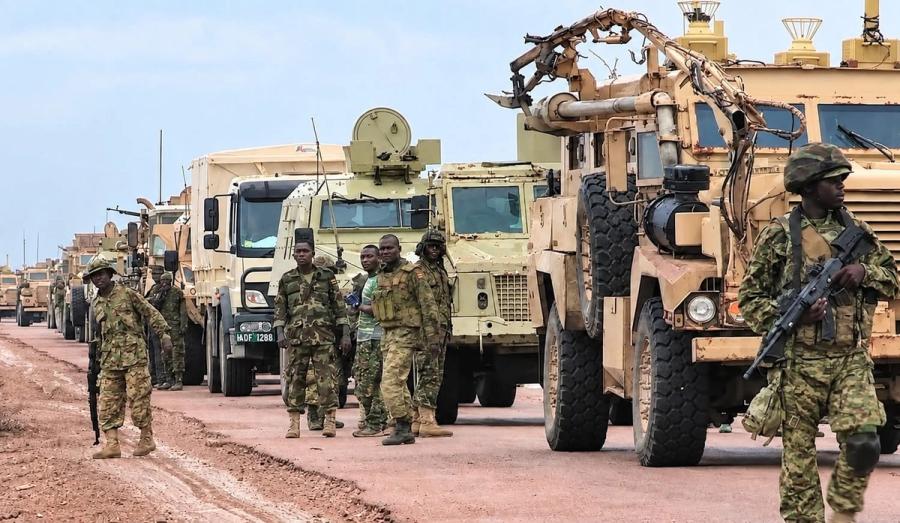
BARAWE, November 11, 2026 — A large military convoy belonging to the Uganda People’s Defence Forces (UPDF), escorted by Somali Federal Government troops, has finally arrived in Barawe, the administrative capital of Somalia’s South West State, following an approximately 10-day journey marked by repeated attacks, reported casualties and significant logistical challenges.
The convoy reached Barawe, in the Lower Shabelle region, on Tuesday afternoon after travelling along a road reportedly measuring less than 200 kilometres. The unusually prolonged journey has raised fresh concerns about the security of major transportation routes in southern Somalia, where Al-Shabaab militants continue to threaten military movements.
Nearly 70 Military Vehicles Involved in Withdrawal Operation
According to security sources, the convoy consisted of approximately 70 military vehicles, primarily heavy transport trucks and armoured personnel carriers.
The operation was reportedly intended to facilitate the withdrawal of thousands of Ugandan soldiers from military positions in and around Barawe as part of an ongoing military redeployment.
Ugandan troops have played a significant role in international security operations in Somalia, particularly in southern regions where they have supported Somali security forces in efforts to counter Al-Shabaab.
However, the latest convoy movement demonstrates the difficulties associated with transporting military personnel and equipment through areas where insurgents retain the capability to launch roadside attacks.
Al-Shabaab Claims 11 Soldiers Killed and Dozens of Vehicles Destroyed
Security officials familiar with the operation reported that the convoy encountered more than five attacks during its journey, with several incidents involving improvised explosive devices (IEDs) planted along the main road.
In a statement claiming responsibility for the attacks, Al-Shabaab alleged that its fighters killed at least 11 soldiers and destroyed or burned dozens of military vehicles.
Uganda has also reportedly acknowledged suffering personnel casualties and vehicle losses during the withdrawal operation, although the exact number of soldiers killed or wounded and the extent of the damage remain unclear.
The repeated attacks reportedly disrupted the convoy’s progress, contributing to the unusually long journey.
A 200-Kilometre Journey Taking Nearly 10 Days
One of the most striking aspects of the operation was the time required for the convoy to complete its journey.
Despite travelling a distance of less than 200 kilometres, the military column reportedly spent approximately 10 days reaching Barawe.
The prolonged movement has raised questions about the ability of military forces to maintain secure access to strategic roads in Lower Shabelle.
Security analysts note that roadside explosives remain among the most significant threats to military convoys operating in southern Somalia.
Such attacks can delay troop movements, damage transport vehicles and complicate the delivery of military supplies, particularly when large convoys must travel through areas vulnerable to insurgent activity.
Although the exact circumstances behind every delay remain unclear, the reported frequency of attacks suggests that security threats played a substantial role in slowing the operation.
Uganda Faces Major Troop Withdrawal Deadline
The convoy’s arrival comes amid reports that Uganda is expected to withdraw more than 1,900 troops by November 22.
These forces have formed an important component of international military operations supporting Somalia’s security institutions and efforts to contain Al-Shabaab.
The planned withdrawal represents a significant logistical undertaking, requiring the movement of personnel, vehicles and military equipment from positions across southern Somalia.
The successful arrival of the convoy in Barawe may allow the next phase of evacuation preparations to proceed, although the security risks surrounding future movements remain considerable.
Growing Concerns Over Security in Southern Somalia
The latest developments highlight broader concerns about the security situation in southern Somalia, particularly along roads connecting major towns and military installations.
Despite years of counterinsurgency operations, Al-Shabaab continues to demonstrate its ability to disrupt military transportation through roadside explosives and other asymmetric tactics.
The reported attacks also raise questions about the security arrangements required to protect withdrawing forces and maintain stability in areas where international troops are reducing their presence.
For Somalia’s security forces, the withdrawal of experienced international troops could create additional operational responsibilities, particularly in regions where militant activity remains persistent.
While the convoy has reached Barawe, the reported casualties, vehicle losses and prolonged journey underscore the continuing challenges facing military operations in southern Somalia.