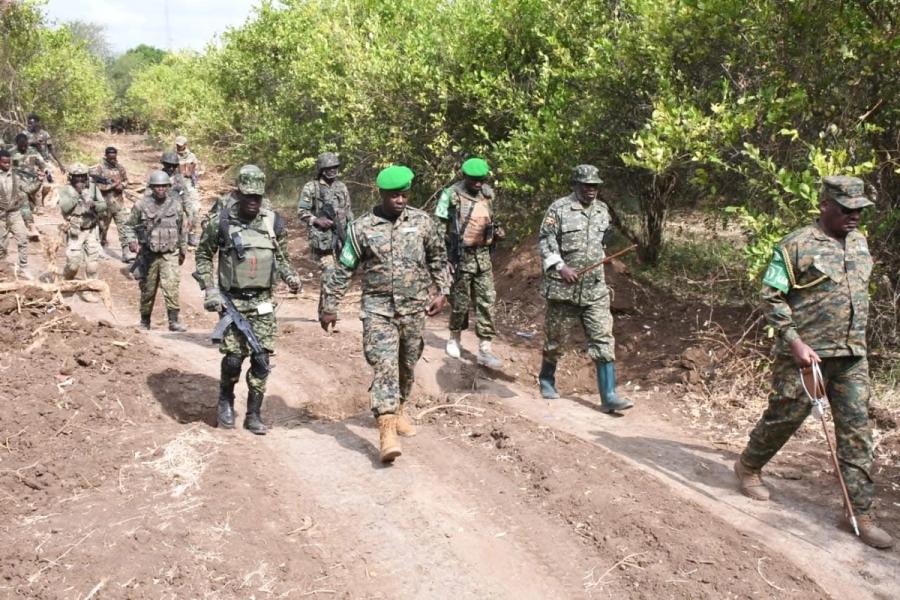
MOGADISHU, Somalia — August 14, 2026 — Heavy fighting erupted between Al-Shabaab militants and joint Somali and Ugandan forces near Jannaale, Mubaarak and Ceel-Wareegow in Somalia’s Lower Shabelle region, according to reports from the area. Casualty figures and the outcome of the separate confrontations were not immediately available.
The clashes occurred as military units moved from positions in the three areas, which lie along strategic routes surrounding Awdheegle district.
Somali government soldiers and Ugandan troops serving with the African Union Support and Stabilization Mission in Somalia, AUSSOM, have been conducting operations against Al-Shabaab across the region.
The first confrontation was reported outside Jannaale after a combined Somali and Ugandan force moved out of the district. Al-Shabaab fighters engaged the troops, leading to an exchange of heavy gunfire.
Al-Shabaab said its fighters forced the joint forces to withdraw. However, no independently verified information was available about the outcome, and it was unclear whether either side had changed its position following the fighting.
A second battle was reported near Mubaarak, a settlement administered under Awdheegle district. Militants confronted a Somali and Ugandan military column after it moved from positions in the area.
Heavy and light weapons were used during the confrontation, according to reports. Al-Shabaab said the joint force suffered losses, but it did not provide verifiable casualty figures.
The third confrontation occurred near Ceel-Wareegow after another contingent moved through the area. Al-Shabaab fighters intercepted the forces, triggering what was described as a prolonged battle.
The militant group said it defeated the military unit involved. That account could not be independently confirmed, and no statement had been issued by Somali military officials or AUSSOM at the time of publication.
Casualties and Civilian Impact
The number of fighters killed or injured in the three confrontations remains unknown. Neither side has released independently verifiable casualty figures.
There were also no immediate reports of civilian deaths, injuries or displacement. Communication difficulties and insecurity in rural Lower Shabelle often delay the collection of reliable information following clashes.
It was unclear whether nearby roads remained open or whether the fighting had interrupted civilian movement between Jannaale, Awdheegle and surrounding settlements.
Lower Shabelle is an important agricultural region, and repeated fighting has disrupted travel, trade and access to farms in several contested areas. Military movements and the threat of roadside bombs also limit the ability of residents and humanitarian organisations to travel safely.
Government and AUSSOM Response
The Somali government and AUSSOM had not publicly addressed the latest clashes by the time of publication.
No official information was available about the purpose of the military movements, the strength of the forces involved or their positions after the battles.
Ugandan troops form an important part of AUSSOM and operate alongside Somali forces in Lower Shabelle. Their responsibilities include protecting strategic settlements, securing supply routes and supporting operations against Al-Shabaab.
Independent verification of battlefield accounts in Somalia is often difficult. The government and Al-Shabaab regularly issue competing statements about casualties, territorial control and the outcome of military operations.
Mubaarak Remains Contested
Mubaarak has been repeatedly contested because of its location along routes connecting Awdheegle with other parts of Lower Shabelle.
Somali and Ugandan forces secured Mubaarak and nearby Daarusalaam from Al-Shabaab in March 2026, according to the Somali Defence Ministry. The joint forces later established military positions intended to prevent the militants from returning.
Later that month, Al-Shabaab launched an assault against the allied position in Mubaarak. AUSSOM said Somali and Ugandan troops repelled the attack and killed more than 40 militants. That casualty figure was announced by the African Union mission and was not independently verified. AUSSOM statement
The March fighting around Mubaarak and Daarusalaam displaced nearly 2,400 civilians, according to a humanitarian monitoring report. The displacement demonstrated the broader effect that control of the area can have on surrounding communities.
Lower Shabelle remains one of the main fronts in Somalia’s long-running conflict with Al-Shabaab.
The region’s proximity to Mogadishu gives it strategic importance. Control of its towns and roads affects the movement of troops, commercial supplies and agricultural products into the capital.
Somali forces and their international partners maintain bases in towns including Jannaale and Awdheegle. Al-Shabaab retains a presence in rural areas and frequently attacks military bases, patrols and convoys travelling between government-controlled locations.
The militants also use roadside bombs and ambushes to restrict military movement. Somali and AUSSOM forces have responded with ground offensives and air-supported operations intended to clear militant positions and protect major roads.
The three confrontations show that Al-Shabaab retains the ability to challenge military movements across several Lower Shabelle locations at the same time. Repeated attacks could make it more difficult for Somali and AUSSOM forces to maintain supply lines and hold recently secured settlements.
Jannaale, Mubaarak and Ceel-Wareegow are located near routes connecting rural Lower Shabelle with Awdheegle and areas closer to Mogadishu. Continued insecurity along those routes could restrict trade, civilian travel and military reinforcement operations.