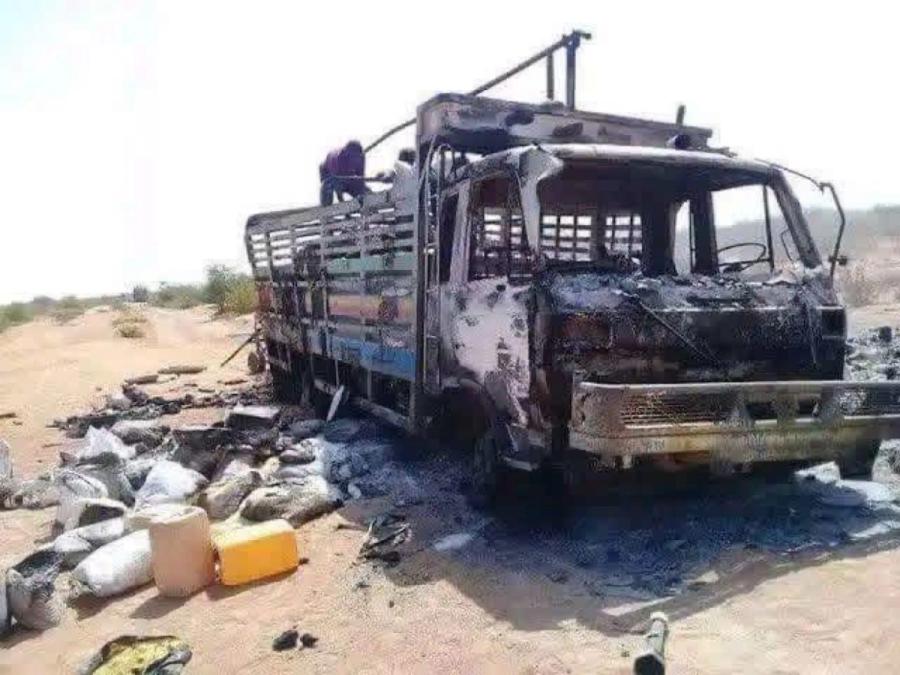
MOGADISHU, Somalia — August 19, 2026 — Al-Shabaab militants have reportedly intercepted and burned 10 trucks transporting charcoal on the road between Wanlaweyn and Afgooye districts in Somalia’s Lower Shabelle region, disrupting traffic along an important commercial corridor southwest of Mogadishu.
The trucks were stopped by armed fighters while travelling from the charcoal-producing areas around Wanlaweyn toward Afgooye, according to preliminary reports from local sources.
The militants ordered the drivers to leave their vehicles before setting the trucks and their cargo on fire, the reports said. Images and video circulated online appeared to show several trucks engulfed in flames, but the exact location and full extent of the destruction could not be independently verified.
There were no immediate reports of deaths or injuries. The whereabouts and condition of all the drivers were not initially clear.
Neither Somalia’s federal government nor authorities in South West State had issued a public statement about the incident at the time of publication. Al-Shabaab also had not publicly explained the reported destruction of the vehicles.
The motive remains unconfirmed. Al-Shabaab has previously attacked commercial vehicles whose owners it accused of refusing to pay levies or violating restrictions imposed in areas where the group operates.
The al-Qaeda-affiliated organization maintains an extensive revenue-collection network targeting businesses, farmers, livestock traders and transport operators. Payments are demanded at checkpoints and through direct threats, according to Somali businesspeople, government officials and international investigations.
Economic and Security Impact
Wanlaweyn, located about 90 kilometres northwest of Mogadishu, is a major centre of Somalia’s domestic charcoal trade. Trucks carrying charcoal and agricultural products use the Afgooye corridor to reach markets in and around the capital.
The destruction of 10 vehicles could impose substantial losses on truck owners, drivers and charcoal traders. It could also temporarily reduce supplies reaching Mogadishu and increase transportation costs if commercial operators avoid the affected road.
The value of the trucks and their cargo was not immediately available. Local authorities had not announced whether security forces had been deployed to the area or whether traffic had resumed normally.
Lower Shabelle holds strategic and economic importance because it surrounds the southern approaches to Mogadishu and includes roads connecting the capital with Baidoa and other towns in southern Somalia. The region is also one of the country’s largest agricultural-producing areas. The European Union Agency for Asylum has described the region’s principal roads as strategically important supply routes and documented persistent insecurity affecting Afgooye and surrounding districts.
Commercial drivers operating in Lower Shabelle regularly encounter checkpoints, extortion demands, threats of abduction and armed attacks. A study of checkpoints in south-central Somalia found that a large proportion were concentrated in South West State, with most of those located in Lower Shabelle.
Previous Attacks on Charcoal Transporters
Al-Shabaab has previously burned vehicles transporting charcoal through Lower Shabelle.
In August 2020, witnesses said militants burned a charcoal-laden truck about 25 kilometres from Afgooye. Two additional trucks carrying charcoal toward Mogadishu were reportedly stopped and burned in October 2020.
Other reports have described similar incidents involving drivers who allegedly failed to comply with the group’s demands. Truck operators interviewed during a 2023 investigation into Somalia’s charcoal industry reported being beaten, detained or having their vehicles destroyed while passing through militant-controlled checkpoints.
Al-Shabaab has historically benefited from taxing charcoal production and transportation. The United Nations Office on Drugs and Crime says the group has collected revenue at production sites, along transport routes and through the illicit charcoal trade, with the proceeds allegedly supporting its operations.
Charcoal production is also an environmental concern in Wanlaweyn. Environmental groups have warned that widespread tree-cutting has accelerated deforestation and damaged land used by rural communities.
Authorities are expected to establish the condition of the drivers, assess the financial losses and determine whether the attack resulted from a taxation dispute or another restriction imposed by Al-Shabaab.
Any prolonged insecurity on the Wanlaweyn-Afgooye road could affect traders transporting charcoal, food and other goods to Mogadishu. Truck owners may also demand additional security along the corridor before resuming normal operations.
The attack demonstrates Al-Shabaab’s continuing ability to interfere with commercial activity on strategically important roads, even as Somali and allied forces conduct operations against the group across southern and central Somalia.
Burning the trucks also sends a warning to other transporters operating in areas where the militants collect revenue. Fear of similar attacks could discourage drivers from using the route, raise transport prices and reduce earnings for rural producers.