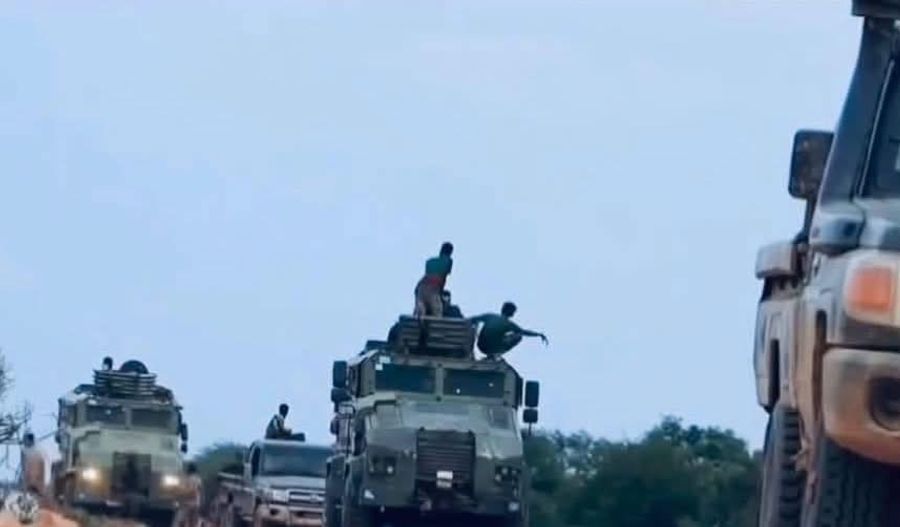
MOGADISHU, Somalia — October 26, 2026-Somali federal government forces have reportedly suffered heavy casualties and extensive military equipment losses following intense fighting with Al-Shabaab militants near Leego in the Lower Shabelle region, raising serious questions about the progress of Operation Banooda, a major government offensive targeting areas around Buurhakaba in southern Somalia.
Al-Shabaab has claimed that its fighters killed more than 300 government soldiers during the clashes around Jameeco, near Leego. The militant group’s casualty figures remain independently unverified, and Somali authorities have not released a comprehensive assessment of the reported losses.
According to security sources, a large federal military convoy, reportedly comprising approximately 2,800 troops and operating with Turkish aerial support, came under sustained attack while advancing through the area.
The fighting reportedly involved heavy weapons, ground assaults and the alleged deployment of explosive-laden drones against government military vehicles.
Local residents and nomadic communities have described widespread destruction along the road connecting Leego and Jameeco, with numerous military vehicles reportedly left burning across the surrounding countryside.
Suicide Drones Reportedly Used Against Somali Military Convoy
Security sources familiar with the clashes allege that one-way attack drones, commonly known as suicide drones, were used to strike sections of the federal military convoy.
According to these accounts, several military vehicles were destroyed by drone strikes, while others were damaged or abandoned during the fighting.
Some sources suggest that drone attacks accounted for a substantial proportion of the equipment losses.
However, the identity of those responsible for operating or launching the drones remains unclear.
The alleged use of such weapons against a large government convoy could represent a significant escalation in the conflict, particularly as military tensions continue to intensify across South West State.
Residents Report Burning Vehicles Between Leego and Jameeco
Residents and nomadic communities living near the battlefield have reported seeing smoke rising from destroyed military vehicles along the main road and in surrounding rural areas.
Eyewitnesses described numerous burned and damaged vehicles scattered across different locations between Leego and Jameeco.
Some residents said they could still see smoke rising from military equipment hours after the fighting began.
The accounts suggest that the confrontation extended beyond a single engagement point, with fighting reportedly spreading across roads and rural locations.
More Than Eight Turkish-Supplied Military Vehicles Reportedly Destroyed
Additional details reported by Baidoa Online, citing sources within Somalia’s security institutions, suggest that more than eight Turkish-supplied heavy military vehicles were destroyed during the fighting near Jameeco on October 26.
Other military vehicles were reportedly captured by Al-Shabaab fighters.
The sources also described substantial losses involving military transport trucks, logistical equipment and supplies intended to support the government offensive.
the destruction and capture of these vehicles would represent a significant material setback for the operation.
The Somali federal government has not released a detailed public accounting of the reported equipment losses, while the precise number and types of vehicles involved remain unverified.
Senior Somali Military Commanders Reportedly Missing
Security sources have also raised concerns about the whereabouts of several senior Somali military commanders following the clashes.
The commanders are reportedly unaccounted for, although their identities and circumstances have not been independently confirmed.
Separate reports suggest that government troops withdrew from some positions following the attacks, allowing Al-Shabaab fighters to seize military equipment and temporarily occupy parts of the battlefield.
Operation Banooda: Military Command Structure and Deployment
The fighting has brought renewed attention to Operation Banooda, the federal government’s military campaign aimed at advancing toward Buurhakaba in the Bay region.
According to operational details reported by Baidoa Online, the campaign was organized around two separate military axes intended to converge near Buurhakaba.
The first axis, advancing from Baledogle toward Buurhakaba, was reportedly led by Colonel Ahmed Abdi Ali, also known as Ahmed Gaashaan.
He was subsequently reported to have reached a military base in Lower Shabelle following the clashes.
The military formations reportedly assigned to the operation included the 174th, 165th, 131st and 12th units, supported by a heavy weapons formation and two technical support teams.
Colonel Cadow Mohamed Sahal was reportedly appointed overall commander of Operation Banooda.
Military Offensive Reportedly Encountered Unexpected Resistance
According to the operational information cited by Baidoa Online, planning for Operation Banooda was finalized on October 22, with the first military movements beginning at approximately 5:00 p.m. on October 23.
The campaign was reportedly designed to achieve its objectives within 14 days.
Under the reported plan, government forces advancing from Baledogle and a second military formation moving from Baidoa were expected to converge on the outskirts of Buurhakaba.
However, the two military axes reportedly encountered stronger resistance than anticipated, disrupting the planned advance.
Sources claimed that neither formation made further progress on October 26 following attacks against government positions and military convoys.
The reported operational assessment had estimated the opposing Al-Shabaab force at fewer than 1000 fighters.
Security sources alleged that military planners underestimated the potential threat and failed to adequately account for the possibility of large-scale counterattacks.
Some personnel involved in the offensive reportedly described the attacks as unexpected, while other sources raised concerns about communication difficulties among commanders and operational units.
Security Sources Compare Leego Losses to Cowsweyne Battle
Multiple security sources have compared the reported losses near Leego to the August 2023 battle of Cowsweyne in Somalia’s central Galgaduud region.
During that confrontation, Al-Shabaab launched a major counterattack against Somali National Army positions, causing heavy casualties and forcing government troops to withdraw from previously captured territory.
The Cowsweyne battle became a significant setback during Somalia’s military offensive against Al-Shabaab.
Reports at the time described substantial government casualties, although the precise death toll remained disputed.
Security sources now suggest that the Leego confrontation could have similarly serious implications for government military operations.
Earlier Government Reports Described Progress Near Leego
The latest reports contrast sharply with earlier government statements concerning the initial stages of Operation Banooda.
On October 24, Somalia’s Ministry of Defence announced that elite Danab commandos had killed seven Al-Shabaab militants during an operation near Leego.
Growing Questions Over Military Preparedness
The reported setbacks have raised questions about the intelligence assessments, logistical preparations and operational planning behind Operation Banooda.
Sources cited by Baidoa Online alleged that potential battlefield risks were not sufficiently addressed during the planning stages.
The reported destruction of Turkish-supplied vehicles, significant transport losses and communication difficulties among military personnel could complicate efforts to sustain the offensive if confirmed.
The alleged use of suicide drones also raises questions about the changing nature of the conflict and the protection of military convoys operating in contested territory.
Strategic Implications for Southwest Somalia
Leego occupies an important position along the road connecting Mogadishu with Baidoa and other strategic locations in southern Somalia.
Military developments around the town could affect the movement of federal troops, reinforcements and logistical supplies between government-held positions.
Al-Shabaab’s claim that more than 300 government soldiers were killed has not been independently verified, and no confirmed casualty figure has been established.