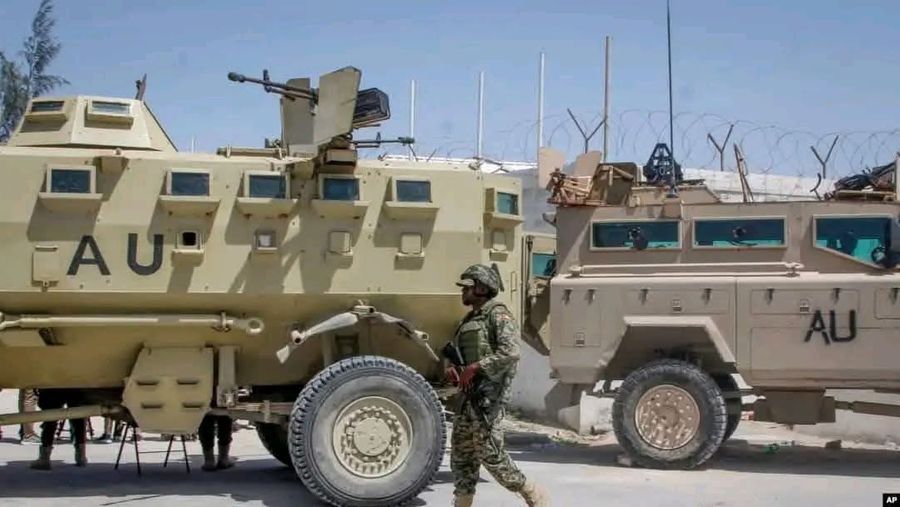
MOGADISHU, Somalia — November 16, 2026-As Somalia approaches another critical phase in its security transition, the history of territorial reversals following African Union troop withdrawals raises serious questions about the country’s ability to maintain long-term security without international military support.
Over nearly two decades, troops from Uganda, Kenya, Burundi and Ethiopia have participated in successive African Union operations in Somalia, including AMISOM, ATMIS and the current African Union Support and Stabilization Mission in Somalia (AUSSOM).
Throughout these missions, there have been repeated incidents in which foreign troops withdrew from towns and strategic rural settlements, only for Al-Shabaab militants to subsequently recapture those locations.
These are historical incidents spanning different years, rather than a list of towns recently captured or necessarily still controlled by Al-Shabaab. They illustrate a recurring security challenge that has persisted throughout Somalia’s internationally supported military operations.
Historical Territorial Reversals Across Seven Regions
A compilation of previous incidents identifies at least 26 towns and settlements where Al-Shabaab militants regained control following the withdrawal of foreign troops.
The locations include:
- Middle Shabelle: Biya Cadde, Miirtaqwo, Ceelbaraf, Xawaadleey, Ceelka Geela, Ilbaq, Fiidoow and Cali Fooldheere.
- Lower Shabelle: Leego and Iidow Jallaad.
- Bay: Goofguduud Shabeellow.
- Galguduud: Ceelbuur, Galcad and Wabxo.
- Hiiraan: Maxaas, Moqokori and Buq-Aqable.
- Bakool: Tayeegloow, Garaweyne and Rabdhuurre.
- Gedo: Gerrilleey, Ceelcadde, Faafaxdhuun, Buusaar, Tarako and Dhamase.
These historical incidents occurred at different stages of Somalia’s military campaigns and international security transitions. The circumstances varied by location, but the reported pattern was similar: foreign troops departed, security gaps emerged and Al-Shabaab subsequently moved back into the affected areas.
Why Has Al-Shabaab Repeatedly Returned?
The historical pattern highlights a fundamental weakness in Somalia’s counterinsurgency strategy: the difficulty of holding territory after international forces withdraw.
Although African Union troops have played a significant role in recovering towns from Al-Shabaab, maintaining those gains has frequently depended on the presence of foreign military personnel.
In areas where Somali forces were unable to establish a sufficiently strong replacement presence, Al-Shabaab reportedly exploited the resulting security vacuum to re-enter towns, restore influence and threaten surrounding communities.
This has raised questions about whether successive military operations have been accompanied by adequate long-term security arrangements, functioning local administrations and sustainable logistical support.
Lessons for the AUSSOM Transition
The experiences of previous African Union missions provide an important warning as Somalia prepares for further changes to the international military presence.
AUSSOM’s transition is intended to strengthen Somali ownership of national security responsibilities. However, historical territorial reversals demonstrate the potential consequences of withdrawing international troops before effective replacement forces and administrative structures are established.
The risks are particularly significant in rural areas where Al-Shabaab maintains operational networks and can exploit gaps between government-controlled towns.
Without effective coordination between the federal government, regional authorities and international security partners, future withdrawals could reproduce the same vulnerabilities witnessed during earlier missions.
Nearly Two Decades of Intervention: What Has Changed?
African Union troops have operated in Somalia since 2007, participating in major offensives, securing strategic population centres and supporting Somali security institutions.
Yet the historical recapture of numerous locations following troop withdrawals raises a difficult question about the durability of those achievements.
Military success cannot be measured solely by the number of towns recovered during offensives. It must also be assessed by whether those territories remain secure after international troops depart.
For Somalia, the long-term challenge is establishing national security institutions capable of maintaining territorial control independently.
Conclusion: A Historical Warning for Somalia’s Future
The reported recapture of at least 26 locations following previous foreign troop withdrawals is not evidence of a single recent military collapse. Instead, it represents a series of historical setbacks that illustrate a persistent vulnerability in Somalia’s security transition.
As the country moves toward greater responsibility for its own security, these past incidents offer a critical lesson: territory recovered through military operations can be lost again if withdrawal plans are not matched by effective security replacements.
The central question facing Somalia and its international partners is whether lessons from nearly two decades of military intervention will prevent the repetition of these historical setbacks during future withdrawals.
In total, at least 26 towns and settlements across seven regions of southern and central Somalia were reportedly recaptured by Al-Shabaab militants following the withdrawal of African Union and other foreign troops over different periods. These historical incidents highlight a recurring security challenge: the inability to sustain territorial control after international forces depart, raising concerns about the effectiveness of Somalia’s security transition and the risk of similar setbacks during future withdrawals.
Baidoa Online | Security & Strategic Analysis