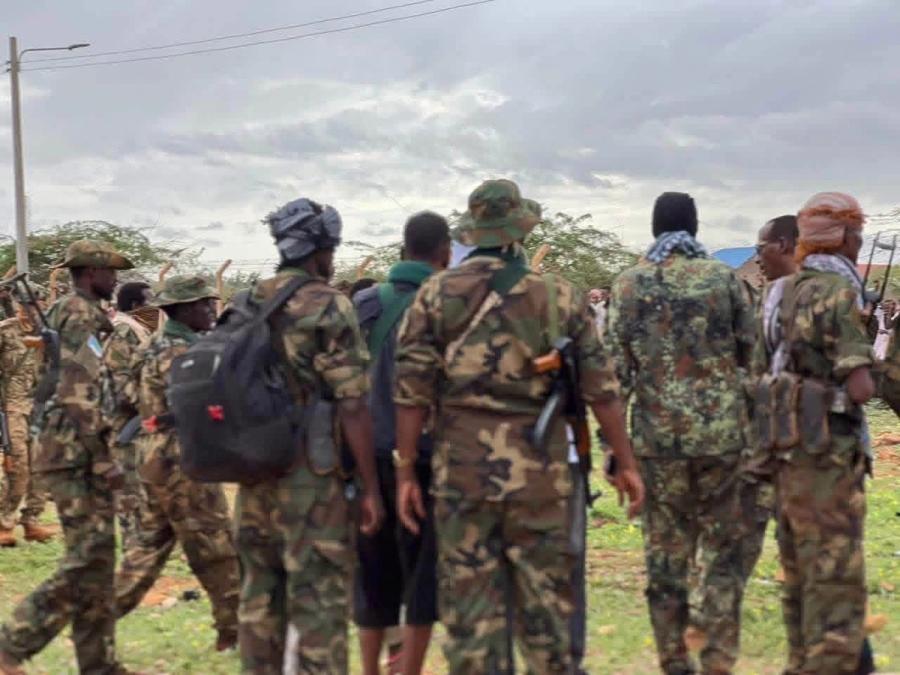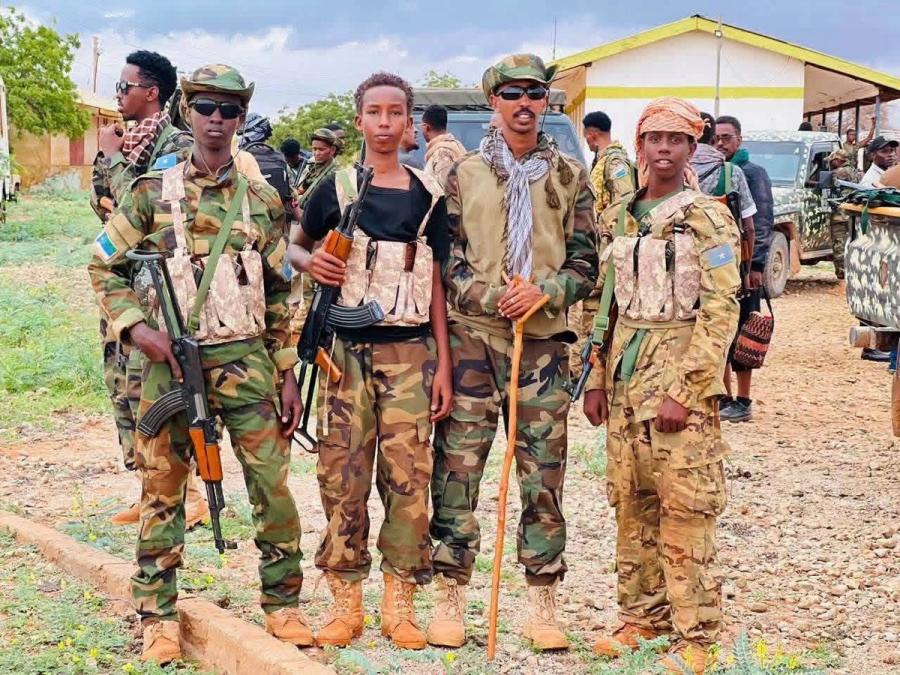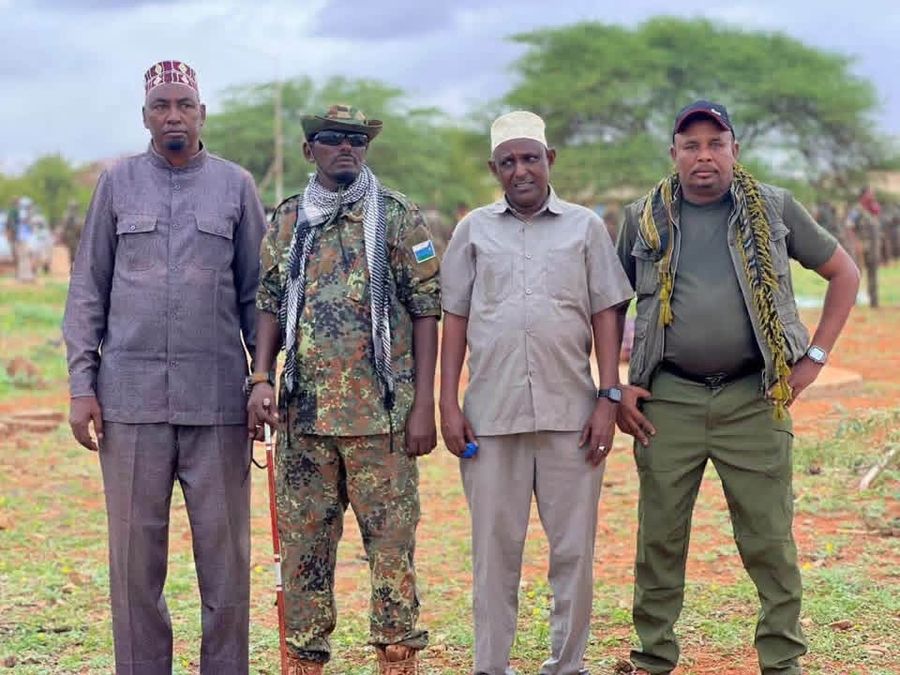
BELED HAWO, Somalia — Jubbaland has taken control of Beled Hawo following weeks of negotiations and the reported handover of forces previously commanded by Abdirashid Hassan Abdinoor, widely known as Janan, marking a significant setback for federal efforts to maintain influence in the strategic border town.
Baidoa Online reported that Janan transferred his forces in Beled Hawo to Jubbaland before departing for Nairobi. The development follows earlier reports of negotiations over the town’s administration, military facilities and the integration of troops previously aligned with Mogadishu.
According to the latest account supplied for this report, approximately 1,000 Jubbaland Darawish troops have assembled at the customs area under commanders Dalab, Dhagajun and Hassan Cibaad. The force reportedly arrived with 21 military pickup trucks, with another 11 vehicles expected later in the afternoon.
The account says mounted weapons were removed from the vehicles to signal that the deployment was intended to restore security and administration rather than launch an attack. It also says Janan travelled to Nairobi aboard a military aircraft. The troop numbers, vehicle totals and aircraft details have not been independently verified.
The reported transfer strengthens Jubbaland’s position in a district that has repeatedly been at the centre of its confrontation with the federal government. It also changes the immediate balance of power by bringing a previously rival security force under Jubbaland’s authority.
The available reporting points to a negotiated takeover built on an accommodation with Janan, troop integration and arrangements over salaries.
On August 10, Baidoa Online reported that senior Jubbaland officials and representatives from neighbouring countries had arrived near Beled Hawo for direct discussions with Janan. Those talks focused on an arrangement that could allow Jubbaland to restore its administration in the town and surrounding areas.
A day later, baidoa online reported that Janan had addressed officers at the UK camp in Beled Hawo, telling them that differences with Jubbaland had ended. The outlet said troops previously registered with the federal government were being registered for Jubbaland salaries and would join its Darawish and police forces.
Reporting published on September 16 subsequently described preparations to implement an agreement reached in Nairobi, including the transfer of weapons, troops and military facilities. A committee was reportedly being sent to oversee the handover. Together, these reports indicate a transition prepared over several weeks, rather than a sudden change brought about by a fresh battle.
Janan’s cooperation was central to that process. As a commander with established local connections and forces under his authority, his decision reduced the likelihood that Jubbaland would have to fight its way into positions held by his men.
For Jubbaland, incorporating those troops offers two advantages: it removes an organised source of resistance and provides personnel familiar with the district. Whether that produces lasting stability will depend on reliable salaries, clear command arrangements and acceptance by local communities.
Beled Hawo’s importance extends beyond its military positions. Located opposite the Kenyan town of Mandera, it is a significant border crossing where security decisions affect trade, civilian movement and relations with neighbouring communities.
Control of the customs area therefore has practical importance. An administration able to secure the crossing and manage its operations can strengthen its local presence while influencing a valuable commercial route. The latest deployment puts Jubbaland in a stronger position to exercise that authority.
For Mogadishu, the setback is both operational and political. Losing the support of Janan’s forces reduces its ability to influence security arrangements through a locally established commander. Their incorporation into Jubbaland’s structures would also make rebuilding a separate federal-aligned presence more difficult.
Politically, the transfer strengthens Ahmed Madobe’s bargaining position. His administration can point to an agreement that brings former opponents into its security institutions, demonstrating its ability to regain authority through local negotiations.
The scale of the reversal should nevertheless be defined precisely. The reported handover represents a substantial loss of federal leverage in Beled Hawo. It does not, by itself, establish that every federal institution or allied force has disappeared from Gedo, or that Jubbaland exercises uncontested authority throughout the region.
The development follows several earlier confrontations between the two administrations.
Their dispute escalated after Madobe’s contested re-election in November 2024. Jubbaland suspended relations and cooperation with the federal government later that month, deepening disagreements over elections and the division of authority between Mogadishu and the regional administration.
On December 11, 2024, federal and Jubbaland forces fought in Ras Kamboni, near the Kenyan border. Both sides blamed the other for initiating the confrontation. The following day, the federal government announced that it had withdrawn troops from Lower Juba, marking an earlier major reversal in the confrontation
Later that month, fighting spread to Doolow in Gedo. Hiiraan Online reported that Jubbaland and Ethiopian forces took control following clashes with Somali federal troops, further illustrating how the dispute had expanded across strategically important border locations.
Beled Hawo itself experienced renewed fighting in July 2025. European humanitarian reporting documented clashes between federal and Jubbaland security forces from July 23 to 26, underscoring the civilian risks of competing military deployments in the town.
Jubbaland now faces the task of turning the handover into functioning administration. Integrating former opponents requires more than changing uniforms or registering names: commanders must establish discipline, resolve overlapping responsibilities and prevent reprisals.
For the federal government, the outcome exposes the limits of a strategy dependent on local military allies whose loyalties can change through negotiation. Beled Hawo’s transfer gives Jubbaland a stronger position on the Kenyan border and leaves Mogadishu with fewer immediate options for challenging its authority there.