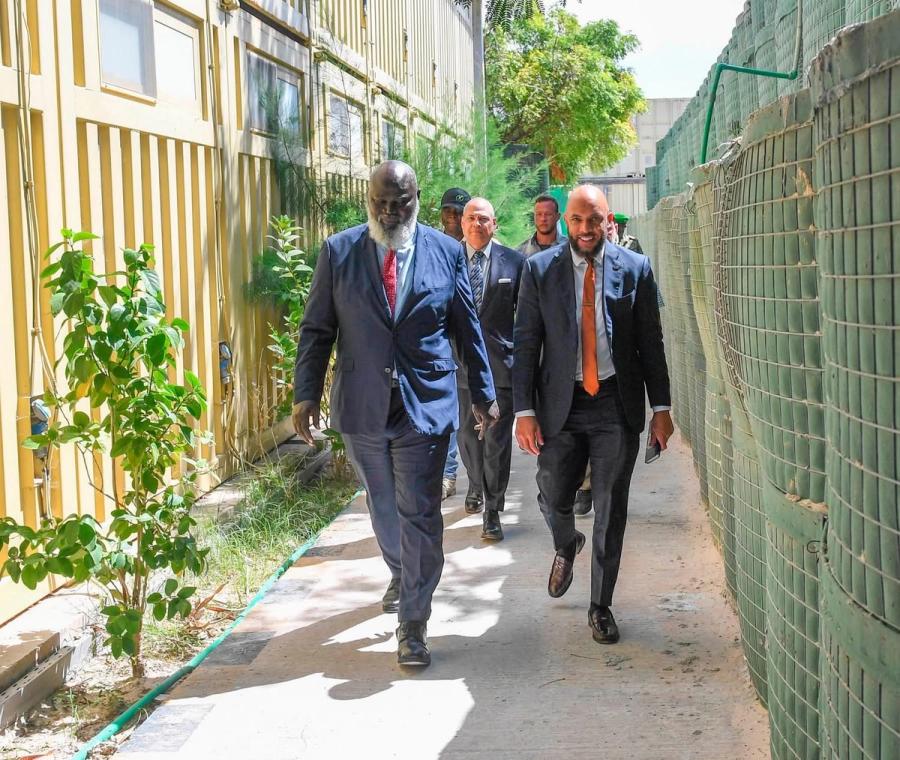
MOGADISHU, Somalia — July 24, 2026 — The head of the African Union Support and Stabilization Mission in Somalia (AUSSOM) and the United States Ambassador to Somalia have held discussions in Mogadishu on the ongoing security transition, management of current security challenges, and the future role of international support for Somalia’s stabilization efforts.
The meeting took place at the Halane security compound in Mogadishu, according to officials familiar with the discussions. The talks focused on the transition process, coordination between international partners, and the security environment facing Somalia as government forces continue operations against Al-Shabaab militants.
AUSSOM leadership and the U.S. diplomatic mission discussed ways to manage the transition period and address security priorities in Somalia, according to officials.
The meeting comes at a sensitive time for Somalia’s security sector, as questions remain over the future financing and logistical support arrangements for the African Union mission operating in the country.
AUSSOM replaced the African Union Transition Mission in Somalia (ATMIS) on January 1, 2025, with a mandate to support Somali security forces, assist stabilization efforts, and help the gradual transfer of security responsibilities to Somali institutions.
The United States has recently indicated that it would not support the continuation of certain United Nations-backed logistical support arrangements for AUSSOM beyond the current authorization period, raising concerns among security analysts and regional officials about potential funding challenges for the mission.
The possible reduction of external assistance has created uncertainty over how African Union forces will maintain operations, including logistics, equipment, and operational support needed for missions against Al-Shabaab.
Security Transition and International Support
Somalia has been working with international partners to strengthen the capacity of its national security forces and gradually assume greater responsibility for nationwide security.
AUSSOM currently supports Somali forces in areas affected by Al-Shabaab’s insurgency, particularly in southern and central Somalia. The mission includes troops from several African countries contributing personnel to support stabilization operations.
The transition from African Union-led security operations to Somali-led responsibility has been a central issue in international discussions. However, security officials and analysts have repeatedly warned that Somalia’s forces require continued training, equipment, and financial assistance to sustain military gains against Al-Shabaab.
The African Union has maintained a military presence in Somalia for more than a decade through previous missions, including AMISOM and ATMIS, supporting Somali authorities in the fight against Al-Shabaab.
ATMIS formally transitioned into AUSSOM in 2025 as part of efforts to create a new phase of security cooperation between Somalia and the African Union. The mission’s objective is to support Somali security institutions while gradually reducing dependence on international forces.
Despite years of military operations, Al-Shabaab remains capable of carrying out complex attacks against government forces, African Union troops, and civilians. The group continues to pose a major security challenge across several regions of Somalia.
Previous attacks against African Union forces, including assaults on military bases in Lower Shabelle and Middle Shabelle, have highlighted the risks faced by international troops supporting Somalia’s security efforts.
The future of international funding and logistical support is considered a major factor in Somalia’s ongoing security transition. Any reduction in assistance could affect operational capabilities if alternative arrangements are not secured.
For Somali authorities, maintaining momentum against Al-Shabaab depends heavily on strengthening national forces while ensuring international partners continue supporting security reforms and stabilization programs.
The discussions between AUSSOM leadership and the U.S. Ambassador reflect broader efforts to coordinate international approaches toward Somalia’s security future. The outcome of these discussions could influence how the transition process is managed in the coming years.