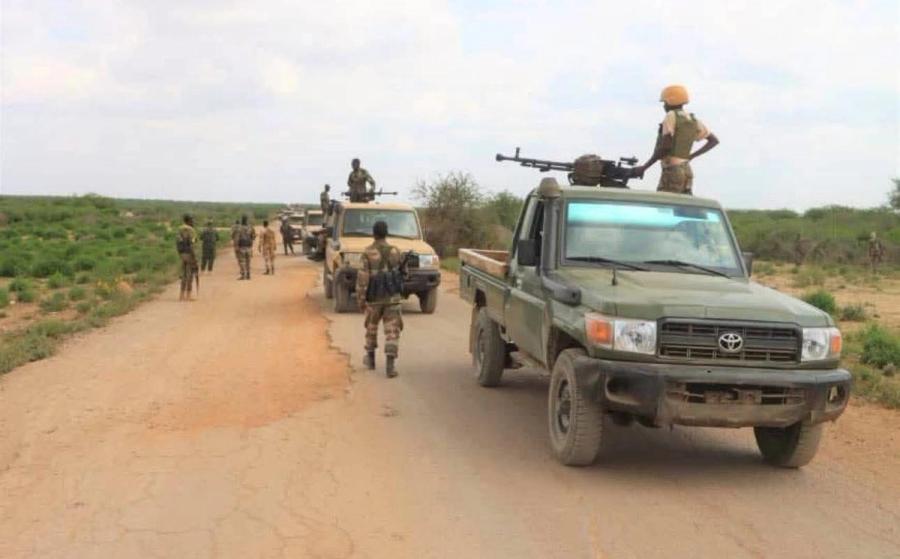
BAIDOA, Somalia — October 26, 2026-The main road connecting Baidoa and Mogadishu has reportedly been completely closed following growing security threats, including suspected landmines and ongoing armed clashes in several areas along the strategic route. The disruption has severely affected civilian transportation, leaving vulnerable communities facing increasing difficulties as fighting continues on the outskirts of Baidoa.
The closure comes as heavy fighting in the Baay-Burjaad area, located on the outskirts of Baidoa, reportedly entered its second consecutive day. Local residents have described hearing intense gunfire, raising concerns about the deteriorating security situation surrounding the city.
The latest developments have heightened fears over civilian safety and the continued disruption of transportation between Baidoa, the administrative capital of Somalia’s Southwest State, and Mogadishu, the country’s capital.
Major Transportation Route Disrupted
The Baidoa–Mogadishu road has long served as an essential transportation corridor for civilians travelling between the two cities. Before the reported closure, at least 55 vehicles used the route daily, carrying passengers in both directions.
The road has been particularly important for low-income travellers, including families, workers, and individuals who cannot afford the significantly higher cost of air transportation.
Its closure has therefore created serious challenges for people who depend on affordable public transport to reach their destinations.
For many residents, travelling by road is not simply a preferred option but an economic necessity. With access now severely restricted, those unable to purchase airline tickets face considerable uncertainty over when normal transportation services might resume.
The disruption also raises concerns about access to essential services and the movement of people who rely on connections between the two cities for personal, economic, and humanitarian reasons.
Landmine Threats and Armed Clashes
The reported closure follows concerns about numerous landmines allegedly planted along sections of the route, creating significant dangers for civilian vehicles and other road users.
The situation has been further complicated by armed clashes affecting areas along the transportation corridor, including Dhanla Leego and locations surrounding Baidoa.
These security developments have reportedly made civilian travel increasingly dangerous, contributing to the suspension of regular vehicle movements between the two cities.
The precise locations and number of suspected explosive devices have not been independently confirmed. Nevertheless, reports of landmine threats have intensified concerns among travellers and transport operators.
Explosive hazards on civilian transportation routes can have far-reaching consequences, particularly in communities where road networks remain essential for daily movement and economic activity.
The combination of reported landmine threats and continuing hostilities has created an increasingly uncertain environment for those who depend on the Baidoa–Mogadishu corridor.
Heavy Fighting Enters Second Day Near Baidoa
Meanwhile, heavy fighting has reportedly continued for a second consecutive day in Baay-Burjaad, an area on the outskirts of Baidoa.
Residents in nearby communities have reported hearing sustained and intense gunfire, suggesting that armed confrontations remain active in the area.
The clashes have added to growing concerns about the security situation around Baidoa, particularly as fighting in surrounding locations continues to affect civilian movement.
Further details about the parties involved in the latest confrontations, the scale of the fighting, and any potential casualties remain unclear.
There has also been no independently verified information establishing the full extent of damage or displacement resulting from the reported clashes.
The continuation of fighting near populated areas raises concerns about the potential risks facing civilians, particularly those living close to locations where armed confrontations are taking place.
As the situation develops, residents remain exposed to uncertainty over security conditions and the possibility of further disruptions to daily activities.
Low-Income Civilians Face the Greatest Hardship
Among those most affected by the road closure are economically disadvantaged residents who cannot afford alternative transportation.
For many families, travelling by air between Baidoa and Mogadishu is financially beyond their reach, leaving road transportation as their only practical option.
The reported suspension of vehicle movements has consequently placed additional pressure on vulnerable households, particularly those who need to travel for medical treatment, family emergencies, employment, or other essential purposes.
People with limited financial resources may now be forced to postpone important journeys or remain in their current locations until the security situation improves.
The closure could also create broader economic consequences if restrictions continue, particularly for communities and businesses that depend on regular movement between the two cities.
Although the full economic impact has not yet been assessed, prolonged disruption of such an important transportation corridor could place additional strain on already vulnerable populations.
Growing Concerns Over Civilian Movement
The simultaneous developments along the Baidoa–Mogadishu road and in Baay-Burjaad highlight the wider challenges facing civilian transportation in areas affected by armed conflict.
Safe and reliable road access remains essential for connecting communities, supporting commercial activity, and enabling people to reach vital services.
When major routes become inaccessible, the consequences often extend beyond transportation, affecting livelihoods, household finances, and access to basic necessities.
The reported security threats also underscore the importance of protecting civilian movement and preventing further harm to people who are not involved in hostilities.
At present, it remains unclear when the Baidoa–Mogadishu road might reopen or whether security conditions will permit regular passenger transportation to resume.
Situation Remains Uncertain
With heavy fighting reportedly continuing around Baay-Burjaad and security concerns affecting the main road to Mogadishu, the situation around Baidoa remains uncertain.
Residents and travellers face growing challenges as the reported closure restricts one of the most important connections between Southwest State and the Somali capital.