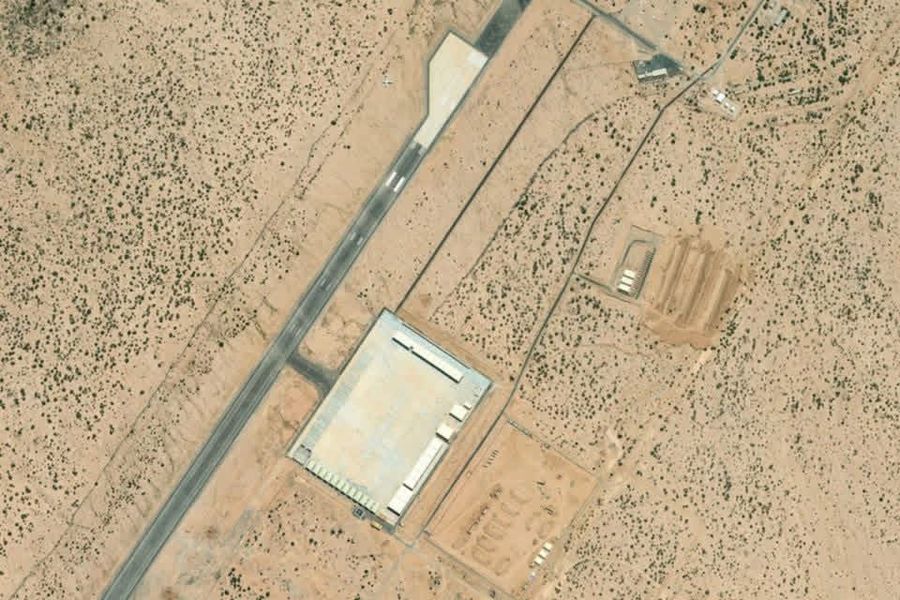
MOGADISHU, Somalia — July 19, 2026 — New satellite imagery analyzed by the BBC has revealed extensive construction and expansion activities around Berbera Airport and a nearby coastal facility in Somaliland, renewing attention over the strategic importance of the port city and claims that the facilities could have military applications.
The BBC’s investigative unit, BBC Verify, examined satellite images of Berbera Airport and surrounding areas, reporting that the images show years of construction work, land excavation, and infrastructure development around the airport and a nearby maritime facility.
The findings come amid recent claims circulating in regional media regarding possible foreign military involvement in Berbera. However, the BBC report did not confirm the establishment of foreign military bases, and authorities in Somaliland, Somalia, the United States, and Israel have not publicly announced any such arrangements.
According to BBC Verify’s analysis, satellite imagery indicates that a new port facility has been developed close to Berbera Airport, with construction activity beginning in 2018 and continuing through several phases until near completion in 2025.
The report stated that the facility appears to have characteristics associated with a deep-water port, which could allow access for large commercial vessels and potentially military ships.
Experts who reviewed the satellite images for the BBC said the design and location of the maritime facility suggest it has strategic value due to Berbera’s position along the Gulf of Aden, one of the world’s most important shipping routes.
The BBC also reported that Berbera Airport has undergone significant expansion in recent years, including the completion of a longer runway capable of supporting different types of aircraft.
Satellite images from May showed the runway had been completed, with experts saying the airport could potentially accommodate both civilian and military aircraft because of its size and infrastructure.
The report also identified newly constructed buildings near logistics areas at the airport. Some analysts told the BBC that these structures could potentially serve as aircraft storage or maintenance facilities, including areas suitable for unmanned aerial vehicles.
Wim Zwijnenburg, a specialist in satellite imagery and open-source intelligence who spoke to the BBC, said the infrastructure developments could allow the airport to support military operations.
“The airport could easily host offensive operations, potentially against the Houthis,” Zwijnenburg was quoted as saying by the BBC, adding that construction activities at the site had been ongoing for years.
Foreign Companies and Infrastructure Development
The BBC investigation reported that Terminal Holdings, a company based in the United Arab Emirates, was among the organizations involved in the development of Berbera Airport infrastructure.
According to the report, a senior official from the company previously confirmed through a LinkedIn post that development and preparation work had started as part of efforts to upgrade the airport.
The expansion of Berbera’s airport and port facilities has attracted international attention because of the city’s strategic location near the Red Sea and Gulf of Aden, where regional security tensions have increased in recent years.
Berbera has also been the focus of foreign investment, including infrastructure projects involving international companies seeking access to maritime trade routes and logistics networks in the Horn of Africa.
Background to Berbera’s Strategic Importance
Berbera, located on the Gulf of Aden coastline, has historically served as an important trading and maritime center. In recent years, the city has gained greater geopolitical importance due to its proximity to major shipping routes connecting Asia, Africa, and the Middle East.
The development of Berbera Port and Airport has been linked to broader efforts to expand trade, transport, and regional connectivity.
Previous reports have highlighted international interest in Somaliland’s coastline because of growing security concerns in the Red Sea region, particularly following attacks on commercial shipping linked to tensions in Yemen.
The French newspaper Le Monde previously published reports examining claims related to foreign interests in Berbera, including statements attributed to an al-Shabaab figure discussing alleged activities in the area.
However, those claims have not been independently verified, and no government has publicly confirmed the existence of foreign military facilities in Berbera.
Government Response and Current Situation
As of now, authorities in Somaliland have not publicly confirmed that foreign military bases have been established at Berbera Airport or the nearby port.
The Somali federal government has also not announced any official findings regarding the reported developments.
Officials from countries mentioned in public discussions about Berbera, including the United States and Israel, have not confirmed any military agreement involving the facilities.
The current status of the infrastructure remains focused on airport and port development, although analysts continue to examine the potential security implications of the facilities due to their location.
Further satellite analysis, official statements, and additional reporting are expected to provide more information about the future use of Berbera’s expanding infrastructure.
Regional governments and security experts are likely to continue monitoring developments in the city as competition increases over strategic locations along the Red Sea and Gulf of Aden.
Berbera’s expanding airport and port infrastructure could have significant implications for trade, security, and regional competition in the Horn of Africa. The city’s location gives it strategic importance for both commercial shipping and potential security operations.
Any future military use of the facilities, if confirmed, could affect regional security calculations, particularly as countries increase their focus on the Red Sea corridor.
For local communities, infrastructure expansion could bring economic opportunities through trade and employment. At the same time, increased foreign security involvement could raise political and diplomatic questions among regional actors.