How Somalia Institutionalized Its Own Decline
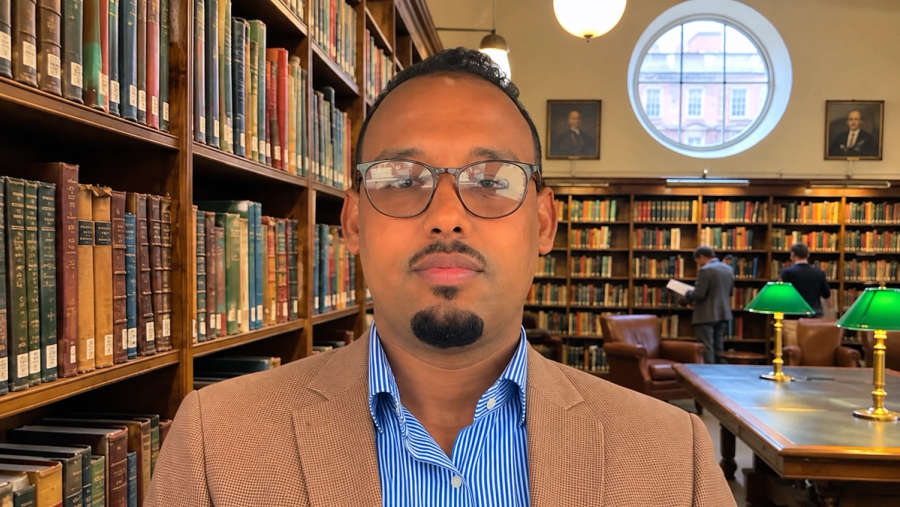
𝐁𝐲 𝐄𝐧𝐨𝐰 𝐎𝐬𝐦𝐚𝐧
8 Nofeembar 2026- There is something deeply disturbing about Somalia’s political experience. Not simply that the country has struggled to rebuild itself since 1991, but that it keeps reproducing the same failures, often through remarkably similar political decisions, despite knowing where those decisions lead.
More than three decades have passed. Governments have changed, constitutions have been drafted, federal administrations established and billions of dollars in international assistance mobilised. Yet the familiar problems remain: contested political authority, corruption, insecurity, fragmentation and the absence of a sustainable national political settlement.
At some point, we must stop pretending that this is simply the legacy of civil war.
Colonialism matters. Clan divisions matter. Foreign interference matters. But these explanations cannot fully answer a more uncomfortable question: why does Somalia repeatedly recreate the conditions that have prevented its recovery?
The problem is increasingly embedded in the political system itself. Institutions become instruments of political competition, public resources become opportunities for patronage, and national security becomes entangled in domestic political alliances.
Somalia is not merely struggling to build institutions. It is struggling with a political system that often rewards the behaviour responsible for weakening them.
The Constitution as an Instrument of Political Survival
A constitution should establish rules that constrain political power, including the power of those who control the government. In Somalia, however, constitutional interpretation has increasingly become part of the political struggle.
The March 2026 amendments extending presidential and parliamentary terms from four to five years exposed this problem. The federal government defended the changes, while opposition leaders and several Federal Member States challenged their legitimacy and the process through which they were adopted.
The consequences extended beyond Mogadishu. Puntland and Jubaland remained outside the federal government’s political framework, while tensions with South West State escalated into a military confrontation in Baidoa.
On 30 March, federal forces entered the city, and President Abdiaziz Laftagareen subsequently left the country. Whatever the competing political justifications, the episode raised serious questions about federal authority and the political independence of regional administrations.
Federalism was supposed to prevent excessive centralisation. Yet the relationship between Mogadishu and the Federal Member States continues to be defined by disagreements over who controls what.
The deeper problem is that Somalia has not established credible mechanisms for resolving constitutional disputes without threatening the political order itself. A constitution that changes with political interests cannot provide lasting institutional stability.
The Political Economy of Corruption
Somalia’s corruption problem is much deeper than individual officials stealing public money. It concerns an entire political economy in which access to public authority, resources and opportunities are frequently mediated through patronage and political loyalty.
Public appointments can maintain political alliances. Government contracts can create opportunities for private accumulation. Administrative authority can translate into economic advantage.
The World Bank’s October 2026 Public Finance Review identifies persistent fragmentation in fiscal responsibilities across federal, state and local administrations. This complicates revenue collection, expenditure management and accountability.
But an uncomfortable question remains: who benefits from keeping the system this way?
Weak oversight and discretionary control over public resources are not necessarily disadvantages for those operating within established political networks. Reform threatens arrangements that have made access to public resources politically valuable.
This explains why announcing anti-corruption programmes is considerably easier than building institutions capable of investigating politically connected individuals.
The greatest damage is not simply the money lost. It is the gradual conversion of public institutions into networks of political and economic dependence.
Fighting an Insurgency While Undermining National Security
Somalia claims fighting an insurgency while simultaneously experiencing serious divisions among the political authorities responsible for defeating it.
Al-Shabaab does not operate in a political vacuum. It exploits weak administration, local grievances, contested authority and gaps between military operations and civilian governance.
Yet political leaders continue to expend considerable energy on disputes over mandates, regional control and political alliances.
The confrontation in Baidoa illustrates the danger. Federal and regional forces that should operate within a coordinated national security framework became entangled in an internal political struggle. Such confrontations weaken institutional trust and create opportunities for armed actors to exploit political divisions.
The African Center for Strategic Studies warned in November 2025 about the security implications of deteriorating federal-state cooperation. Chatham House’s October 2026 analysis similarly examines how political confrontations have contributed to renewed armed clashes and weakened counterinsurgency efforts.
A national army cannot sustainably serve a national purpose if its deployment, legitimacy and command structures become entangled in competing domestic political interests.
Somalia cannot defeat an insurgency while continually weakening the political cooperation necessary to sustain the fight.
When Clan Representation Replaces National Citizenship
Somalia’s clan-based power-sharing arrangements emerged from the realities of post-civil-war reconciliation. They served a transitional purpose, helping address political exclusion and establish a framework for sharing authority.
But a transitional arrangement can become a permanent institutional problem when there is no credible process for moving beyond it.
The problem is not that Somalis maintain clan identities. It is how political representation has evolved.
Access to parliamentary seats, government positions and administrative authority increasingly involves negotiating competing clan interests. Political accountability can consequently shift away from citizens and towards the networks responsible for securing political positions.
A parliament should represent citizens. A government should administer public affairs according to national priorities. Yet the political system frequently encourages competition over the distribution of positions and resources among organised constituencies.
The uncomfortable question is whether Somalia’s existing arrangements are transforming clan representation from a mechanism of inclusion into a permanent organising principle of government.
National citizenship cannot develop meaningful institutional strength while political accountability remains dominated by narrower systems of representation.
Foreign Policy Without a Coherent National Strategy
Somalia occupies an extraordinarily important geographical position. Its coastline, proximity to the Bab el-Mandeb Strait and access to the Indian Ocean place it at the intersection of major international economic and security interests.
Türkiye, the UAE, Ethiopia, Egypt, Qatar and other countries have legitimate strategic interests in Somalia. International partnerships are necessary. The problem is not foreign involvement itself, but the country’s difficulty in managing these relationships through a coherent national framework.
When federal and regional authorities pursue competing external relationships, domestic political divisions can become connected to wider regional rivalries.
Chatham House’s October 2026 analysis describes how external rivalries increasingly interact with Somalia’s internal political crisis.
The strategic danger is straightforward: diplomatic, economic and security partnerships can become instruments of domestic political competition.
Somalia’s geographical importance should strengthen its national position. Instead, political fragmentation risks making the country increasingly vulnerable to competing external interests.
A country that cannot establish sufficient agreement on its own national interests will struggle to protect them internationally.
Three Decades of Political Transitions, But Little Institutional Learning
Perhaps the most frustrating aspect of Somalia’s experience is how frequently the same political problems return.
The 2021 crisis involved disagreements over electoral arrangements and presidential mandates. The 2026 crisis has again involved constitutional amendments, electoral legitimacy and competing interpretations of political authority.
The actors have changed, but the institutional weaknesses remain familiar: contested federal relations, patronage, politicised security institutions and inadequate public accountability.
Somalia has accumulated enormous experience in transitional governance, constitutional negotiations and international mediation. Yet successive administrations have struggled to turn that experience into durable political rules.
This is a failure of institutional learning.
Political actors frequently pursue immediate advantages without considering the long-term consequences. An administration may gain political control while weakening federal cooperation. A military intervention may resolve an immediate confrontation while creating deeper problems of legitimacy and security.
The country repeatedly pays for decisions whose consequences should have been foreseeable.
That is the cost of political short-termism.
The Problem Is Bigger Than Any One Administration
Even though everyone knows that the-problem is structural than thinking of changing political personalities which will eventually accomplish little if public institutions remain vulnerable to patronage, constitutional arrangements remain contested and political competition continues to undermine national security.
Somalia needs more than another political agreement. It needs an enforceable settlement over constitutional authority and fiscal responsibilities, credible oversight of public resources, professional security institutions and political representation increasingly accountable to citizens.
Most importantly, political leaders must recognise that winning political confrontations is not the same as building a country.
The Triumph of Dysfunction
Somalia’s greatest problem is not that it lacks intelligent people, resources or opportunities. It is that its political arrangements frequently fail to reward the behaviour necessary for national development.
Constitutional manipulation weakens legitimacy. Patronage undermines administration. Clan-centred competition complicates national representation. Political confrontations weaken security. External rivalries exploit domestic divisions. Successive administrations inherit problems they repeatedly fail to resolve.
These developments are connected.
Perhaps the most troubling possibility is that dysfunction is no longer merely an unintended consequence of weak institutions. It is becoming a condition that certain political interests have learned to accommodate, exploit and reproduce.
That is what makes the situation particularly difficult to change. For some, institutional uncertainty creates opportunities; meaningful reform threatens established networks of influence and access.
Somalia does not need another generation of political actors who understand how to acquire authority but cannot establish the institutional conditions necessary to exercise it responsibly.
It needs a political system that rewards public service over patronage, constitutional responsibility over political expediency and national interests over the preservation of individual power.
A country does not institutionalise its decline simply because its leaders make mistakes. It does so when its political system repeatedly rewards those mistakes, protects their beneficiaries and transfers their consequences to the next generation.
Somalia’s tragedy is not simply that it has struggled to build a functioning state. It is that, after more than three decades, its political system still gives so many actors reasons to prevent one from emerging.
𝐁𝐲 𝐄𝐧𝐨𝐰 𝐎𝐬𝐦𝐚𝐧
𝐖𝐫𝐢𝐭𝐞𝐫 𝐚𝐧𝐝 𝐚𝐧𝐚𝐥𝐲𝐬𝐭, 𝐞𝐱𝐩𝐥𝐨𝐫𝐢𝐧𝐠 𝐬𝐨𝐜𝐢𝐚𝐥 𝐣𝐮𝐬𝐭𝐢𝐜𝐞, 𝐩𝐡𝐢𝐥𝐨𝐬𝐨𝐩𝐡𝐲, 𝐚𝐧𝐝 𝐭𝐡𝐞 𝐫𝐮𝐥𝐞 𝐨𝐟 𝐥𝐚𝐰 𝐰𝐢𝐭𝐡 𝐜𝐥𝐚𝐫𝐢𝐭𝐲, 𝐝𝐞𝐩𝐭𝐡, 𝐚𝐧𝐝 𝐦𝐨𝐫𝐚𝐥 𝐩𝐮𝐫𝐩𝐨𝐬𝐞.
𝐁𝐚𝐢𝐝𝐨𝐚 𝐎𝐧𝐥𝐢𝐧𝐞 𝐄𝐝𝐢𝐭𝐨𝐫𝐢𝐚𝐥 𝐍𝐨𝐭𝐞
𝐄𝐧𝐨𝐰 𝐎𝐬𝐦𝐚𝐧 𝐬𝐮𝐛𝐦𝐢𝐭𝐭𝐞𝐝 𝐭𝐡𝐢𝐬 𝐠𝐮𝐞𝐬𝐭 𝐨𝐩𝐢𝐧𝐢𝐨𝐧 𝐚𝐫𝐭𝐢𝐜𝐥𝐞 𝐭𝐨 𝐁𝐚𝐢𝐝𝐨𝐚 𝐎𝐧𝐥𝐢𝐧𝐞. 𝐓𝐡𝐞 𝐯𝐢𝐞𝐰𝐬 𝐞𝐱𝐩𝐫𝐞𝐬𝐬𝐞𝐝 𝐚𝐫𝐞 𝐭𝐡𝐞 𝐚𝐮𝐭𝐡𝐨𝐫’𝐬 𝐨𝐰𝐧 𝐚𝐧𝐝 𝐝𝐨 𝐧𝐨𝐭 𝐧𝐞𝐜𝐞𝐬𝐬𝐚𝐫𝐢𝐥𝐲 𝐫𝐞𝐟𝐥𝐞𝐜𝐭 𝐭𝐡𝐞 𝐞𝐝𝐢𝐭𝐨𝐫𝐢𝐚𝐥 𝐩𝐨𝐬𝐢𝐭𝐢𝐨𝐧 𝐨𝐟 𝐁𝐚𝐢𝐝𝐨𝐚 𝐎𝐧𝐥𝐢𝐧𝐞.