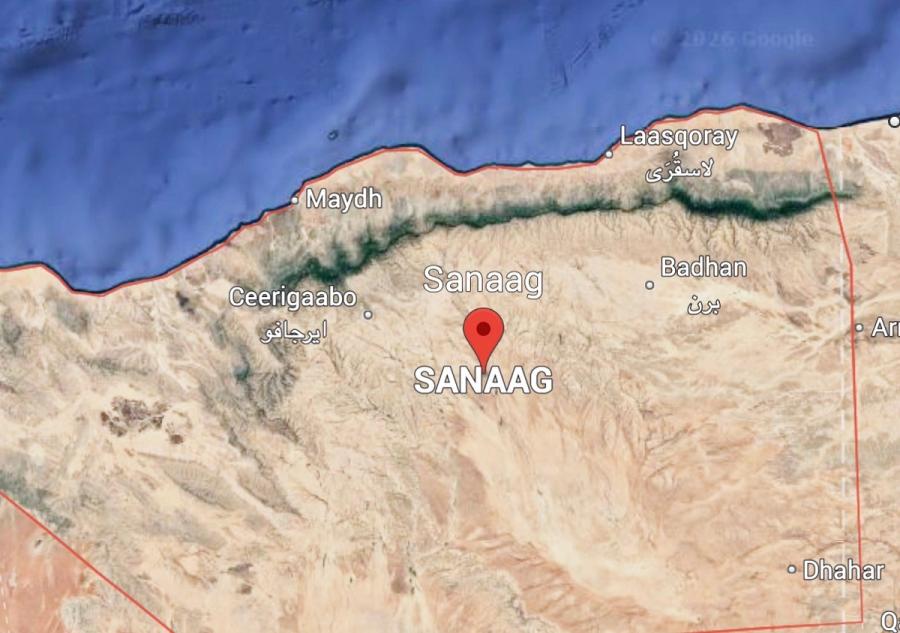
MOGADISHU, Somalia — July 25, 2026 — Heavy fighting between two clans in Somalia’s northern Sanaag region subsided on Saturday afternoon after erupting before dawn in the area between Dhabar-galool and Dawaco, according to local residents. Preliminary reports indicate that more than a dozen people may have been killed, although the casualty toll remains unverified because of restricted access to the area and the absence of official confirmation.
The fighting began early Saturday and continued for several hours before ending later in the afternoon, according to residents and community sources familiar with the situation.
The clashes occurred between two clans that share territory in parts of Sanaag, a region that has experienced periodic inter-clan disputes over the years.
Witnesses said the confrontation involved heavy gunfire, forcing residents in nearby areas to remain indoors while others reportedly fled to safer locations. The full extent of displacement, if any, has not yet been established.
According to local residents, communication with communities in the affected area has been difficult, making it challenging to obtain reliable information about the situation on the ground.
No regional administration or federal government authority had issued an official statement on the fighting by the time this article was published.
Casualties and Humanitarian Impact
Preliminary reports from local sources suggest that more than a dozen people may have been killed during the clashes, with an unknown number of others reportedly wounded.
The reported casualty figures could not be independently verified. Limited access to the remote area and the lack of official confirmation have made it difficult to determine the precise number of deaths and injuries.
Community members said families in affected villages remain concerned about the security situation, while local elders have reportedly begun consultations aimed at preventing further violence.
There were no immediate reports confirming damage to public infrastructure, although the humanitarian impact remains unclear as information continues to emerge from the area.
No official response had been released by Somalia’s Federal Government, regional authorities, or security agencies regarding the latest fighting at the time of publication.
Local community leaders and traditional elders are expected to intensify mediation efforts in an attempt to prevent renewed clashes and encourage dialogue between the rival communities.
In previous incidents across northern Somalia, traditional elders have often played a central role in negotiating ceasefires and facilitating reconciliation after outbreaks of inter-clan violence.
Sanaag has experienced repeated episodes of inter-clan conflict over the past several years, with disputes frequently linked to grazing land, water resources, territorial boundaries, and local influence.
Several previous clashes in the region have resulted in deaths, injuries, and the displacement of civilians. Although ceasefire agreements have periodically been reached through mediation by elders and local authorities, tensions have occasionally resurfaced when underlying disputes remained unresolved.
The rugged terrain and limited road infrastructure across parts of Sanaag often complicate efforts by authorities and humanitarian organizations to quickly assess security incidents or provide assistance to affected communities.
Security analysts have long warned that recurring localized conflicts can increase humanitarian needs and undermine broader efforts to promote stability in northern Somalia.
Community elders are expected to continue discussions aimed at securing a lasting ceasefire between the two sides.
Authorities may also seek to verify casualty figures and assess conditions in the affected communities once access improves.
Residents say they hope mediation efforts will prevent retaliatory attacks, which have followed previous inter-clan confrontations in parts of Sanaag.
Officials have not yet announced whether security forces or independent investigators will be deployed to the area.
The latest fighting highlights the persistent challenge posed by localized inter-clan conflicts in Somalia, particularly in remote regions where access is limited and government institutions have a reduced presence. Such violence can quickly disrupt daily life, restrict movement, and expose civilians to increased risks.
Recurring clashes also place additional pressure on traditional mediation mechanisms that have historically helped de-escalate conflicts. Without durable agreements addressing the underlying disputes, temporary ceasefires may not prevent future violence.
The incident is also significant because insecurity in Sanaag can affect local trade, livestock movements, and humanitarian access. Continued instability may delay development efforts and increase the vulnerability of communities that depend heavily on pastoral livelihoods.