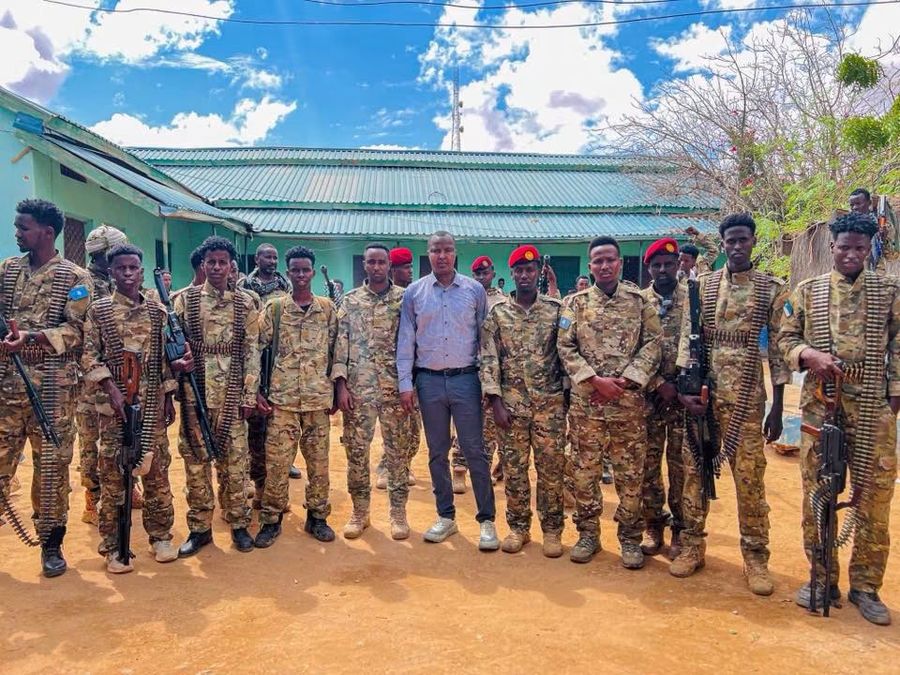
MOGADISHU, Somalia — October 7, 2026 — The chairman of Doolow district in Somalia’s Gedo region has said local authorities will not accept political activities directed against neighboring Ethiopia being brought into their territory, as political and security developments intensify across Gedo and the wider Horn of Africa.
The district official said Doolow would not support what he described as an anti-Ethiopia political agenda being introduced into the area, highlighting the border community’s longstanding security, commercial and social links with Ethiopia.
His comments come at a sensitive moment for Gedo, where competing political and security interests have repeatedly placed the region at the center of disputes involving Somalia’s federal government, the Jubaland administration and neighboring Ethiopia.
Doolow sits directly along Somalia’s border with Ethiopia and is one of the most strategically important towns in northern Gedo. The district serves as a major cross-border route for people, trade and humanitarian operations and has for years hosted Somali and Ethiopian security forces operating against Al-Shabaab.
The remarks also follow fresh movements by forces in Gedo. On October 5, officials in Beled Hawo said forces had moved from the direction of Luuq and Doolow toward Beled Hawo, another strategic town near Somalia’s borders with Kenya and Ethiopia. The developments have increased political attention on the deployment and movement of forces across the region.
The situation in Gedo is unfolding against a broader shift in regional relations involving Somalia and Ethiopia.
On October 4, the leaders of Somalia, Egypt, Eritrea and Sudan met in New Alamein City, Egypt, for a quadrilateral consultative summit focusing on developments in the Horn of Africa, the Red Sea and wider regional security.
Somali President Hassan Sheikh Mohamud joined Egyptian President Abdel Fattah el-Sisi, Eritrean President Isaias Afwerki and Sudan’s Transitional Sovereignty Council chairman Abdel Fattah al-Burhan at the meeting.
According to the declaration issued following the summit, the four leaders agreed to strengthen political, trade and economic cooperation and increase consultation and coordination on regional developments.
The declaration emphasized respect for the sovereignty, independence and territorial integrity of states, support for national institutions, non-interference in internal affairs and peaceful approaches to regional disputes.
The four-country meeting expanded a diplomatic framework that Somalia, Egypt and Eritrea had already developed over the previous two years.
In October 2024, Hassan Sheikh, Sisi and Afwerki held a tripartite summit in Asmara, where the three governments agreed to deepen cooperation and coordination and strengthen Somalia’s state institutions and security forces.
The Asmara agreement included cooperation aimed at improving the Somali National Army’s ability to combat terrorism and protect Somalia’s land and maritime borders.
That summit took place during a major diplomatic dispute between Somalia and Ethiopia following Addis Ababa’s January 2024 memorandum of understanding with Somaliland concerning access to the Red Sea.
Mogadishu rejected that arrangement and intensified diplomatic engagement with Egypt and Eritrea. Somalia and Ethiopia later entered Turkish-mediated talks that produced the Ankara Declaration in December 2024, establishing a framework for resolving their differences through negotiations.
Despite those diplomatic efforts, Gedo has remained one of the most sensitive areas in relations between the two neighbors.
Previous Doolow confrontation
Doolow has previously been the scene of direct security tensions involving Somali and Ethiopian forces.
During an earlier confrontation in the district, Somalia’s federal government said Ethiopian forces attacked positions occupied by the Somali National Army, the National Intelligence and Security Agency and Somali police.
The federal government said the confrontation resulted in casualties among security personnel and civilians and condemned the incident as a violation of Somalia’s sovereignty.
The episode demonstrated the sensitivity of security arrangements in Doolow, where Ethiopian forces have maintained a presence as part of broader efforts to prevent Al-Shabaab from expanding along the border.
Gedo’s security environment is particularly important because the region borders both Ethiopia and Kenya while also connecting several key towns, including Doolow, Luuq, Garbahaarey, Beled Hawo, Baardheere and Ceel Waaq.
Security control across those areas has changed repeatedly as federal forces, Jubaland units, local forces and international troops have maintained different positions.
Ethiopian troops have also played a longstanding role in security operations in parts of Gedo, particularly in areas close to the Ethiopian frontier.
The latest political developments have therefore placed additional attention on whether wider regional tensions could affect existing security relationships inside Gedo.
Growing regional tensions
The Doolow chairman’s comments come as relations between Ethiopia and some neighboring countries have deteriorated sharply.
Ethiopia and Eritrea have entered a new period of diplomatic confrontation, while Addis Ababa and Cairo continue to face longstanding disagreements over the Grand Ethiopian Renaissance Dam and Nile waters.
Ethiopia has also continued to emphasize its desire for reliable access to the Red Sea, an issue that has generated concern among neighboring coastal states.
At the same time, Somalia, Egypt, Eritrea and Sudan have increased diplomatic consultation on regional affairs following the October 4 summit.
The four governments said their talks covered developments in the Horn of Africa and Red Sea region and stressed continued coordination on shared regional challenges.
For Somalia, the regional developments coincide with renewed political competition over Gedo, an area that has for years been disputed between the federal government and Jubaland.
Gedo returns to focus
Recent movements of forces around Doolow, Luuq and Beled Hawo have once again made Gedo a major focus of Somalia’s internal political and security situation.
Doolow’s geographical position gives developments in the district importance beyond local politics. The town lies immediately adjacent to Ethiopia and has extensive cross-border connections with communities on the Ethiopian side.
The border is also an important movement corridor. International migration monitoring data has consistently identified Doolow as one of Somalia’s busiest border movement points, reflecting the scale of movement between Somalia and neighboring countries.
That makes stability in the district important for residents, traders, humanitarian agencies and communities living on both sides of the frontier.
The chairman’s statement indicates that Doolow authorities want to maintain their existing relationship with Ethiopia despite changes in Somalia’s wider regional partnerships.
His comments also underline the differing political calculations emerging inside Somalia as the federal government strengthens diplomatic and security cooperation with other governments in the Horn of Africa and Red Sea region.
Why This Matters
Doolow is one of the locations where Somalia’s domestic political competition intersects directly with regional security. Developments in the district can affect relations between Mogadishu and Jubaland while also carrying implications for Somalia’s relationship with Ethiopia.
The October 4 summit involving Somalia, Egypt, Eritrea and Sudan has added another dimension to an already rapidly changing regional environment. Although the four governments publicly framed their cooperation around sovereignty, stability, economic cooperation and peaceful settlement of disputes, the meeting took place during heightened diplomatic tensions involving Ethiopia and several neighboring states.
For Doolow, those regional changes are unfolding alongside security movements inside Gedo itself. The presence of different security forces, the district’s proximity to Ethiopia and its importance as a cross-border route make the area particularly sensitive to changes in relations between Mogadishu and Addis Ababa.
The district chairman’s rejection of what he described as politics directed against Ethiopia therefore places Doolow’s local position into the wider debate over Somalia’s evolving regional relationships.
As political and security developments continue across Gedo, Doolow remains a key frontier district where Somalia’s internal disputes and the Horn of Africa’s changing alliances increasingly intersect.