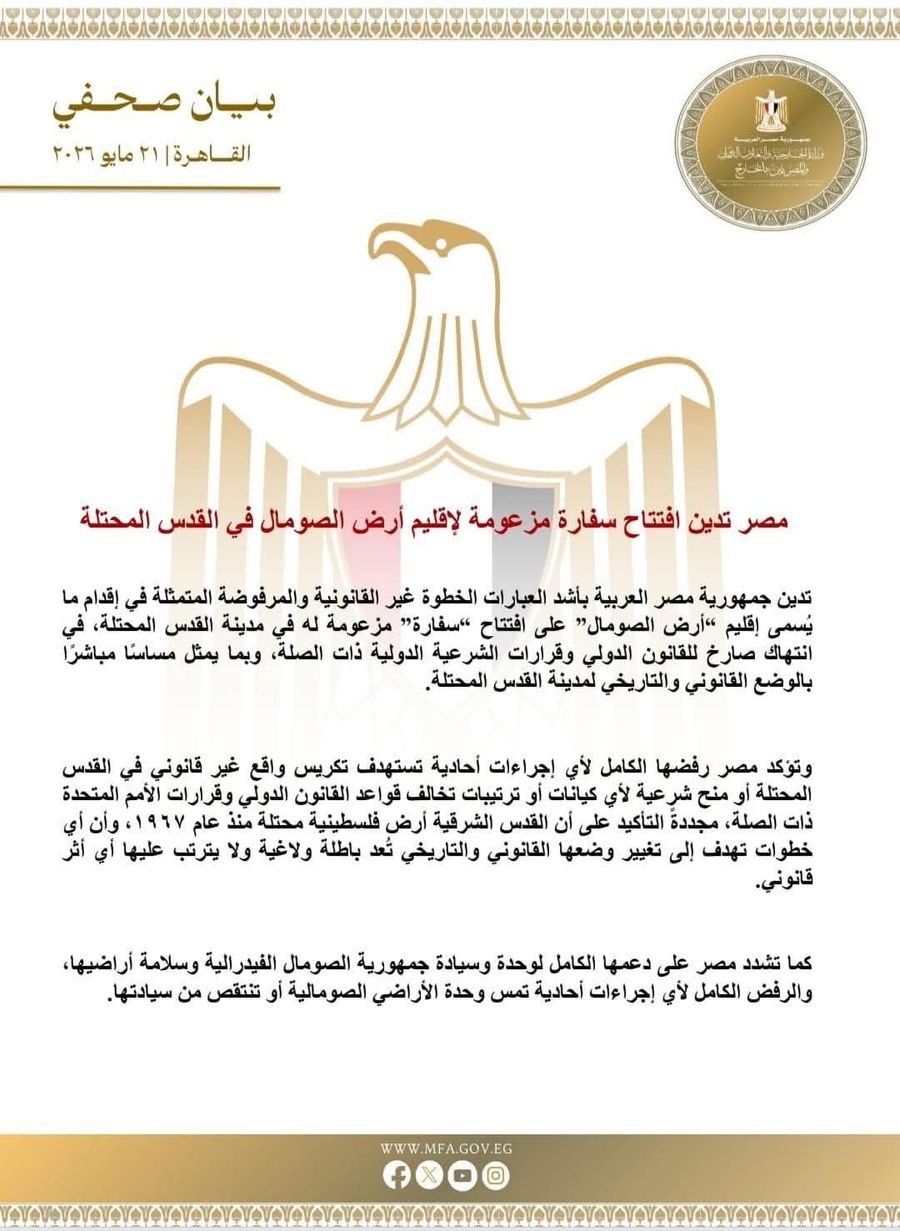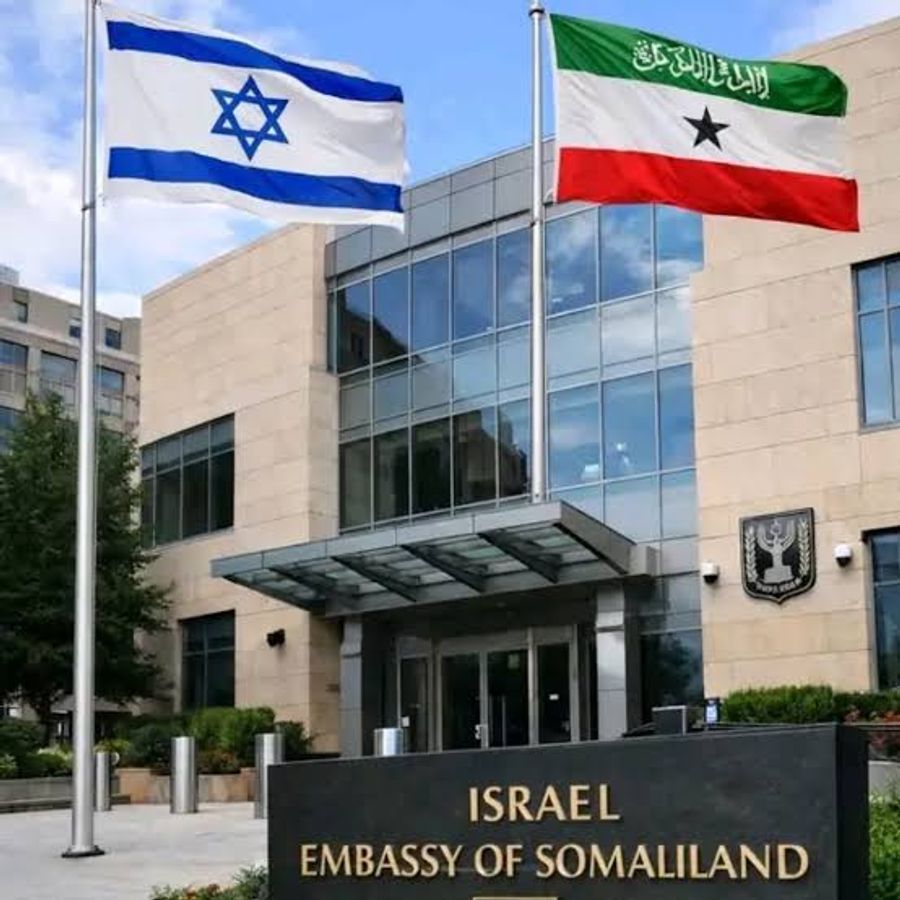
Thursday, May 21, 2026-Egypt has strongly condemned reports that Somaliland intends to open a diplomatic mission in Jerusalem, describing the move as illegal and a violation of international law. The Egyptian government also reaffirmed its support for Somalia’s sovereignty, unity, and territorial integrity, according to an official statement from Cairo.
In a statement issued on May 21, 2026, Egypt’s Ministry of Foreign Affairs said it rejects any unilateral actions aimed at changing the legal or historical status of Jerusalem.
The statement described reported plans for a Somaliland diplomatic mission in Jerusalem as “illegal and provocative,” stressing that such actions have no legal basis under international law.
According to the Egyptian Foreign Ministry, East Jerusalem remains occupied Palestinian territory under international law since 1967, and any attempts to alter its status are considered invalid.
Egypt warned that granting legitimacy to diplomatic representation in Jerusalem undermines international consensus on the city’s status and could threaten efforts to achieve a lasting peace settlement in the Middle East.
Strong Opposition to Unilateral Diplomatic Moves
Cairo emphasized that any diplomatic activity that changes the status of Jerusalem without broad international agreement is “null and void” and carries no legal effect.
According to Egyptian officials, maintaining the internationally recognized status of Jerusalem is essential to preserving stability and avoiding escalation in an already sensitive regional conflict.
The statement also highlighted concerns that unilateral diplomatic steps could deepen divisions and complicate ongoing diplomatic efforts related to the Israeli Palestinian conflict.
Support for Somalia’s Sovereignty
In the same statement, Egypt reaffirmed its full support for the unity, sovereignty, and territorial integrity of the Federal Republic of Somalia.
According to the Egyptian Foreign Ministry, Cairo rejects any unilateral measures that could undermine Somalia’s territorial unity or political sovereignty.
Egypt has historically maintained strong diplomatic relations with Somalia and has consistently supported Mogadishu’s position regarding national unity and state sovereignty.
Regional Diplomatic Sensitivities
The reported issue has drawn regional attention amid ongoing debates about Somaliland’s international status and its efforts to expand diplomatic engagement with foreign governments.
Somaliland declared independence from Somalia in 1991 but has not received recognition from the United Nations or most countries.
Over the years, Somaliland has pursued informal and semi formal relations with various states and international actors, while the Federal Government of Somalia continues to reject any claims of independence.
Jerusalem remains one of the most sensitive and disputed cities in international diplomacy.
Its status is at the center of the Israeli Palestinian conflict, with East Jerusalem widely regarded by much of the international community as occupied territory.
Most countries have historically avoided establishing embassies in Jerusalem, although some have recently changed their diplomatic positions.
Within the Horn of Africa context, Somalia has consistently aligned itself with broader Arab and Islamic positions on the Palestinian issue.
Neither Somaliland nor Israeli authorities had issued an official response to Egypt’s statement at the time of publication.
Diplomatic observers expect further reactions from regional and international stakeholders if the reported plans progress.
The issue is likely to remain part of broader discussions on Somaliland’s international engagement and recognition efforts.
Egypt’s statement adds significant regional weight to an already sensitive diplomatic issue involving Somaliland and Somalia’s contested political status.
The reaction reflects how developments related to Somaliland’s foreign relations are closely monitored across the Middle East and Africa.
It also highlights the continued sensitivity surrounding Jerusalem’s status in international diplomacy and its broader geopolitical implications.
The situation underscores how Somaliland’s efforts to expand its diplomatic footprint can trigger responses that connect Horn of Africa politics with wider regional conflicts.