ADDIS ABABA, Oct. 5, 2026 — Ethiopia has defended its interests in the Nile and Red Sea, saying political rhetoric, coercion and attempts at destabilisation cannot alter geographic and historical realities, following a summit involving Egypt, Eritrea, Somalia and Sudan.
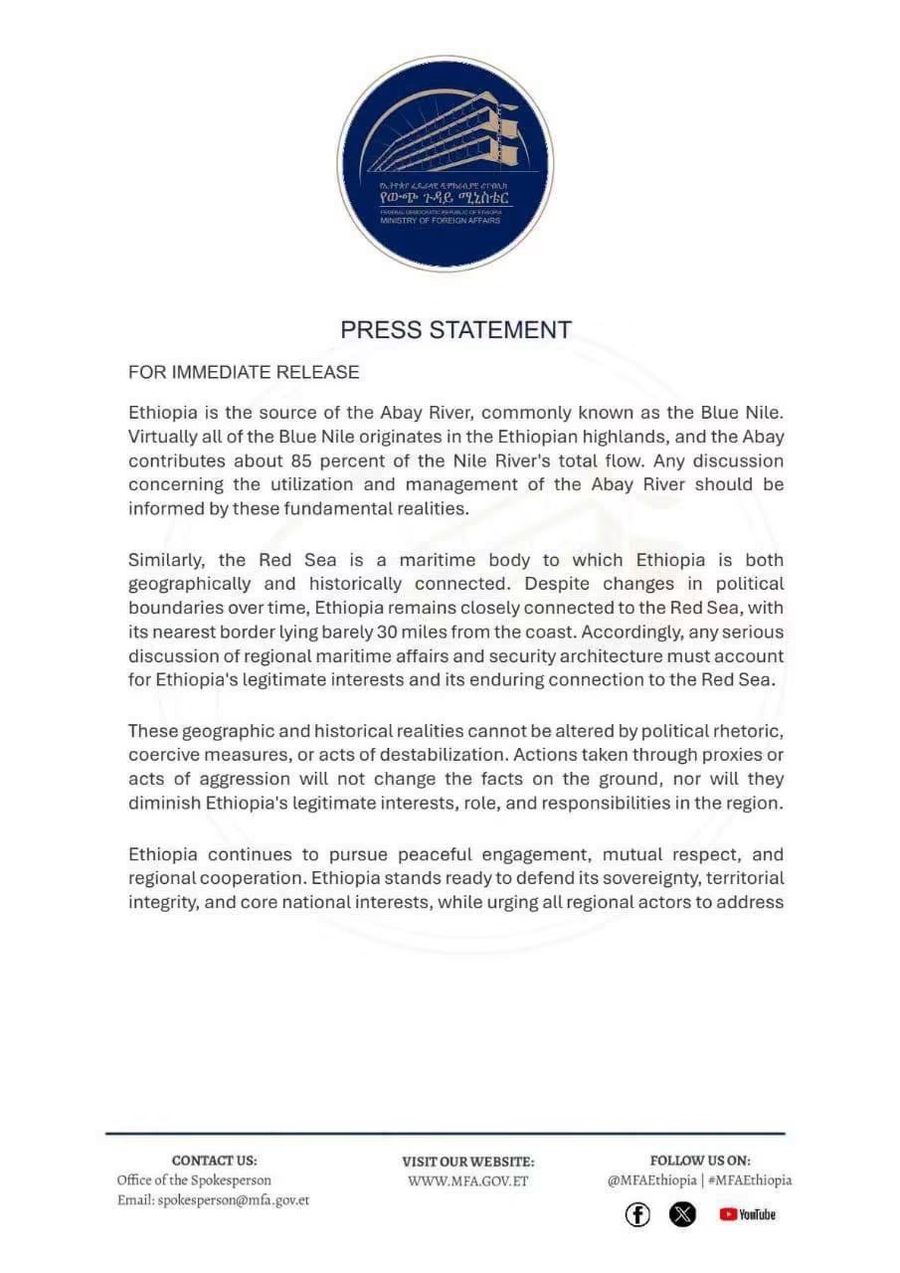
In a statement dated Monday, Ethiopia’s Ministry of Foreign Affairs stressed the country’s role as the source of the Abay River, commonly known as the Blue Nile, and argued that regional maritime and security discussions must recognise Ethiopia’s longstanding connections to the Red Sea.
The statement did not explicitly name the four countries or their summit. However, it followed their leaders’ meeting in Egypt’s New Alamein on Sunday, where they endorsed coastal states’ responsibility for Red Sea security and rejected unilateral measures that could harm downstream Nile water use.
“These geographic and historical realities cannot be altered by political rhetoric, coercive measures, or acts of destabilization,” the Ethiopian ministry said.
The ministry also warned that aggression or actions carried out through proxies would neither change conditions on the ground nor diminish what Ethiopia considers its legitimate regional interests and responsibilities. It did not identify any particular proxy group or provide details of specific incidents.
Ethiopia Defends Its Nile Interests
The ministry said virtually all the Blue Nile’s water originates in the Ethiopian highlands and argued that discussions about the river’s use and management must take that geographic reality into account.
It also stated that the Abay contributes about 85 percent of the Nile’s total flow. That figure was presented as the ministry’s claim.
The statement comes against the backdrop of the longstanding dispute over the Grand Ethiopian Renaissance Dam. Egypt maintains that the project threatens its water security, while Ethiopia considers it central to its development and electricity generation.
At Sunday’s summit, the four leaders called for cooperation over transboundary rivers through notification, consultation and agreement, while emphasising the need to avoid harm to other states. Their joint statement opposed unilateral action affecting the existing water use of Egypt and Sudan, the two downstream Nile countries.
Red Sea Access Remains a Point of Dispute
On maritime affairs, Ethiopia’s foreign ministry described the Red Sea as a body of water to which the country remains geographically and historically connected despite changes in political boundaries.
The ministry said Ethiopia’s nearest border lies approximately 30 miles from the coast and argued that any serious discussion about maritime affairs or regional security arrangements must accommodate its interests.
The statement asserted a continuing connection and legitimate interests in the Red Sea, but did not announce a new port agreement, specify a territorial claim or outline measures to secure maritime access.
Ethiopia’s pursuit of sea access has become a major source of regional friction, particularly with Eritrea. Its maritime agreement with Somaliland also prompted strong opposition from Somalia and contributed to closer coordination between Mogadishu, Cairo and Asmara.
The four-country summit affirmed freedom of navigation while maintaining that responsibility for Red Sea security and governance should rest with coastal states. It also stressed sovereignty, territorial integrity and peaceful solutions to regional disputes.
Diplomatic Tensions Intensify
The exchange comes amid a sharp deterioration in regional relations. Ethiopia ordered the closure of its embassy in Eritrea and expelled 10 Eritrean diplomats on Oct. 1, prompting Asmara to sever diplomatic ties. Ethiopia and Egypt also expelled each other’s diplomats.
The African Union subsequently urged Ethiopia, Eritrea and Egypt to exercise restraint and resolve their differences through diplomatic channels.
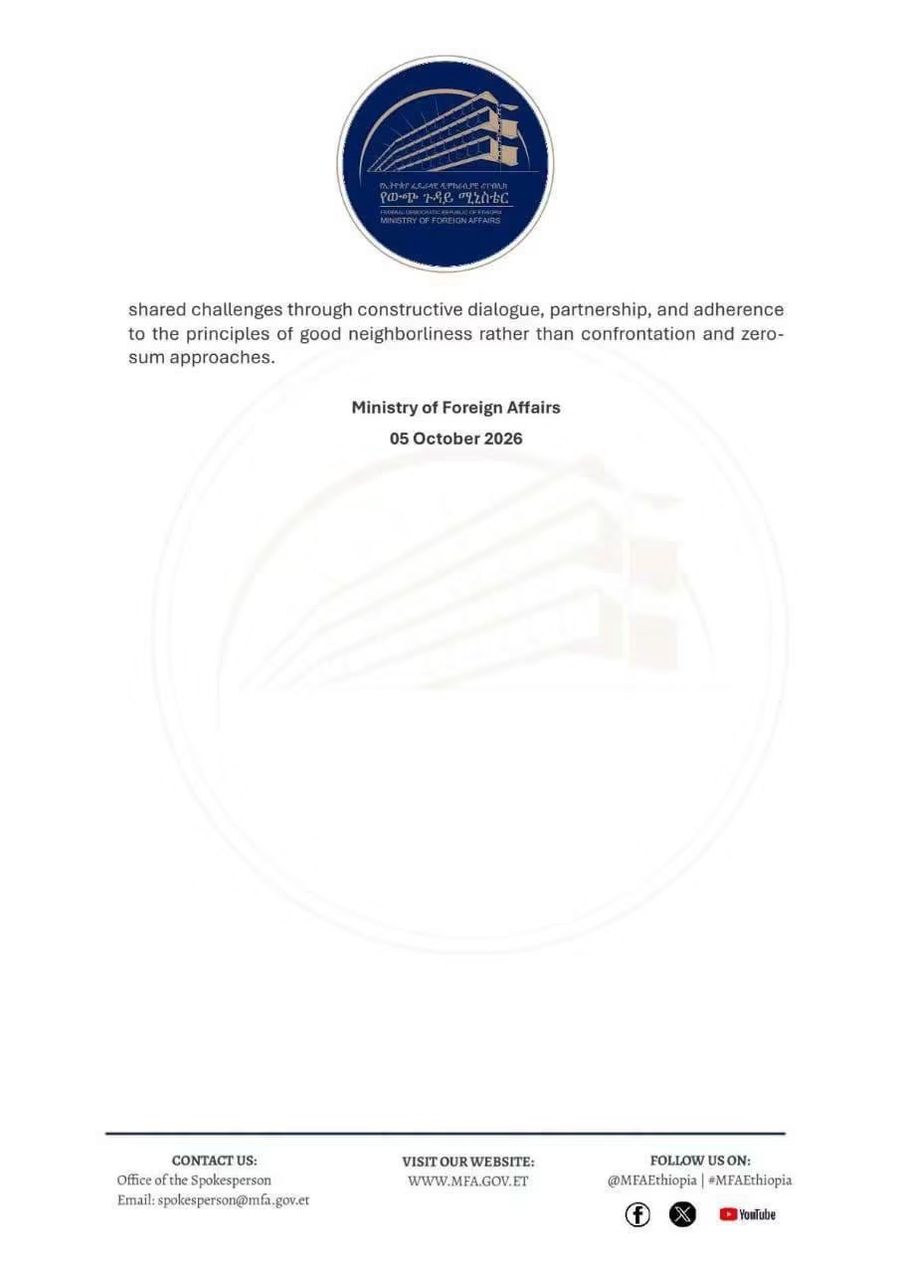
Despite its firm language, Ethiopia’s latest statement said the country remained committed to peaceful engagement, mutual respect and regional cooperation.
The ministry said Ethiopia stood ready to defend its sovereignty, territorial integrity and core national interests, while urging regional actors to address shared challenges through constructive dialogue, partnership and good-neighbourly relations.