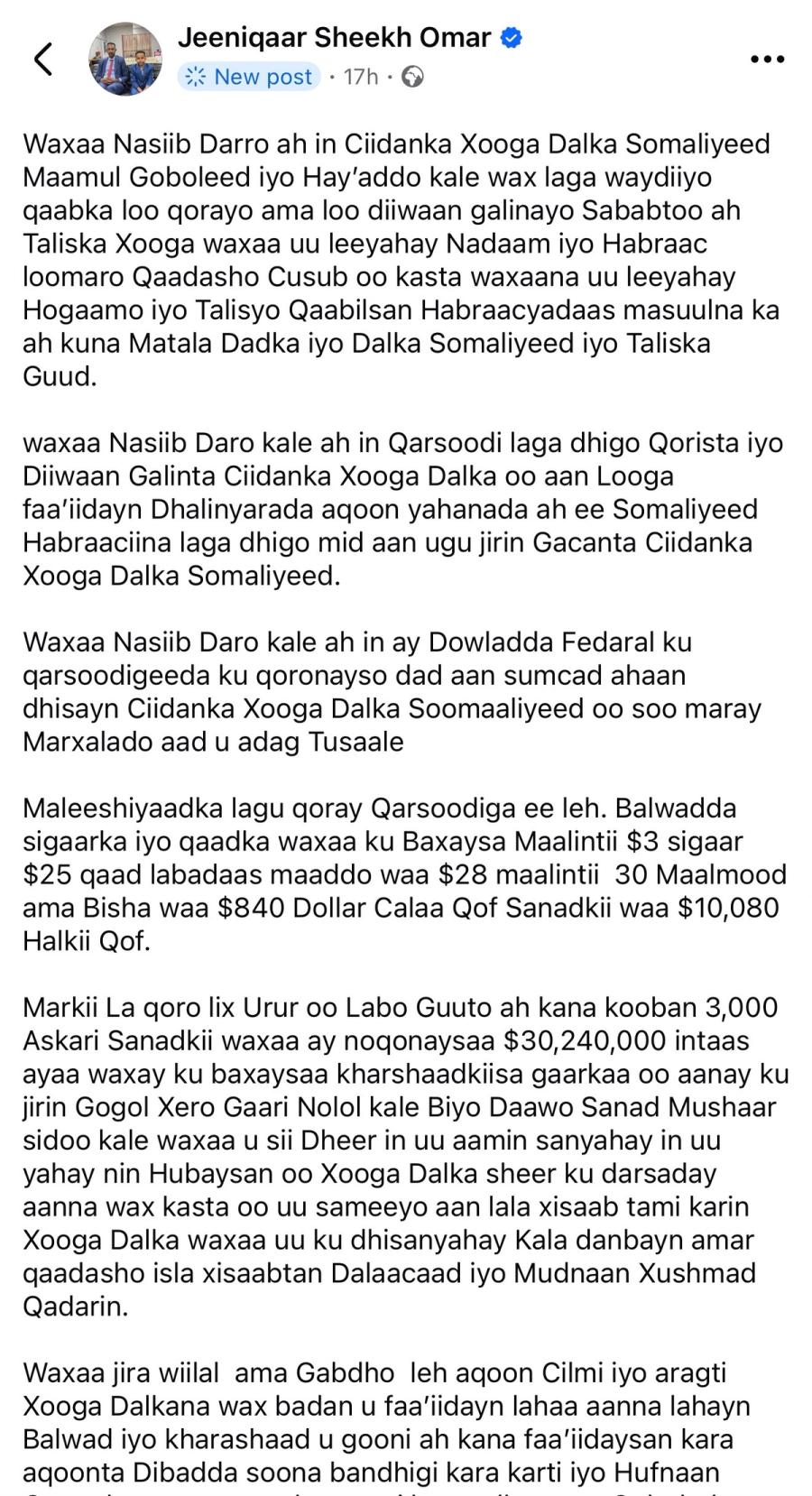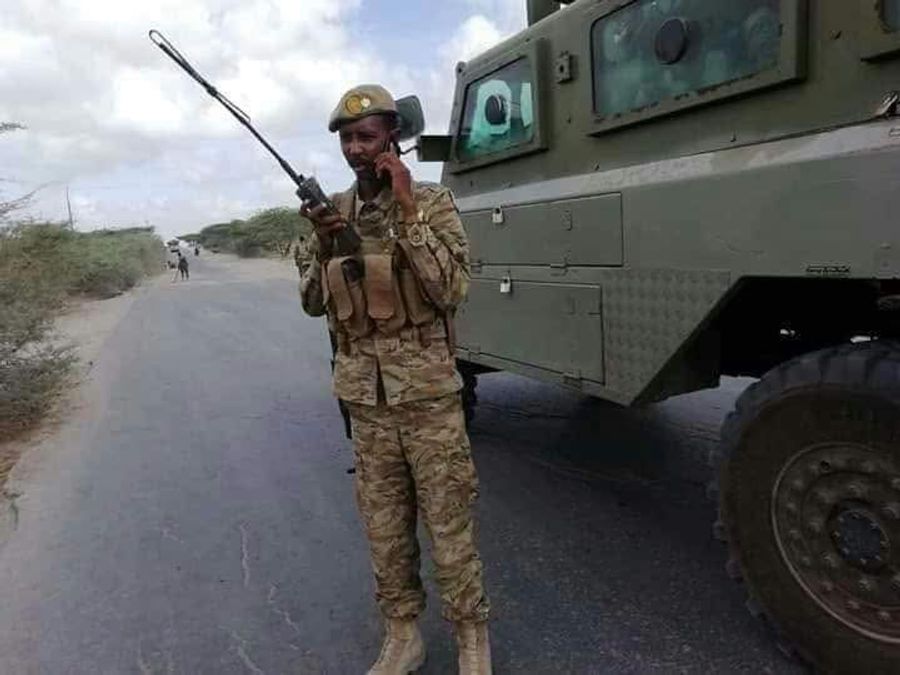
MOGADISHU, Somalia, June 21, 2026 – Former Danab Brigade commander Colonel Jeeniqaar Sheikh Omar has publicly criticized what he described as a secretive recruitment process into the Somali National Army (SNA), accusing federal authorities of bypassing established military procedures and excluding the army’s leadership from decisions concerning new enlistments.
The remarks add to growing public debate over military reforms and recruitment practices as Somalia continues efforts to strengthen its national security forces amid ongoing security challenges.
Col. Jeeniqaar, who previously served as a senior commander of the elite Danab Special Forces, voiced concern over reports that new recruits are being enlisted into the Somali National Army through a process he claims is being conducted outside the formal command structure of the armed forces.
In a statement circulated publicly, the former commander argued that recruitment and registration of soldiers should remain under the authority of the Somali National Army’s established leadership and administrative systems.
“It is unfortunate that regional administrations and other institutions are being consulted on how members of the Somali National Army are recruited or registered,” Jeeniqaar said. He maintained that the military already has procedures, command structures, and designated leadership responsible for managing recruitment and representing both the Somali people and the army’s general command.
The former officer further criticized what he described as a lack of transparency surrounding the recruitment process, alleging that new enlistments were being conducted without sufficient public awareness and outside the direct control of military authorities.
According to his statement, the current approach risks limiting opportunities for qualified Somali youth seeking to join the armed forces through established channels.
Jeeniqaar also alleged that some individuals being recruited may not meet the standards necessary to strengthen the reputation and professionalism of the Somali National Army. However, he did not provide specific evidence or identify individuals involved in the process.
Debate Over Military Recruitment
The comments come at a time when Somalia is seeking to expand and modernize its security institutions while assuming greater responsibility for national defense.
Successive federal governments have emphasized reforms aimed at improving military professionalism, accountability, and operational effectiveness. Recruitment procedures have remained a sensitive issue due to long-standing concerns about transparency, clan balance, payroll management, and command oversight.
Security analysts note that maintaining clear recruitment standards has become increasingly important as Somali forces continue military operations against Al-Shabaab and prepare for evolving security responsibilities following the drawdown of international support missions.
No immediate response was issued by the Federal Government of Somalia or the Ministry of Defense regarding the allegations raised by the former commander.
Government Response
As of Sunday, federal authorities had not publicly commented on Jeeniqaar’s claims.
The Somali National Army has established recruitment mechanisms that are generally overseen by military leadership and relevant government institutions. Officials have previously stated that recruitment reforms are intended to create a professional force capable of addressing national security threats and maintaining stability across the country.
It remains unclear whether the recruitment process referenced by Jeeniqaar relates to a specific ongoing enlistment campaign or a broader government initiative.
The Somali National Army has undergone significant restructuring over the past decade with support from international partners, including training programs, institutional reforms, and efforts to improve command and control systems.
The elite Danab Brigade, where Jeeniqaar previously served in a senior leadership role, has often been cited as one of Somalia’s most effective military units due to its specialized training and operational capabilities.
Military recruitment has historically generated debate among politicians, security officials, and civil society groups. Previous administrations have faced calls to ensure transparency, merit-based selection, and equitable representation in the security sector.
Somalia’s security institutions remain under pressure as government forces continue operations against Al-Shabaab in several regions, including Middle Shabelle, Lower Shabelle, Hiiraan, and parts of Jubbaland and Galmudug.
Security experts say that public confidence in military recruitment processes plays a key role in maintaining the credibility of national defense institutions and attracting qualified recruits.
The concerns raised by Col. Jeeniqaar highlight broader questions about governance, transparency, and accountability within Somalia’s security sector. Recruitment practices can directly affect the quality, professionalism, and cohesion of the armed forces.
The issue may also influence public trust in ongoing military reforms. Allegations that recruitment procedures are being conducted outside established channels could prompt calls for greater oversight and clarification from government institutions.
As Somalia continues efforts to strengthen its national security architecture, scrutiny of recruitment systems is likely to remain an important aspect of the country’s broader state-building and security reform agenda.