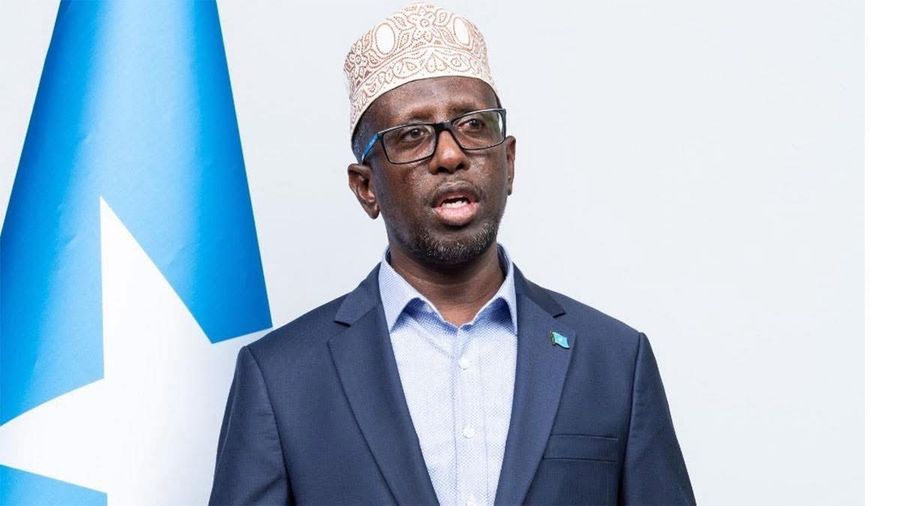
MOGADISHU, Somalia — July 31, 2026 —Former Somali President Sheikh Sharif Ahmed has warned that Somalia could face challenges similar to those that preceded the collapse of Afghanistan’s former government if political divisions and governance problems continue to undermine the country’s campaign against Al-Shabaab. Speaking in a video published on his official Facebook page, Sharif urged Somali leaders to prioritize national unity and the fight against the militant group over domestic political disputes.
Sharif made the remarks in a video shared on his official Facebook page as political tensions continue to dominate Somalia’s national debate alongside ongoing military operations against Al-Shabaab in several regions of the country.
According to the former president, Afghanistan’s experience should serve as a warning for Somalia. He argued that despite receiving years of international military assistance and financial support, the former Afghan government collapsed in 2021 because of deep political divisions, widespread corruption, and failures to build national consensus.
Sharif also said the former Afghan leadership’s refusal to pursue meaningful negotiations with the Taliban contributed to the rapid collapse of the state after the withdrawal of international forces.
Drawing parallels with Somalia, the former president warned that political disputes could weaken national institutions if they continue to divert attention from the fight against Al-Shabaab.
He reiterated that Somali security forces should remain focused on counterterrorism operations rather than becoming involved in political confrontations.
“If the forces established to fight Al-Shabaab are used against politicians, Al-Shabaab cannot be defeated,” Sharif said in the video.
He also criticized the structure of Somalia’s security forces, arguing that they remain fragmented and influenced by clan affiliations rather than functioning as a fully unified national army.
Afghanistan Comparison
Sharif said Afghanistan’s collapse demonstrated that military assistance alone cannot guarantee stability without political cohesion and effective governance.
According to the former president, years of international funding and security support failed to prevent the Afghan government’s collapse because internal political disagreements and corruption weakened state institutions.
He argued that Somalia must avoid repeating those mistakes while continuing military operations against Al-Shabaab.
Sharif also compared the narratives used by the Taliban during the Afghan conflict with those promoted by Al-Shabaab.
He said the Taliban portrayed itself as resisting foreign military intervention and claimed Al-Shabaab has attempted to use similar messaging in Somalia.
The former president urged Somali political leaders to pursue national dialogue and strengthen state institutions to deny extremist groups opportunities to exploit internal divisions.
Political and Security Context
Sharif’s remarks come during a period of heightened political tensions between the Federal Government of Somalia and opposition leaders.
In recent months, disagreements over governance, constitutional issues, and security have intensified political debate while Somali forces continue operations against Al-Shabaab in central and southern Somalia.
The Somali government has repeatedly stated that defeating Al-Shabaab remains its top national security priority and continues to work with local forces, regional partners, and international allies in military operations targeting the group.
At the same time, opposition politicians have raised concerns over the direction of national politics and have called for broader political dialogue.
Afghanistan’s former Western-backed government collapsed in August 2021 after Taliban forces rapidly captured major cities following the withdrawal of United States and NATO troops.
Although Afghan security forces had received years of international training, equipment, and financial support, the country’s institutions disintegrated within weeks as Taliban fighters advanced across the country.
Political analysts have identified several factors that contributed to Afghanistan’s collapse, including political fragmentation, governance challenges, corruption allegations, declining public confidence, and the rapid withdrawal of foreign military support.
Sharif cited those developments as an example of why Somalia should strengthen political unity while continuing military pressure against Al-Shabaab.
Al-Shabaab has waged an insurgency in Somalia for more than a decade and continues to conduct attacks despite sustained military campaigns by Somali forces, local community fighters, and international partners.
Government officials have consistently maintained that military operations against Al-Shabaab are continuing across several regions and have emphasized that national security remains a central priority.
Political observers say debate over Somalia’s security strategy is likely to continue as military operations against Al-Shabaab proceed alongside discussions over governance and national political reconciliation.
Whether Sharif’s call for greater political unity gains wider support remains uncertain, but his comments are expected to add to ongoing discussions over how Somalia can strengthen its institutions while sustaining pressure on Al-Shabaab.
Sharif’s remarks highlight growing debate over the relationship between Somalia’s political stability and its long-running campaign against Al-Shabaab. His comparison with Afghanistan reflects concerns shared by some opposition figures that political divisions could weaken national security institutions if left unresolved.
The comments also underscore broader questions about the balance between military operations and political consensus. Security experts have frequently argued that successful counterinsurgency campaigns require not only battlefield gains but also functioning state institutions, public confidence, and political cohesion.