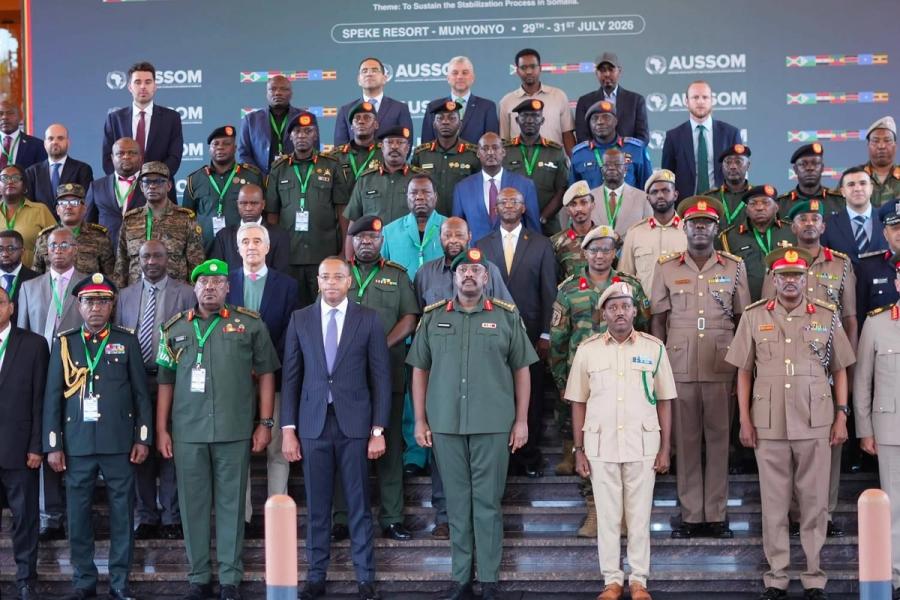
MOGADISHU, Somalia — July 29, 2026 —The African Union Support and Stabilization Mission in Somalia (AUSSOM) summit officially opened in Kampala, Uganda, on Wednesday, with senior military commanders beginning discussions on the future of the mission as participating countries confront growing financial challenges and prepare for a major security transition in Somalia. The three-day meeting will conclude on July 31 with a summit of heads of state expected to endorse key decisions on the mission’s future.
The Kampala meeting has brought together representatives from the African Union, troop-contributing countries, and senior security officials for discussions aimed at determining the next phase of AUSSOM’s operations in Somalia.
According to officials familiar with the summit agenda, Wednesday’s session is dedicated to meetings of the Chiefs of Defence Forces from countries contributing troops to AUSSOM.
The discussions are expected to examine the operational status of the mission, assess security developments across Somalia, and consider proposals for restructuring AUSSOM in response to evolving security conditions and financial pressures.
On July 30, defense ministers from troop-contributing countries are scheduled to review recommendations from military commanders before forwarding proposals to heads of state.
The final day of the summit, July 31, will feature a meeting of leaders from the countries contributing forces to AUSSOM. Officials expect the summit to produce the most significant policy decisions regarding the future direction of the mission.
Funding Future Dominates Agenda
One of the central issues before delegates is the future financing of AUSSOM.
The discussions come after the United States announced plans to end its financial support for the United Nations Support Office in Somalia (UNSOS) by the end of 2026. UNSOS provides critical logistical assistance to AUSSOM and Somalia’s security forces, including transportation, engineering support, medical services, communications, and supply operations.
According to officials, participants are exploring alternative funding mechanisms that could allow the mission to continue operating without major disruptions once current financial arrangements change.
Delegates are also discussing whether additional support from international partners or new funding models could help sustain operations during the coming years.
Security Transition Under Review
Another major topic is Somalia’s ongoing security transition.
Officials are reviewing plans for gradually transferring greater security responsibilities to the Somali National Armed Forces and other national security institutions.
The discussions include assessments of force readiness, operational coordination, and the pace at which Somali forces can assume responsibilities currently carried out with support from AUSSOM personnel.
According to participants, military planners are also examining possible adjustments to the mission’s force structure and troop numbers to reflect changing security requirements.
No official decisions on troop reductions or restructuring have been announced.
Regional Security Cooperation
The Kampala summit also provides an opportunity for troop-contributing countries to coordinate their broader regional security strategy.
Officials are expected to review progress made since AUSSOM replaced the African Union Transition Mission in Somalia (ATMIS), evaluate ongoing operations against Al-Shabaab, and identify areas where closer coordination could strengthen stabilization efforts.
Security officials say cooperation among troop-contributing countries remains essential as Somalia continues efforts to expand government authority and improve national security capabilities.
No Final Decisions Yet
Despite intensive discussions, no final agreement has been announced regarding AUSSOM’s long-term future.
Officials indicated that recommendations from military commanders and defense ministers will be consolidated before being presented to heads of state during Friday’s summit.
The final communiqué expected after the July 31 meeting is anticipated to outline decisions on funding priorities, force structure, security transition planning, and future political support for the mission.
AUSSOM officially succeeded the African Union Transition Mission in Somalia (ATMIS) in 2025 as the African Union’s primary peace support mission in Somalia.
The mission supports Somali security forces in countering Al-Shabaab, protecting key government institutions, assisting stabilization efforts, and helping create conditions for long-term national security.
For years, international partners have financed much of the mission’s operational costs through United Nations logistical support and contributions from donor countries. However, uncertainty surrounding future funding has increased pressure on the African Union and troop-contributing countries to identify sustainable financial arrangements.
The Kampala summit follows months of consultations among African Union officials, Somalia, international partners, and regional governments over the future design of the mission as Somalia gradually assumes greater responsibility for its own security.
Attention will now shift to Thursday’s meeting of defense ministers, where military recommendations are expected to undergo political review before being submitted to heads of state.
The most closely watched session will take place on July 31, when leaders of troop-contributing countries are expected to consider proposals on AUSSOM’s financing, force structure, and long-term mandate.
Officials have indicated that any major policy decisions affecting the mission’s future will likely be announced after the conclusion of the heads of state summit.
The Kampala summit comes at a pivotal moment for Somalia’s security landscape. Decisions on AUSSOM’s funding and future structure could influence the pace of Somalia’s security transition and the ability of national forces to maintain pressure against insurgent groups.
The planned end of U.S. support for UNSOS at the close of 2026 has intensified efforts to secure alternative financial resources. Without sustainable funding, regional officials face the challenge of maintaining operational capacity while supporting Somalia’s long-term stabilization goals.
The outcome of the July 31 summit is also likely to shape future cooperation between the African Union, Somalia, and international partners. Clear commitments on financing, troop deployment, and security transition will be closely watched by governments, donors, and security analysts assessing the next phase of regional peace support efforts.