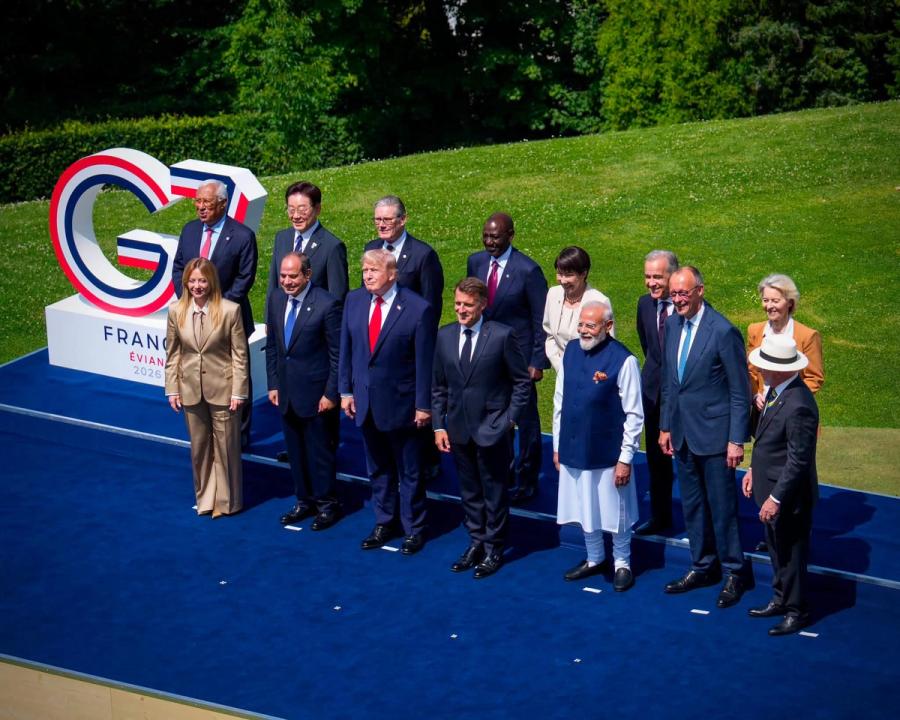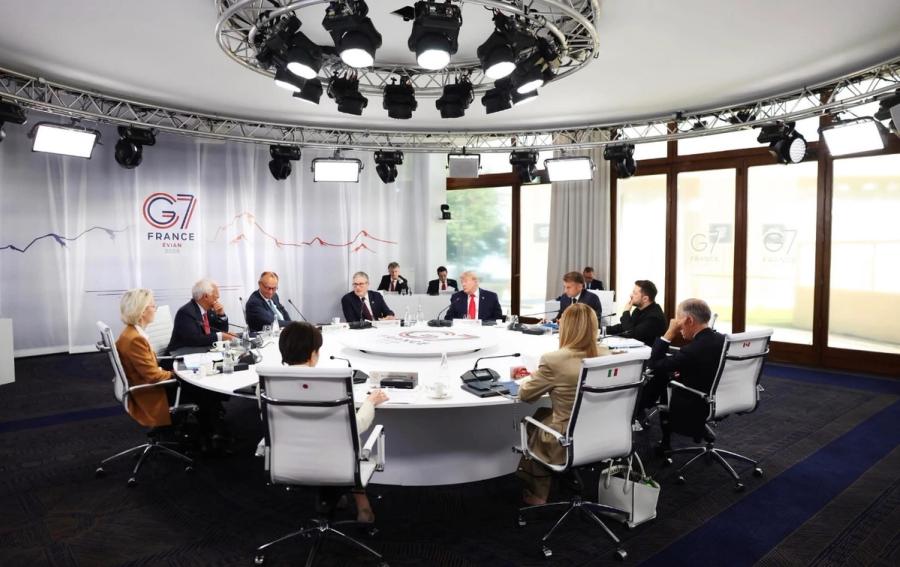
Thursday, June 18, 2026 (Baidoa Online) - World leaders wrapped up the 2026 G7 Summit in Évian-les-Bains, France, adopting nine declarations covering some of the most pressing crises facing the international community, from the Iran war to artificial intelligence regulation.
France's presidency of the summit took an inclusive approach, bringing in partner nations including India, Kenya, South Korea, Brazil, and Egypt throughout the discussions — an unprecedented method reflecting the reality that today's major challenges require broader international cooperation beyond the G7 membership alone.
Iran and the Middle East
The summit was dominated by the US-Iran peace agreement signed by President Donald Trump at the Palace of Versailles. G7 leaders welcomed the deal, emphasizing the shared need for the immediate and unconditional reopening of the Strait of Hormuz — the critical waterway through which approximately one-fifth of the world's oil supply flows. Leaders noted that the agreement opens the door to addressing deeper concerns around Iran's nuclear and ballistic capabilities and its destabilizing activities across the region.
On Lebanon, leaders called for a strong and immediate ceasefire, supporting Lebanese authorities in efforts to achieve Hezbollah's disarmament and restore the state's monopoly on weapons, with full respect for Lebanon's sovereignty and territorial integrity.
Ukraine
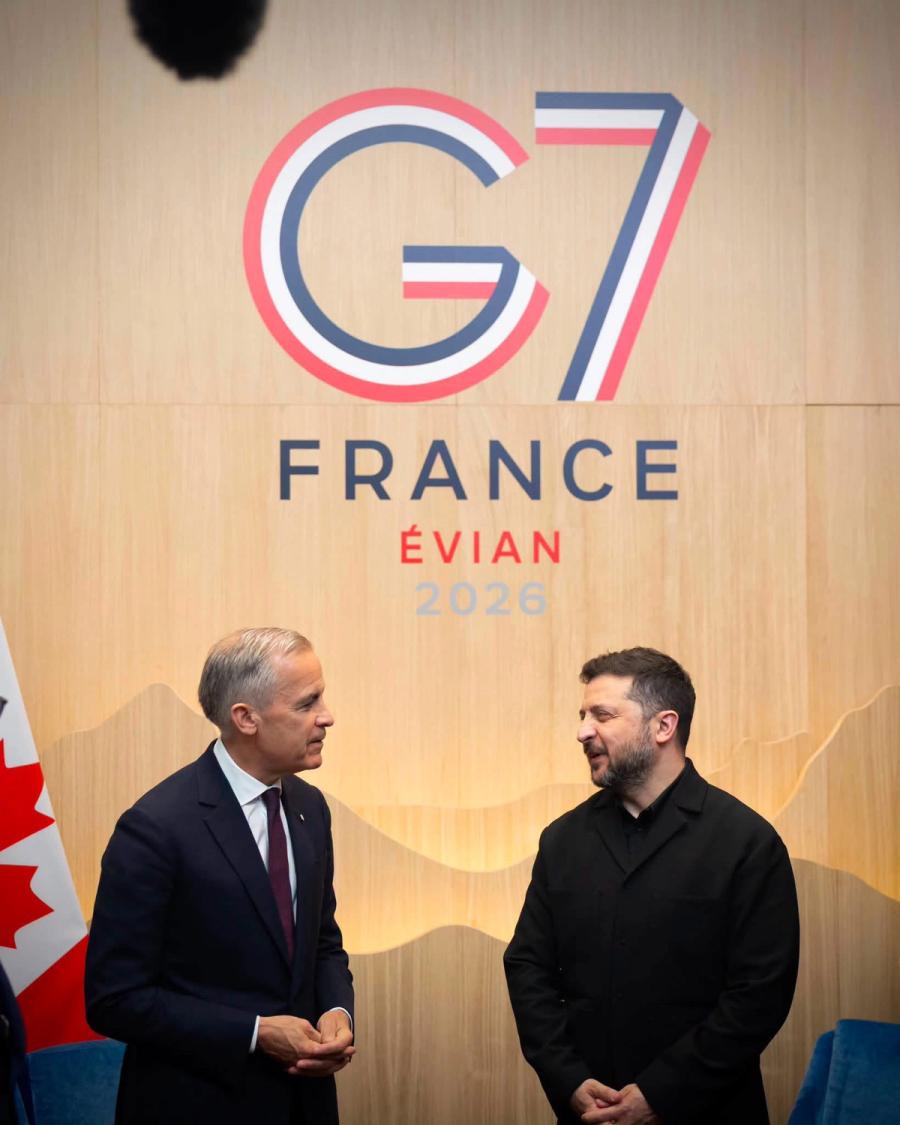
In the presence of Ukrainian President Volodymyr Zelenskyy, G7 leaders reaffirmed their commitment to Ukraine's freedom, sovereignty, and territorial integrity. They agreed to increase military support including air defense systems, interceptors, and long-range capabilities, while also committing to strengthen Ukraine's energy resilience and increase economic pressure on Russia through expanded sanctions on Russian oil and gas.
Energy and Canada
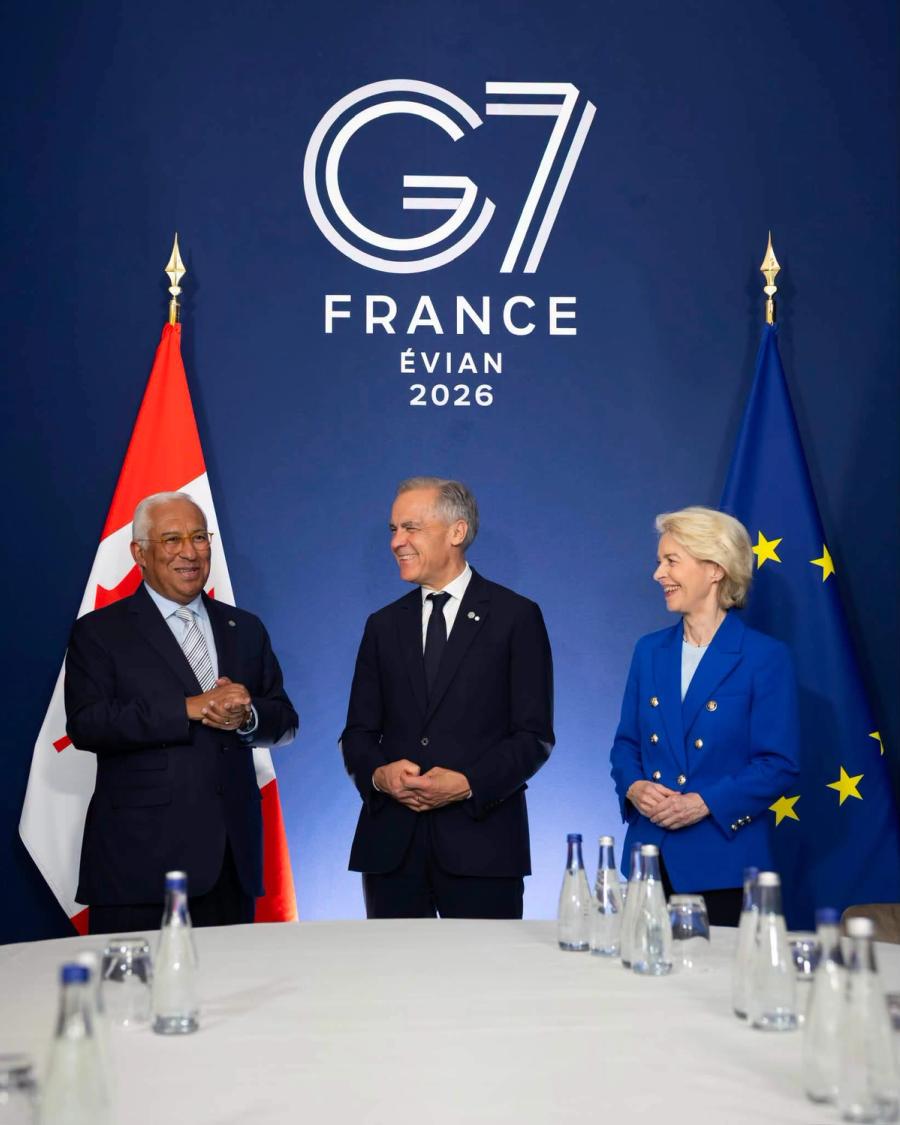
In response to the disruption caused by the Strait of Hormuz closure, G7 leaders committed to diversifying global energy supply routes. The joint statement specifically recognized Canada's potential to deliver significant additional energy capacity to global markets, as Prime Minister Mark Carney pitched expanded LNG exports and new pipeline infrastructure as a reliable alternative for European and Asian partners.
Global Economy and Trade
Leaders acknowledged the need for coordinated economic policies to address macroeconomic imbalances, protect industries and jobs, and prevent future trade conflicts and financial crises. The IMF was identified as having a central role in monitoring these imbalances, with further discussions to continue at the G20.
Digital Technology and Artificial Intelligence
G7 members agreed on the importance of protecting young people from the risks of AI, including adapting AI chatbot language when interacting with children. Leaders committed to working with leading technology companies to accelerate the safe and beneficial deployment of AI across society.
Critical Minerals, Health, and Security
Leaders agreed to reduce dependencies on single sources for critical minerals through coordinated international action. On health, they promoted a coordinated approach to poor-prognosis cancers, pediatric cancers, and universal healthcare access. In response to a potential Ebola health crisis, the G7 committed over one billion dollars in funding in line with United Nations efforts. Leaders also renewed commitments to combat drug trafficking through cooperation between international seaports and to dismantle organized criminal networks engaged in migrant smuggling and human trafficking.
The 2026 G7 Summit in France will be remembered as a moment of rare convergence among the world's major democracies — on war, energy, technology, and global security. Whether the agreements translate into lasting action, particularly on Iran and Ukraine, will define the legacy of this gathering in the months ahead.