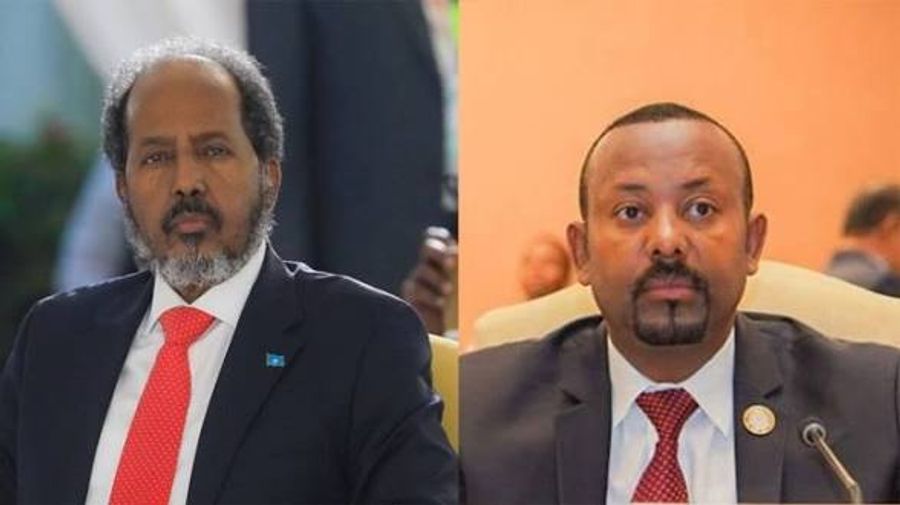
BAIDOA | October 17, 2026 | Somalia – Ethiopia Diplomatic tensions between Somalia and Ethiopia are reportedly deepening following disagreements over Somaliland, the political and security situation in South West State, and the implementation of understandings discussed during a September 29 meeting between Somali President Hassan Sheikh Mohamud and Ethiopian Prime Minister Abiy Ahmed.
According to diplomatic sources, several issues raised during the high-level discussions have not produced the outcomes anticipated by Somalia's Federal Government, raising fresh questions about the future of relations between Mogadishu and Addis Ababa.
The reported disagreements come amid significant political and military developments in Somalia's Bay region, where forces loyal to Abdiaziz Hassan Mohamed, widely known as Lafta Gareen, have reportedly expanded their territorial control despite efforts by the federal government to consolidate its authority.
Ethiopia Reportedly Moving to Strengthen Relations With Somaliland
Sources familiar with regional diplomatic discussions claim that Ethiopia has made a strategic decision to strengthen its engagement with Somaliland, despite objections from Somalia's federal leadership.
Information reportedly obtained from a government maintaining close relations with President Hassan Sheikh Mohamud suggests that Addis Ababa intends to pursue deeper cooperation with Somaliland as part of its broader regional interests.
The sources further indicate that sensitive diplomatic consultations concerning Somaliland are expected ahead of a forthcoming inauguration ceremony involving Ethiopian Prime Minister Abiy Ahmed.
These discussions could potentially lead to significant political or diplomatic announcements, although no definitive details have been disclosed.
The developments are particularly sensitive because Somalia considers Somaliland an integral part of its sovereign territory, while Somaliland has maintained its claim to independence since 1991.
Mogadishu's South West State Strategy Faces Major Setback
A second major area of disagreement reportedly concerns the role of Ethiopian troops stationed in Somalia's South West State.
According to sources familiar with the discussions, Villa Somalia had sought assurances that Ethiopian forces would remain deployed in strategic areas of South West State and help prevent military advances by forces loyal to Lafta Gareen.
However, those expectations have reportedly not materialized.
Instead, South West State Darwish forces loyal to Lafta Gareen have reportedly expanded their presence across several districts in Bay region, including areas previously controlled by federal government-aligned forces.
Recent reports from Berdaale and Diinsoor indicate that federal-aligned personnel withdrew from key positions as Lafta Gareen-aligned forces advanced.
The reported territorial changes represent a potentially significant setback for President Hassan Sheikh Mohamud's efforts to strengthen federal influence in South West State.
The precise role of Ethiopian troops in these developments remains unclear, and there is no independently verified evidence establishing that Ethiopian commanders agreed to intervene against Lafta Gareen's forces.
Hassan Sheikh Reportedly Expresses Frustration With Ethiopia
The growing diplomatic friction has reportedly prompted unusually strong criticism of Ethiopia from President Hassan Sheikh Mohamud.
According to political sources, the Somali president recently expressed frustration during discussions with political associates, accusing Ethiopian authorities of behaving in a manner that disregards Somalia's sovereignty.
The reported remarks were made in connection with Ethiopia's engagement with Somaliland, an issue that has repeatedly generated tension between the neighboring countries.
The remarks also stand in contrast to recent statements attributed to the Somali president suggesting that Mogadishu had presented Ethiopia with three possible port options for consideration, but had not received a response.
The reported proposal reflects Somalia's efforts to address Ethiopia's longstanding interest in maritime access while maintaining Somali sovereignty and territorial integrity.
Regional Implications: Somaliland, Maritime Access and Military Influence
The reported diplomatic disagreements highlight three interconnected issues shaping relations between Somalia and Ethiopia: access to maritime trade routes, Ethiopia's engagement with Somaliland, and the security arrangements governing Ethiopian military deployments inside Somalia.
For Ethiopia, access to the sea remains a strategic economic priority, given the country's dependence on foreign ports for international trade.
For Somalia, any agreement concerning maritime access must respect its internationally recognized borders and sovereign authority.
Meanwhile, Ethiopian forces have historically played a significant security role in South West State, making Addis Ababa an important actor in the region's evolving political and military landscape.
Any substantial change in Ethiopia's position could therefore have consequences for the balance of power between Somalia's federal government and regional authorities.
Uncertain Outlook for Mogadishu–Addis Ababa Relations
The latest reports suggest that the September 29 discussions may have failed to resolve several issues that Somalia's federal leadership considers strategically important.
With Somaliland-related diplomatic consultations reportedly continuing and Lafta Gareen-aligned forces making territorial advances in Bay region, President Hassan Sheikh Mohamud faces mounting challenges on both the diplomatic and domestic political fronts.
Whether Addis Ababa will publicly clarify its position on Somaliland or adopt a more active role in South West State remains uncertain.
For now, the reported disagreements underscore the fragility of Somalia–Ethiopia relations at a time when regional political alliances and security arrangements are undergoing significant changes.
Additional Verified Developments and Diplomatic Context
The September 29 meeting itself was confirmed by both Somali and Ethiopian reporting. Somalia's state news agency said the leaders discussed bilateral relations, regional security and political developments, but the public account did not confirm specific agreements concerning Somaliland or Ethiopian military intervention in South West State.
The reported dispute also raises questions about the future of the Ankara Declaration, signed on December 11, 2024, under Turkish mediation. The agreement committed Somalia and Ethiopia to respecting each other's sovereignty and pursuing arrangements for Ethiopian maritime access under Somali sovereign authority.
Separately, Ethiopia is confronting renewed instability in its northern Tigray region. Reuters reported on October 16 that Abiy Ahmed had announced a caretaker administration following renewed fighting, adding another significant security challenge for Addis Ababa