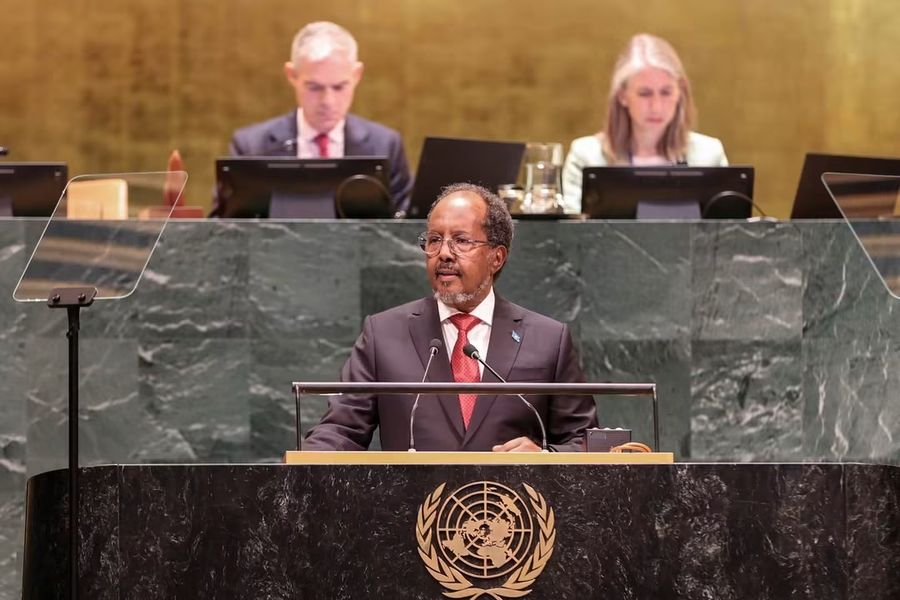
MOGADISHU, Somalia — September 26, 2026 — Somali President Hassan Sheikh Mohamud has returned from the United States without any publicly confirmed meetings with senior US government officials, according to sources familiar with the visit. The sources said efforts to secure talks with Secretary of State Marco Rubio and other high-ranking officials did not succeed, raising questions over Villa Somalia’s earlier claims about planned engagements.
Somali President Hassan Sheikh Mohamud has concluded a visit to the United States without holding publicly confirmed meetings with Secretary of State Marco Rubio or other senior members of the US administration, according to sources familiar with the diplomatic outreach.
The sources said Villa Somalia had made extensive efforts to arrange high-level meetings during the president’s trip, including an engagement with Rubio, who leads the US State Department. But Somali officials were reportedly informed before the president left Somalia that no meeting with the secretary of state could be accommodated.
According to the sources, the president’s office also sought contacts with officials responsible for African affairs and other senior American officials. No high-level bilateral meeting was ultimately secured, they said.
There was no immediate public statement from Villa Somalia detailing whether the president held official talks with senior US officials during the trip. The US State Department had also not publicly announced a meeting between Rubio and Hassan Sheikh by the time of publication.
The reported outcome contrasts with recent claims attributed to Villa Somalia that the president had an appointment with the US secretary of state. The presidency has not publicly explained whether such an appointment was formally scheduled, postponed or never confirmed.
The trip took place during a sensitive period for Somalia, as the country faces disputes over its electoral process, continued tensions between the federal government and some federal member states, and a difficult security environment marked by attacks by Al-Shabaab.
Efforts to Secure Washington Engagements
Sources familiar with the visit said Somali officials had sought to use the trip to reinforce Mogadishu’s relationship with Washington and secure continued diplomatic, security and development support.
The United States has long been one of Somalia’s principal international partners, supporting counterterrorism operations, humanitarian assistance, governance programmes and efforts to strengthen national institutions. The US also remains a key diplomatic actor in discussions concerning Somalia’s elections, constitutional review and relations between Mogadishu and regional administrations.
A meeting with Rubio, or another senior White House or State Department official, would have provided an opportunity for Hassan Sheikh’s government to present its position directly on a range of urgent issues, including the electoral dispute, the campaign against Al-Shabaab and the transition of security responsibilities from international forces to Somali institutions.
However, the sources said that no such high-level engagement was secured. It was not immediately clear whether the president met lower-level American officials, diplomatic representatives, members of Congress, policy groups or Somali diaspora leaders during the visit.
Diplomatic visits often involve private meetings that are not publicly disclosed. Still, the absence of an announced engagement with a senior administration official is likely to draw scrutiny, particularly after reports that Villa Somalia had anticipated a meeting with Rubio.
US Concerns Over Somalia’s Political Deadlock
Sources said some US officials have expressed concern about Somalia’s prolonged political and electoral impasse, which has delayed agreement on an inclusive electoral framework and deepened disagreements between the federal government and several federal member states.
Somalia’s political debate has centred on proposed changes to the electoral system, constitutional reforms and the timing and structure of future elections. The federal government has argued that the country needs to move away from the indirect clan-based system that has shaped previous polls. Critics and some regional leaders, however, have said key changes should be agreed through a broader political consensus.
The lack of agreement has contributed to tensions between Mogadishu and political actors in Puntland and Jubbaland, while opposition figures have repeatedly called for an inclusive dialogue on electoral arrangements and constitutional reforms.
According to the sources, American officials have also raised questions about the pace of political dialogue and whether unresolved disputes could undermine wider efforts to stabilise the country.
The United States has consistently identified governance, security and stability as central to its policy in Somalia. Its earlier country strategy highlighted support for more effective institutions, democratic governance and efforts to counter extremist groups.
Security and the Fight Against Al-Shabaab
The reported diplomatic concerns also come amid continued pressure on the Somali government over the security situation and the campaign against Al-Shabaab.
Sources said US officials are frustrated by what they described as limited and uneven progress against the group, despite years of international security assistance and repeated Somali government pledges to expand operations.
Al-Shabaab continues to carry out attacks in and around Mogadishu and across parts of south and central Somalia. A current US travel advisory says the group fired about 50 rockets at the Aden Adde International Airport compound in ten separate incidents between 2024 and 2026, with the latest listed incident occurring in March 2026.
The group’s ability to mount attacks, collect revenue in areas under its influence and exploit local political divisions remains a major challenge for Somalia’s security forces and international partners.
Washington has continued to view Al-Shabaab as a serious security threat. The group remains designated by the United States as a Foreign Terrorist Organization.
Somalia has been working to take on greater responsibility for its own security as African Union-led forces reduce or reshape their role. But the transition has raised concerns over funding, troop readiness, coordination among Somali security institutions and the risk that armed groups could exploit any gaps.
A recent US policy document on peacekeeping identifies AUSSOM’s mandate as disrupting terrorist threats emanating from Somalia, including Al-Shabaab and Islamic State-linked militants.
Why the Visit Matters
For Villa Somalia, a senior-level meeting in Washington would have carried political and diplomatic value at a time when the government is seeking international backing for its security strategy and political agenda.
Such meetings can help maintain direct communication with major partners, provide a platform to discuss disputed policies and demonstrate that Somalia retains access to influential foreign decision-makers.
The reported failure to secure those engagements does not by itself signal a change in US policy toward Somalia. Washington’s relationship with Mogadishu is built on security cooperation, humanitarian support, diplomatic engagement and longer-term institution-building programmes.
However, the episode may increase pressure on Villa Somalia to clarify the purpose and results of the president’s visit, especially after claims that a meeting with Rubio had been expected.
It also highlights the importance of progress at home. A credible political agreement on elections and constitutional reforms, alongside measurable security gains against Al-Shabaab, would strengthen Mogadishu’s position in discussions with international partners.