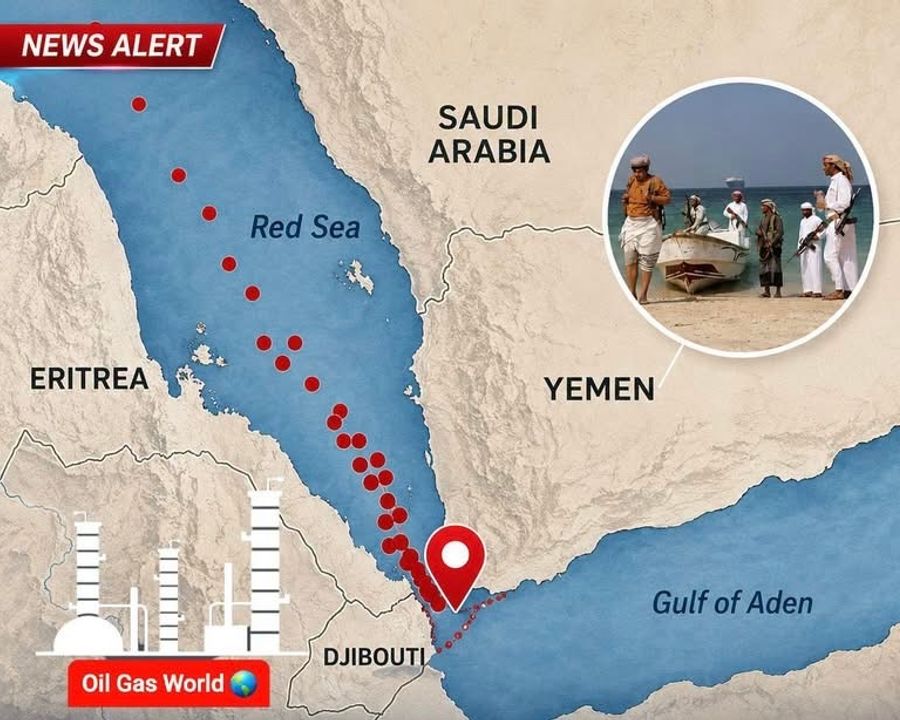
MOGADISHU, Somalia — July 22, 2026 —Several commercial vessels, including oil tankers, have begun changing their planned routes through the Red Sea after Yemen’s Houthi movement threatened ships bound for Saudi Arabian ports, according to vessel tracking data, maritime analysts, and European naval authorities. The developments have heightened concerns over the security of one of the world’s busiest shipping corridors and increased fears of potential disruptions to global energy markets.
At least four oil tankers altered their courses on Wednesday after the Iran-aligned Houthi movement announced what it described as a maritime blockade targeting Saudi Arabia. Shipping companies and maritime security officials say the warnings have already begun affecting vessel movements through the Red Sea, Bab al-Mandab Strait, and surrounding waters.
According to vessel tracking data from LSEG and MarineTraffic, four oil tankers changed their routes on Wednesday as concerns mounted over the security situation in the Red Sea. Two of the vessels indicated that they were redirecting toward the Suez Canal, while others adjusted their destinations or remained in open waters as operators assessed the evolving security risks.
The changes came days after the Houthis, who control large parts of northern Yemen and maintain close ties with Iran, announced what they described as a naval blockade against Saudi Arabia. The group warned ships traveling to Saudi ports, raising concerns that commercial vessels could become targets if they continued operating in the affected maritime corridor.
According to maritime intelligence firms, the announcement has prompted shipping companies to reassess voyage plans and risk exposure in one of the world’s most strategically important waterways.
Clarksons, a global shipbroking and maritime services company, said the Houthi threats had already begun influencing tanker operations.
In a market update, the company reported that several tankers carrying petroleum products from Saudi Arabia’s Yanbu port had altered their planned routes toward the Suez Canal instead of continuing south through the Bab al-Mandab Strait. Other vessels were reported to have paused operations while awaiting further guidance from shipowners and security advisers.
Maritime Security Warning
The European Union’s Aspides naval mission also issued a security advisory on Wednesday warning that vessels linked to Israel, the United States, or Saudi Arabia could face an elevated threat of attack.
According to the advisory, ships with recent commercial activity involving Saudi ports should reduce their electronic footprint to make tracking more difficult and minimize the transmission of digital information that could reveal their location.
The mission also advised operators to avoid unnecessary transit through the Red Sea and Gulf of Aden until the security situation improves.
Maritime security experts say such precautions have become increasingly common since attacks on commercial shipping intensified in the region over the past two years.
Additional Vessel Movements Reported
Shipping data also showed that a fifth vessel, the vehicle carrier Liu Jiang Kou, appeared to reverse course in the Gulf of Aden after previously identifying the Saudi Red Sea port of Jeddah as its destination.
Meanwhile, three crude oil tankers transporting Saudi oil to China and India reportedly changed course on Tuesday, heading toward the Suez Canal rather than continuing through waters off Yemen where security risks have increased.
Separate reports indicated that several additional oil tankers remained near the waiting area outside Saudi Arabia’s Yanbu port on Wednesday, suggesting some operators may be delaying departures while monitoring developments.
Potential Impact on Global Energy Markets
The Red Sea and Bab al-Mandab Strait form one of the world’s most important maritime trade routes, linking the Mediterranean Sea through the Suez Canal with the Indian Ocean.
Industry analysts warn that any sustained disruption could increase shipping costs, delay cargo deliveries, and place additional pressure on global energy supplies.
Braemar, a maritime advisory and shipbroking firm, said the Houthi announcement raises significant questions about the continued use of eastern export routes from Yanbu, where Saudi Arabia’s East-West oil pipeline reaches the Red Sea.
Analysts noted that if the Bab al-Mandab Strait became inaccessible, Saudi Arabia would lose one of its principal export routes that allows crude oil shipments to bypass the Strait of Hormuz. Such a scenario could increase concerns about the reliability of global oil supplies during periods of heightened regional tension.
The Red Sea has remained a major security concern since the conflict in Gaza triggered an escalation in regional tensions. The Houthi movement has carried out numerous missile and drone attacks against commercial shipping, saying its operations are intended to support Palestinians and pressure Israel and its allies.
The attacks prompted several international shipping companies to divert vessels around Africa via the Cape of Good Hope, significantly increasing voyage times and transportation costs.
The United States, European allies, and regional partners have responded by expanding naval patrols and maritime security operations to protect commercial shipping passing through the Red Sea and Gulf of Aden.
Although periods of reduced attacks have allowed some shipping traffic to return, maritime security agencies continue to classify the region as high risk.
The latest course changes by commercial vessels suggest that shipping companies are reacting quickly to renewed security threats, even before any reported attacks on Saudi-bound ships under the Houthis’ latest warning. Such precautionary measures can affect global trade flows and increase freight and insurance costs.
The Red Sea is one of the world’s most critical energy transit corridors. Any sustained disruption to shipping through the Bab al-Mandab Strait could affect oil exports from the Gulf, delay deliveries to international markets, and contribute to higher transportation costs for businesses and consumers.
The developments also underscore the growing regional implications of tensions involving the Houthis, Iran, Saudi Arabia, and international naval forces. Maritime security officials are expected to continue monitoring vessel movements closely as governments and shipping companies evaluate the evolving risks.
Shipping companies are expected to continue reviewing voyage plans as maritime security conditions evolve. International naval missions operating in the Red Sea are likely to maintain heightened patrols while monitoring compliance with security advisories.