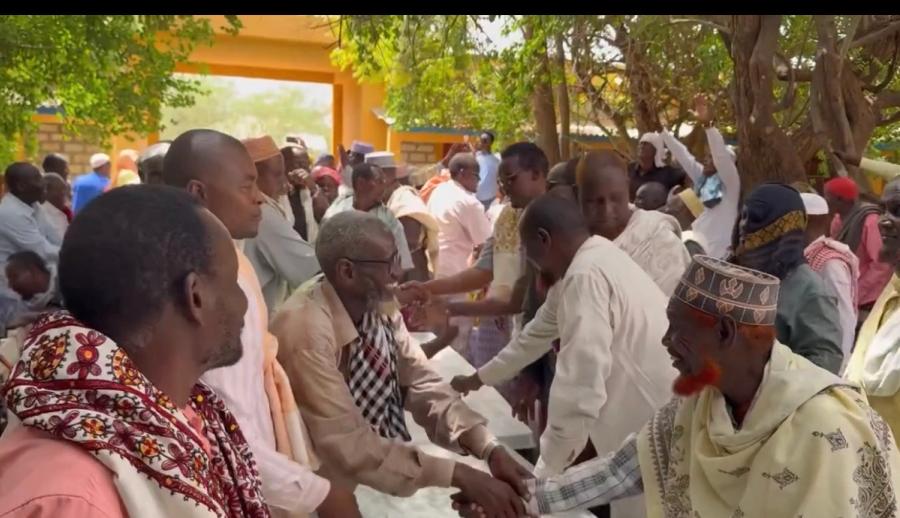
MOGADISHU, Somalia — June 20, 2026 —Clan elders in Jalalaqsi town in Somalia’s Hiiraan region have announced a peace agreement between two recently fighting communities, officially ending four days of deadly inter clan clashes. The deal, reached through traditional mediation, is intended to restore stability, according to elders involved in the talks.
Clan elders confirmed on Friday that the agreement between the two sides involved in the recent fighting in Jalalaqsi has formally brought an end to hostilities in the town.
According to a traditional elder who participated in the negotiations, the settlement was reached after several rounds of dialogue between community representatives from both sides. The agreement was announced following the conclusion of the mediation process.
The peace deal was facilitated by local traditional elders, who played a central role in bringing the parties together and securing commitments aimed at restoring calm, encouraging coexistence, and rebuilding trust among residents in Jalalaqsi.
According to community leaders, the agreement comes after four consecutive days of armed clashes in the town. Local residents said the violence caused significant displacement, forcing hundreds of families to flee their homes. Witnesses also reported that several houses were set on fire during the fighting, although full damage assessments have not been independently verified.
The current situation in Jalalaqsi is reported to be calm following the announcement of the agreement. Community elders said efforts are now focused on maintaining the ceasefire and preventing renewed violence.
Authorities in the Hiiraan region have not yet issued a detailed public statement on the agreement at the time of reporting.
Inter clan conflicts have periodically affected parts of Hiiraan region, often linked to local disputes over resources, land, and community grievances. Jalalaqsi has experienced similar outbreaks of violence in previous years, with traditional elders frequently stepping in to mediate.
Somalia’s rural and semi urban areas often rely on customary reconciliation systems led by elders, particularly in situations where formal security presence is limited or stretched. These mechanisms have historically played a key role in reducing tensions after outbreaks of clan violence.
The recent clashes in Jalalaqsi are among several localized conflicts reported in central Somalia, where security conditions remain fragile and community disputes can escalate quickly.
The peace agreement in Jalalaqsi highlights the continued role of traditional elders in resolving local conflicts in Somalia, especially in areas affected by recurring clan tensions.
The displacement of residents and destruction of homes during the fighting reflects the humanitarian impact of such conflicts, even when they are limited to small towns. Recovery for affected families may take time, particularly for those who lost property or were forced to flee.
Sustaining the agreement will depend on continued engagement from community leaders and adherence by both sides, as past incidents in similar contexts have shown that fragile peace deals can break down without sustained monitoring.