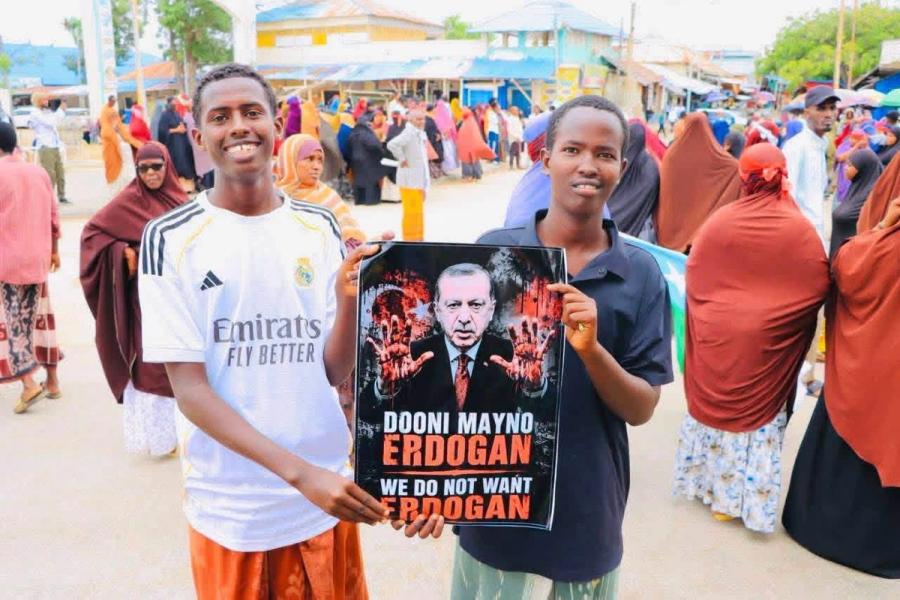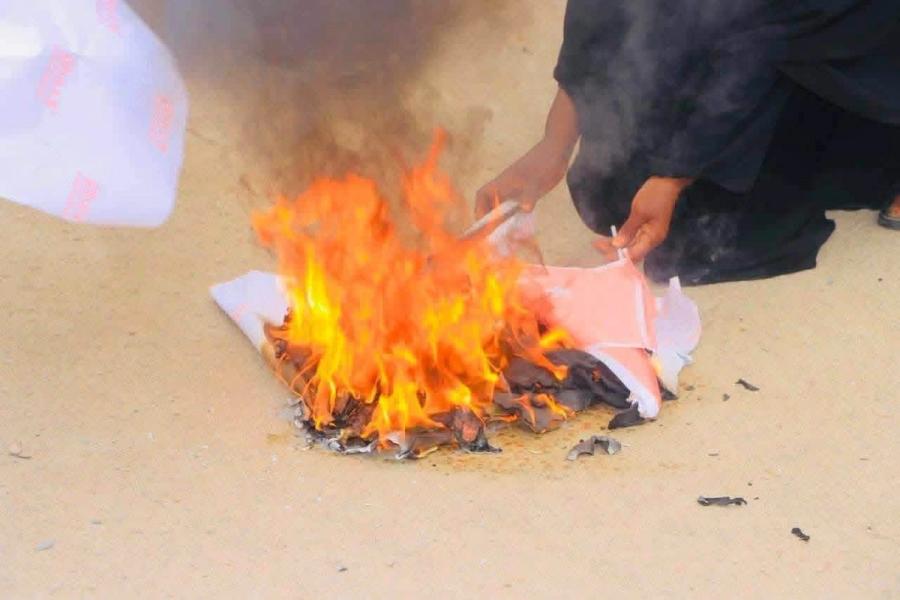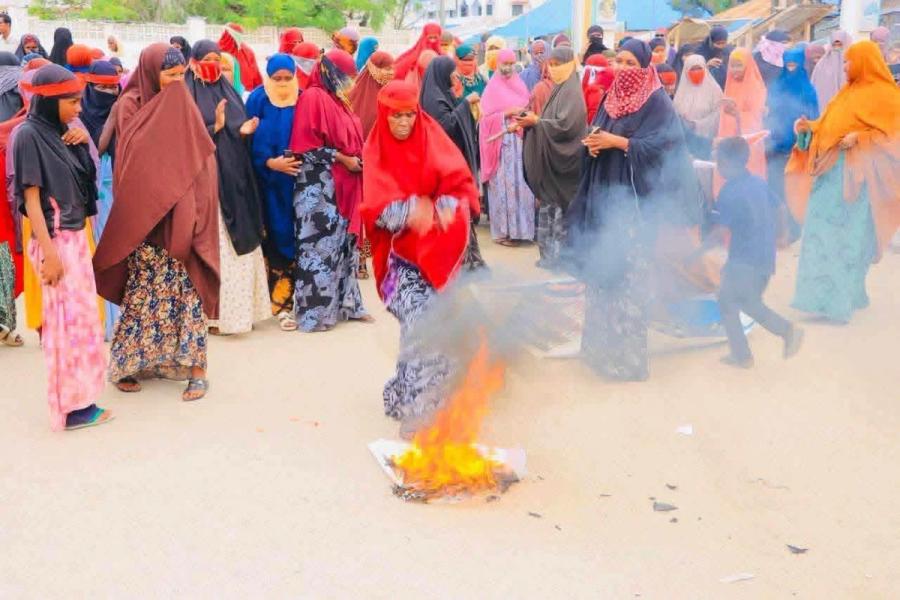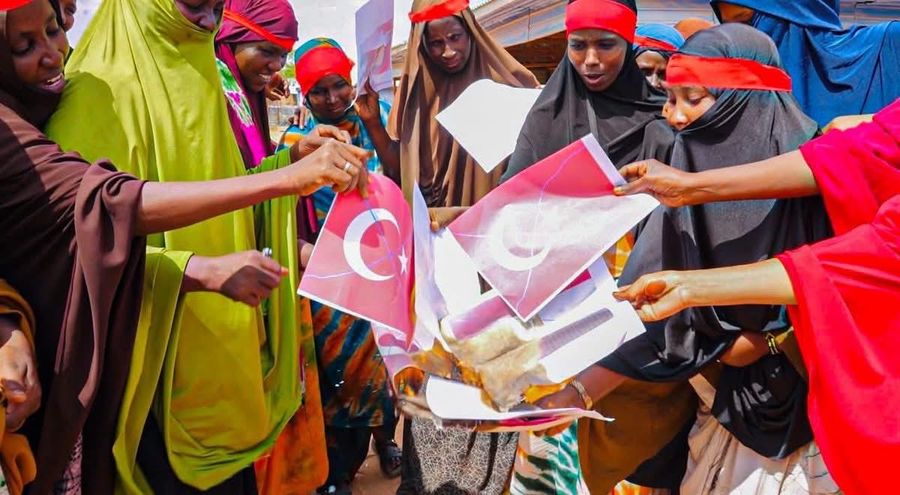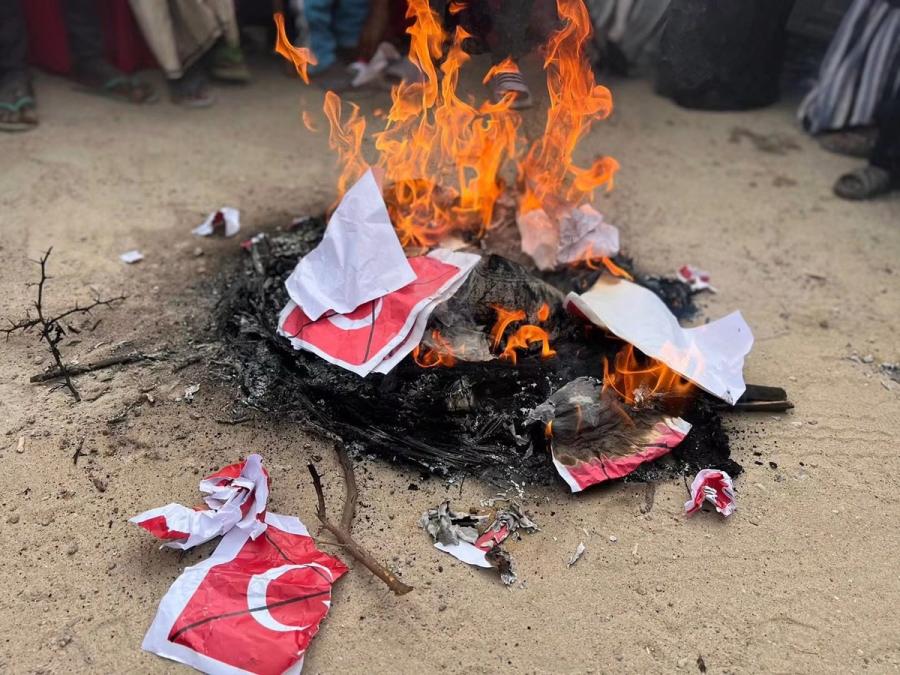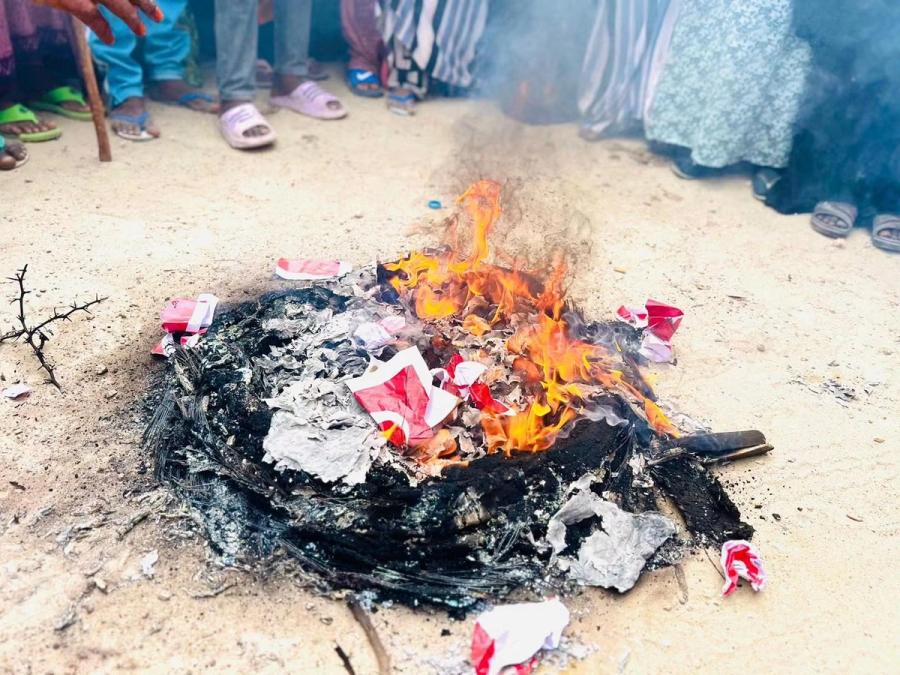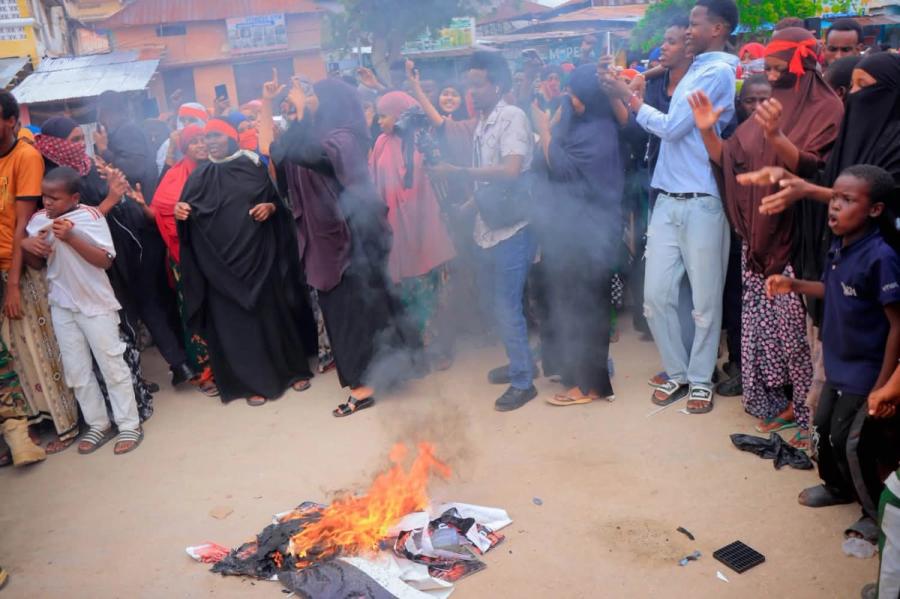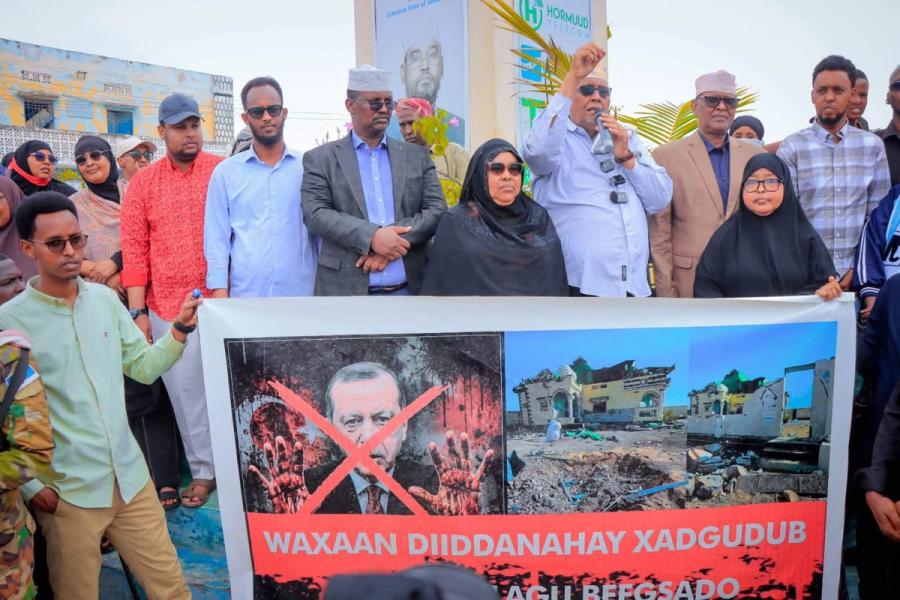
KISMAYO, Somalia — September 6, 2026 — Hundreds of demonstrators marched through Kismayo on Sunday, burning Turkish flags and displaying images depicting President Recep Tayyip Erdoğan with blood on his hands as they protested an alleged Turkish drone strike targeting former Somali Custodial Corps commander General Mahad Abdirahman Aden, widely known as General Shub.
The demonstration took place in Kismayo, the interim capital of Jubaland, amid growing anger over explosions that struck residential compounds in Doolow district, Gedo region, during the night of September 3–4.
Protesters carried placards bearing slogans including “We don’t need Erdoğan” and accused Türkiye of involvement in what Jubaland authorities described as an attempt to assassinate General Shub.
“We used to love Erdoğan and Türkiye, but now we hate them,” demonstrators chanted in Somali during the march.
Images from the protest showed participants burning Turkish flags and holding pictures that portrayed Erdoğan with blood covering his hands. The scenes represented an unusually direct expression of public anger against Türkiye, which has long maintained close diplomatic, economic and security relations with Somalia.
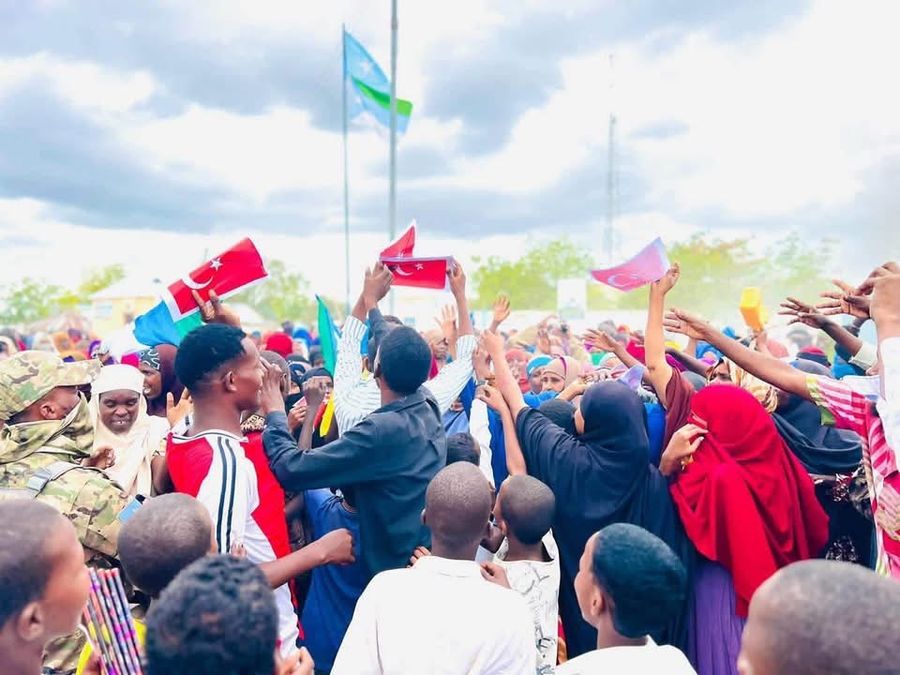
The demonstration followed a similar protest in Doolow on Saturday, where hundreds of residents gathered to condemn the reported attack. Some participants carried Turkish flags to identify the country they accused of conducting the operation, according to local officials and residents.
Conflicting Accounts of Doolow Incident
Jubaland’s administration said two missiles were fired at compounds in Doolow, with one striking the residence where General Shub was staying and another hitting the home of the district commissioner.
The regional government said General Shub and four civilians were injured. Other reports offered conflicting accounts of the casualties, and no independently verified casualty figure was available.
Jubaland directly accused Türkiye of operating the aircraft and alleged that General Shub was targeted because of his political disagreements with Somalia’s federal government. It described the reported operation as a war crime and called for an international investigation.
General Shub previously served as commander of the Somali Custodial Corps and remains an influential security figure. Reports from Doolow said he survived the incident.
Federal Government Denies Involvement
Somalia’s federal government rejected accusations that it was responsible for an airstrike in Doolow. In a statement reported by Somali media, the government said no federal air operation had been carried out in the district and accused Jubaland of spreading misleading information.
The conflicting accounts have deepened tensions between the federal government in Mogadishu and Jubaland, which have been locked in a long-running dispute over political authority, elections, security control and the administration of the Gedo region.
Türkiye had not issued a public response to the allegations at the time of publication. No independent international body has publicly confirmed the origin of the aircraft reportedly involved.
The dispute has also drawn condemnation from several Somali political figures. Former presidents and opposition politicians have called for an investigation and warned against using foreign-supported military capabilities in domestic political conflicts.
Türkiye has been one of Somalia’s most prominent international partners since President Erdoğan visited Mogadishu during the 2011 famine. Ankara has since expanded its role through humanitarian assistance, infrastructure projects, commercial investment, military training and defence cooperation.
Türkiye operates a major military training facility in Mogadishu and has trained several units of the Somali National Army. Turkish-supplied drones have also supported Somali military operations against Al-Shabaab.
The partnership has generally enjoyed public support in Somalia, partly because of Türkiye’s visible humanitarian and development projects. The burning of Turkish flags in Kismayo therefore marked a significant shift among protesters angered by the Doolow allegations. It does not, however, establish a nationwide decline in Somali public support for Türkiye.
Turkish drone operations in Somalia have faced scrutiny before. In 2024, Amnesty International said strikes conducted during an operation supported by Turkish drones killed 23 civilians, including 14 children and five women, in Lower Shabelle. The rights organisation said the incident should be investigated as a possible violation of international humanitarian law. Somalia’s government disputed reports that civilians had been killed.
Jubaland has called for Türkiye and Somalia’s federal government to be held accountable and urged international partners to investigate the Doolow incident.
Further demonstrations could increase political pressure on Türkiye to respond publicly. The controversy may also complicate Ankara’s position as both a close security partner of Somalia’s federal government and a country seeking influence across Somalia’s divided political system.
The protest is significant because it publicly challenges Türkiye’s long-standing image as a trusted partner of the Somali people. Burning Turkish flags and displaying hostile images of Erdoğan indicate the intensity of anger among demonstrators, although their views should not be treated as representative of all Somalis.
The allegations also raise wider concerns about foreign-supplied military technology being drawn into Somalia’s internal political disputes. If evidence establishes that an external partner participated in an operation against a Somali political or security figure, it could further damage relations between Mogadishu and Jubaland and deepen public mistrust of foreign military involvement.