MOGADISHU, Somalia, June 23, 2026- A mass funeral was held in Las Anod on Tuesday for more than 20 civilians reportedly killed in violence in the Ari-Cadeeye area of Somalia’s Sool region, according to local residents and community leaders. The deaths have prompted strong reactions from the federal government and renewed calls for peace and accountability.
The funeral was attended by families, traditional elders, local officials, and community members. The killings have raised serious concerns over civilian safety and the risk of further escalation in the region.
Community leaders at the burial urged authorities and elders to support affected families and take urgent steps to prevent renewed violence.
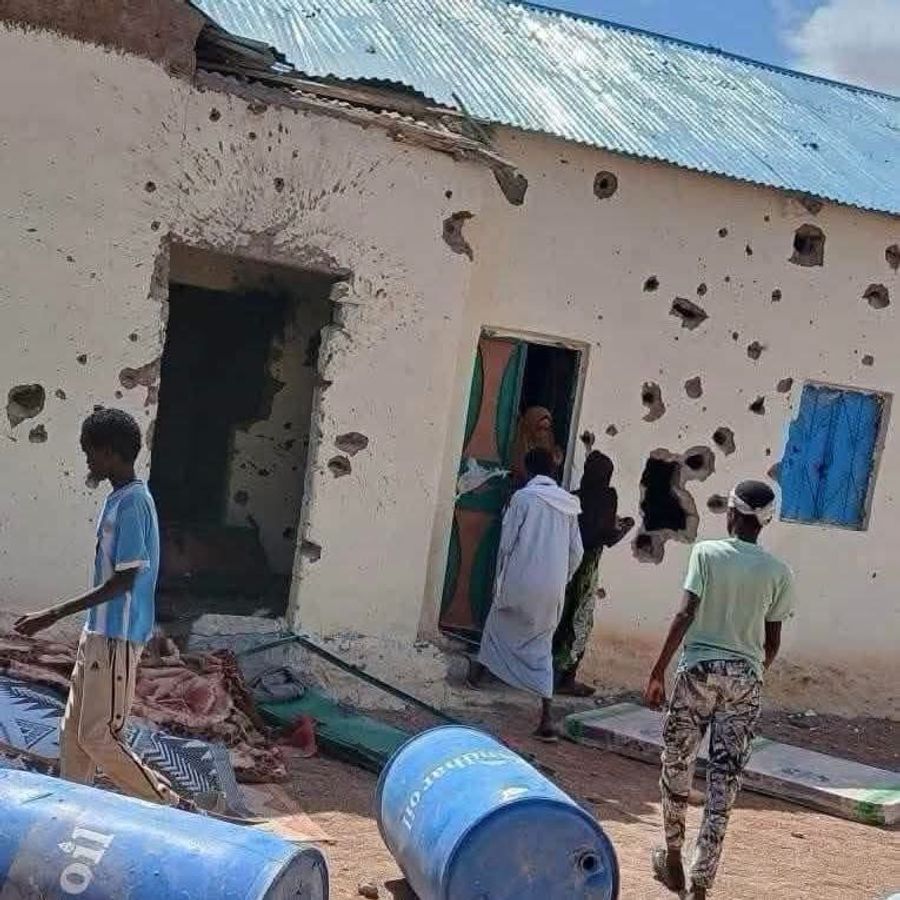
According to local residents, armed attackers targeted civilian homes in Ari-Cadeeye on Monday, with reports indicating that more than 21 people were killed.
Witnesses said heavy weapons were used in residential areas, and families reported being caught off guard by intense gunfire. Local sources said armed groups moved through parts of the town during the incident.
Community representatives said many of the victims were civilians, including elderly traditional elders. The attack has been described by local leaders as one of the most serious incidents in the area in recent months.
On Tuesday, a mass funeral was held in Las Anod for the victims. Religious leaders led prayers while community members called for calm and restraint amid rising tensions.
Government Response
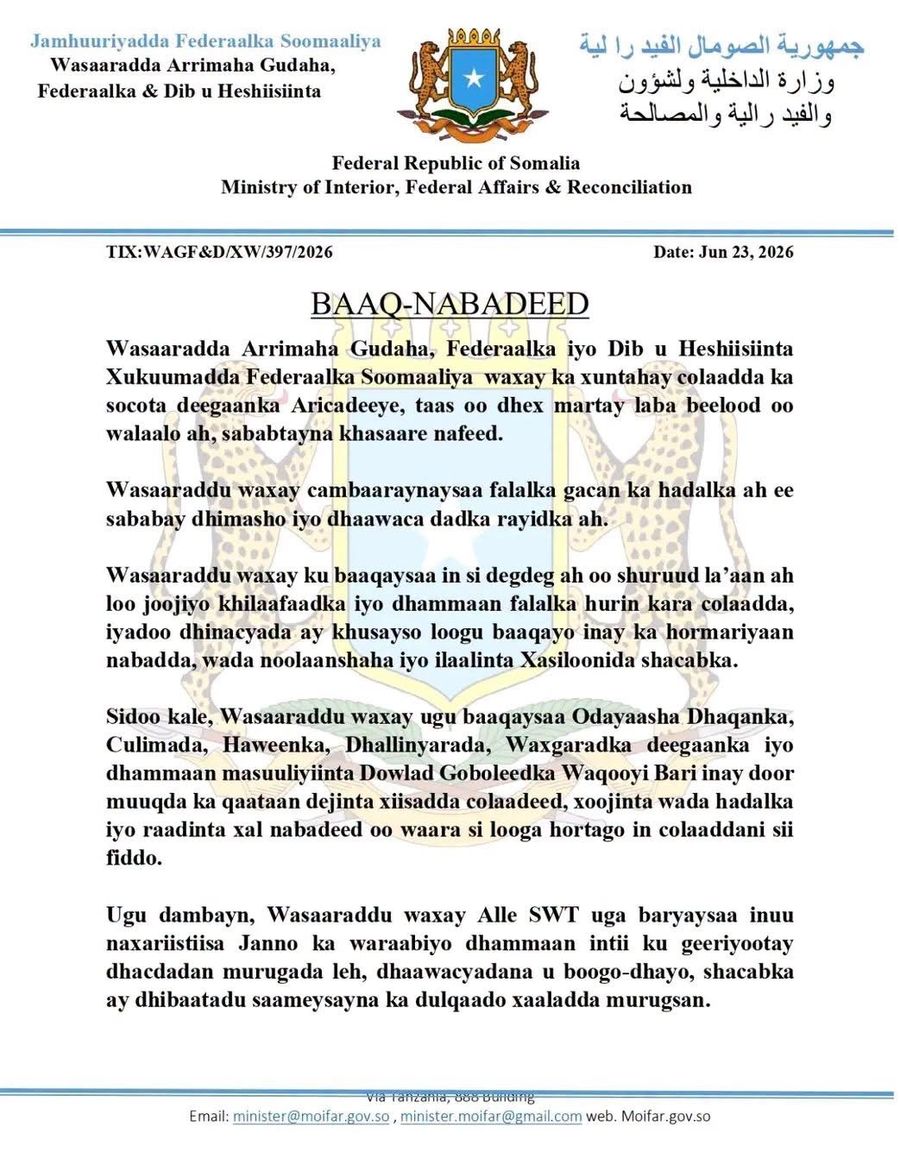
The Ministry of Interior, Federal Affairs and Reconciliation of the Federal Government of Somalia expressed sorrow over the violence in Ari-Cadeeye, describing it as a conflict between two brotherly communities that resulted in loss of life.
The ministry strongly condemned acts of violence that led to the killing and injury of civilians.
It called for an immediate and unconditional cessation of hostilities and urged all parties involved to prioritize peace, coexistence, and the protection of civilians.
The ministry also appealed to traditional elders, religious leaders, women, youth, local intellectuals, and officials of the Northeastern State administration to take an active role in de-escalating tensions, strengthening dialogue, and pursuing a sustainable peaceful resolution to prevent further escalation.
Local leaders said the victims included respected elders and civilians from surrounding communities.
Families who attended the funeral described the loss as devastating, with several households reportedly losing multiple relatives in the violence.
Community members warned that the humanitarian and social impact could deepen if the situation is not addressed through urgent mediation and support.
According to local residents and community accounts, the violence may have been preceded by a separate killing on the outskirts of Ari-Cadeeye involving individuals traveling in a vehicle carrying khat.
Multiple sources suggested that the earlier incident may have increased tensions and contributed to possible retaliatory violence. These claims remain unverified and have not been independently confirmed by authorities.
Residents said the attack unfolded rapidly, with heavy gunfire reported in residential neighborhoods and armed groups allegedly entering the town.
The situation in Ari-Cadeeye remained tense on Tuesday, with conflicting accounts still emerging.
The Sool region has experienced recurring insecurity and periodic outbreaks of violence in recent years, affecting civilians and disrupting local stability.
Las Anod and surrounding areas have seen episodes of armed conflict, displacement, and local tensions involving communities and armed actors. Traditional elders have often played a key role in mediation and conflict resolution.
Analysts and community leaders warn that localized disputes can escalate quickly in the absence of strong dialogue mechanisms and effective reconciliation efforts.
Authorities and community leaders are expected to continue discussions aimed at de-escalating tensions and preventing further violence.
Traditional elders and civil society actors have been urged to intensify mediation efforts and engage directly with affected communities.
Further updates are expected as investigations continue and more information becomes available regarding the circumstances of the incident.
The reported killing of more than 21 civilians has heightened fears over deteriorating security conditions in parts of the Sool region.
The involvement of traditional elders among the victims has deepened concerns, given their role in mediation and maintaining community stability.
The federal government’s call for urgent ceasefire reflects growing concern that the violence could escalate into wider intercommunal conflict if not contained.
For local communities, the focus remains on stopping further violence, supporting bereaved families, and restoring dialogue between affected groups.