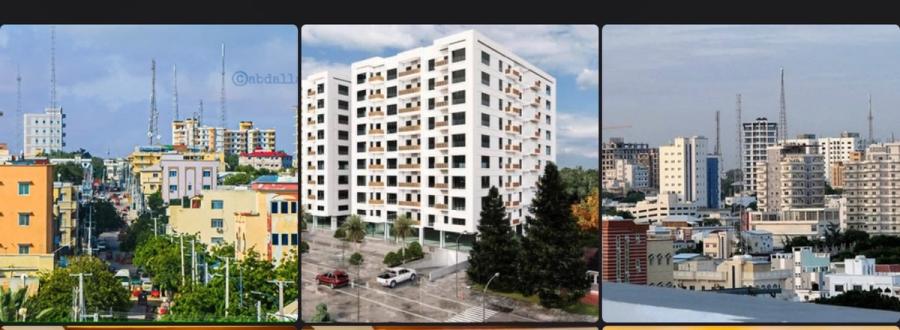
MOGADISHU, Somalia — June 20, 2026 -Mogadishu is witnessing a sharp increase in residential and commercial construction projects, with new skyscrapers and business centers rising across several districts of the capital. According to developers, residents, and local business operators, the construction surge reflects expanding investor confidence and growing demand for modern housing and office space in Somalia’s rebuilding capital.
Construction activity has accelerated in key areas of Mogadishu including Hodan, Howlwadag, Waberi, and parts of the seaside corridor, where multiple high rise buildings are currently under development. Contractors working in the city say the skyline is changing rapidly as multi story residential towers, hotels, and office complexes take shape.
According to local construction companies, several new projects have reached advanced stages, with reinforced concrete structures rising above previously low density neighborhoods. Some of the new developments are designed as mixed use buildings combining residential apartments, retail spaces, and corporate offices.
Residents in different districts report that construction sites are now a common feature of daily life. According to local residents, cranes, cement mixers, and heavy trucks operate throughout the day as demand for housing continues to increase.
Business owners say the expansion of commercial centers is also contributing to increased economic activity. New shopping complexes, office buildings, and service centers are opening in areas that were previously dominated by smaller informal businesses.
According to municipal planning officials, the city is experiencing one of its fastest construction cycles in decades, driven by private investment and diaspora funding. Officials say many of the projects are privately financed, with growing participation from Somali investors abroad.
City authorities in Mogadishu have acknowledged the rapid pace of construction and say efforts are underway to improve urban planning and infrastructure management.
According to municipal officials, the administration is working to regulate building standards, improve road access to construction zones, and ensure compliance with safety regulations. Officials also noted that the expansion of vertical housing is part of a broader shift toward higher density urban development.
Government representatives say the construction boom reflects improved stability in parts of the capital, although they also emphasize the need for coordinated planning to prevent congestion and infrastructure strain.
Mogadishu has undergone significant reconstruction over the past decade following years of conflict that damaged much of its infrastructure. In earlier years, much of the city consisted of low rise buildings and informal settlements.
According to economic observers, the current construction surge is driven by several factors including increased diaspora remittances, private sector growth, and rising demand for urban housing as population inflows to the capital continue.
In recent years, investment in real estate has become one of the most active sectors in Somalia’s urban economy. Developers have increasingly focused on high rise residential and commercial buildings to maximize limited urban land.
Urban planners have previously raised concerns about infrastructure capacity, including water supply, road networks, drainage systems, and electricity distribution, which are struggling to keep pace with rapid urban expansion.
The construction boom in Mogadishu signals a major shift in the city’s economic and urban development trajectory. The rise of skyscrapers and modern business centers reflects increasing investor confidence and a growing private sector presence in the capital.
The expansion also highlights the changing nature of urban housing demand, with more residents seeking modern apartments and commercial spaces. This shift is reshaping traditional neighborhoods and accelerating vertical development in areas once dominated by low rise housing.
At the same time, the rapid pace of construction raises questions about long term urban planning and infrastructure sustainability. Without coordinated development, experts warn that traffic congestion, service delivery challenges, and uneven access to utilities could increase pressure on the city.
Despite these challenges, the ongoing transformation continues to position Mogadishu as a central hub for commerce, real estate investment, and economic activity in Somalia, with the construction sector playing a leading role in shaping its future growth.