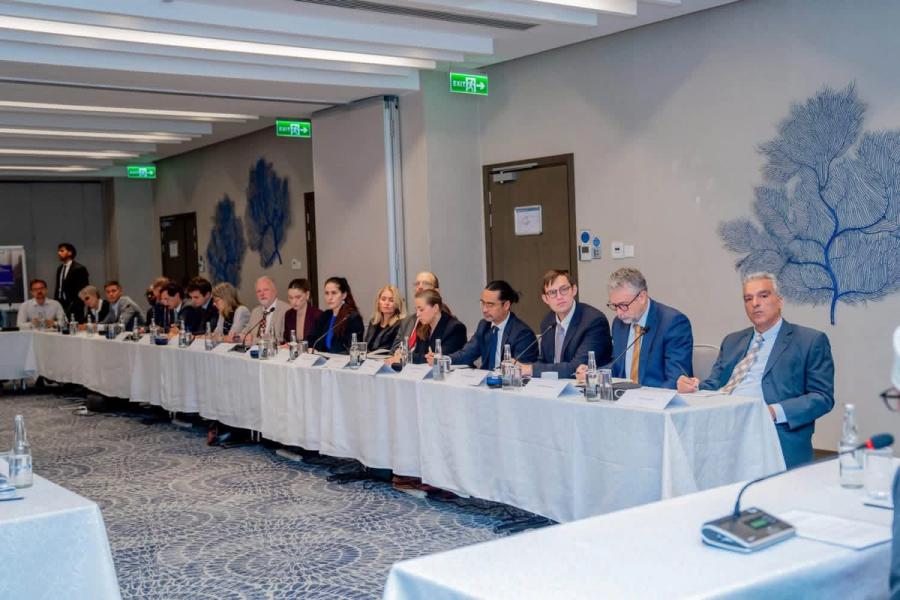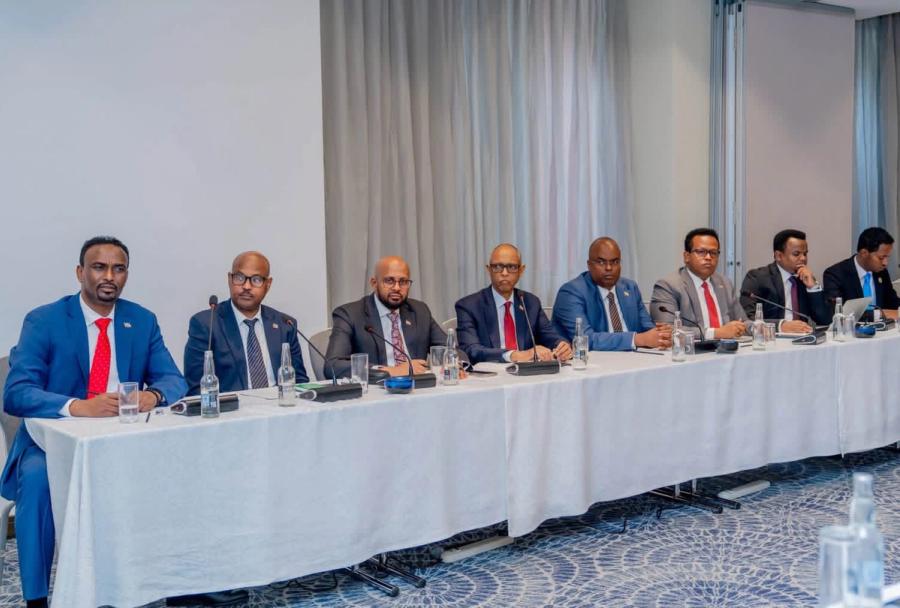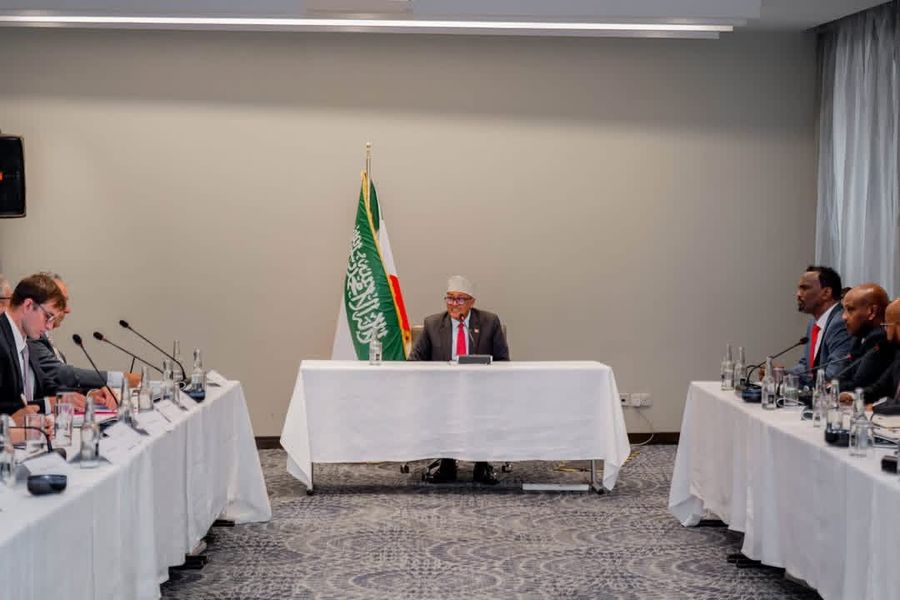
NAIROBI, Kenya — August 7, 2026 — Somaliland President Abdirahman Mohamed Abdullahi “Irro” said his administration is seeking mutually beneficial international partnerships rather than aid and handouts, as he highlighted the disarmament and integration of about 6,000 clan militia members and efforts to pursue peaceful dialogue over disputes, including tensions in the Sool region.
Irro made the remarks while addressing international representatives during meetings in Kenya, where he outlined his administration’s approach to foreign relations, security and internal reconciliation.
The Somaliland president said his government wants its engagement with international partners to move toward cooperation based on shared interests and reciprocal benefits rather than traditional aid dependency.
“Somaliland is not seeking aid and handouts,” Irro said, according to remarks from the meeting, emphasizing instead a relationship centered on partnership and exchange.
His comments come as Somaliland seeks to expand its diplomatic and economic engagement abroad while continuing its longstanding campaign for international recognition as an independent state.
Irro also used the meeting to highlight what he described as progress by his administration in addressing armed clan groups and strengthening formal security institutions.
The president said his government had disarmed approximately 6,000 clan militia members, provided them with training and subsequently integrated them into Somaliland’s security forces.
The figure was provided by the president and was not independently verified.
Security, Dialogue and Sool
Irro said his administration had prioritized dialogue as part of efforts to resolve political and security disputes rather than relying solely on military measures.
He said his government had entered talks over disputes in western areas and remained committed to pursuing peaceful solutions wherever tensions emerged.
The president specifically pointed to the Sool region, where political disputes and armed confrontations have posed one of the most serious security challenges facing Somaliland in recent years.
Irro said his administration would continue working toward peace in Sool and other areas affected by political or clan tensions.
Sool has remained particularly sensitive following the conflict centered on Las Anod, where fighting that erupted in 2023 between Somaliland forces and locally organized fighters caused significant casualties and displacement.
Somaliland forces subsequently withdrew from positions around Las Anod after months of fighting. The conflict dramatically altered political and security arrangements in the area and remains central to disputes over authority and territorial control in northern Somalia.
Any sustained political settlement involving communities in Sool would therefore represent a significant test of Irro’s reconciliation strategy.
Partnership Rather Than Aid
Irro’s message in Kenya also focused heavily on Somaliland’s economic and diplomatic ambitions.
By emphasizing partnership rather than financial assistance, the president sought to present Somaliland as an actor looking for investment, trade and mutually beneficial international cooperation.
Somaliland has maintained its own governing institutions, security forces and political system since declaring independence from Somalia in 1991. It has pursued international recognition for more than three decades, but its sovereignty has not received broad international recognition.
Somalia’s federal government considers Somaliland part of Somalia and has repeatedly rejected attempts to recognize it as an independent country.
The dispute over Somaliland’s political status remains a major issue in Somalia’s domestic politics and its relations with neighboring countries and international partners.
For Somaliland authorities, expanding direct diplomatic and economic relationships abroad has remained an important part of their strategy to strengthen their international position.
Kenya has been an important regional venue for Somaliland’s diplomatic outreach, with officials from Hargeisa maintaining contacts with political, diplomatic and business figures based in Nairobi.
Irro took office after defeating former President Muse Bihi Abdi in Somaliland’s November 2024 presidential election, marking another peaceful transfer of political leadership in the territory.
His administration inherited several major challenges, including unresolved tensions in the east, relations with Somalia’s federal government, economic pressures and Somaliland’s continued campaign for international recognition.
Security and reconciliation have been particularly sensitive following the Las Anod conflict.
The emergence of a new political and security administration in areas previously claimed by Somaliland has complicated Hargeisa’s efforts to restore its influence in parts of Sool and neighboring regions.
Against that backdrop, Irro’s emphasis on dialogue signals an attempt to place negotiations and reconciliation at the center of his administration’s approach to outstanding internal disputes.
His claim that 6,000 clan militia members have been disarmed, trained and incorporated into formal security forces also suggests that his government views security-sector integration as part of its strategy for reducing the presence of independently armed clan groups.
The long-term effectiveness of that approach will depend on whether disarmament is sustained and whether political agreements can prevent communities from returning to armed mobilization during future disputes.
Irro’s government is expected to continue diplomatic outreach to regional and international partners as Somaliland seeks greater foreign investment, economic cooperation and political engagement.
Security developments in Sool will remain closely watched because the region continues to be one of the most politically sensitive areas claimed by Somaliland.
Any formal negotiations or reconciliation initiatives involving local authorities, traditional elders and communities in contested areas could provide a clearer indication of how Irro intends to translate his pledge for peaceful dialogue into policy.
His administration will also face scrutiny over the reported integration of thousands of former clan militia members into Somaliland’s security forces, including how those personnel are trained, deployed and incorporated into established command structures.
Irro’s remarks combine two central priorities for his administration: strengthening Somaliland’s international engagement and reducing internal security tensions. Presenting Somaliland as a potential trade and investment partner rather than primarily an aid recipient is designed to broaden the basis of its relationships with foreign governments and institutions.
The reported disarmament of about 6,000 clan fighters could be significant if it results in a lasting reduction in independently armed groups. Clan militias have historically played influential roles during periods of political and security tension across Somalia and Somaliland, making successful integration into formal security structures potentially important for longer-term stability.
Sool remains the more difficult test. The legacy of the Las Anod fighting and continuing disputes over political authority mean that military measures alone are unlikely to provide a durable settlement. Irro’s emphasis on dialogue could open opportunities for negotiations, but any lasting agreement would require the participation and acceptance of communities and political actors directly involved in the dispute.
The president’s message in Kenya also reflects Somaliland’s wider effort to demonstrate political stability and economic potential to international partners while pursuing its longstanding diplomatic objectives abroad.