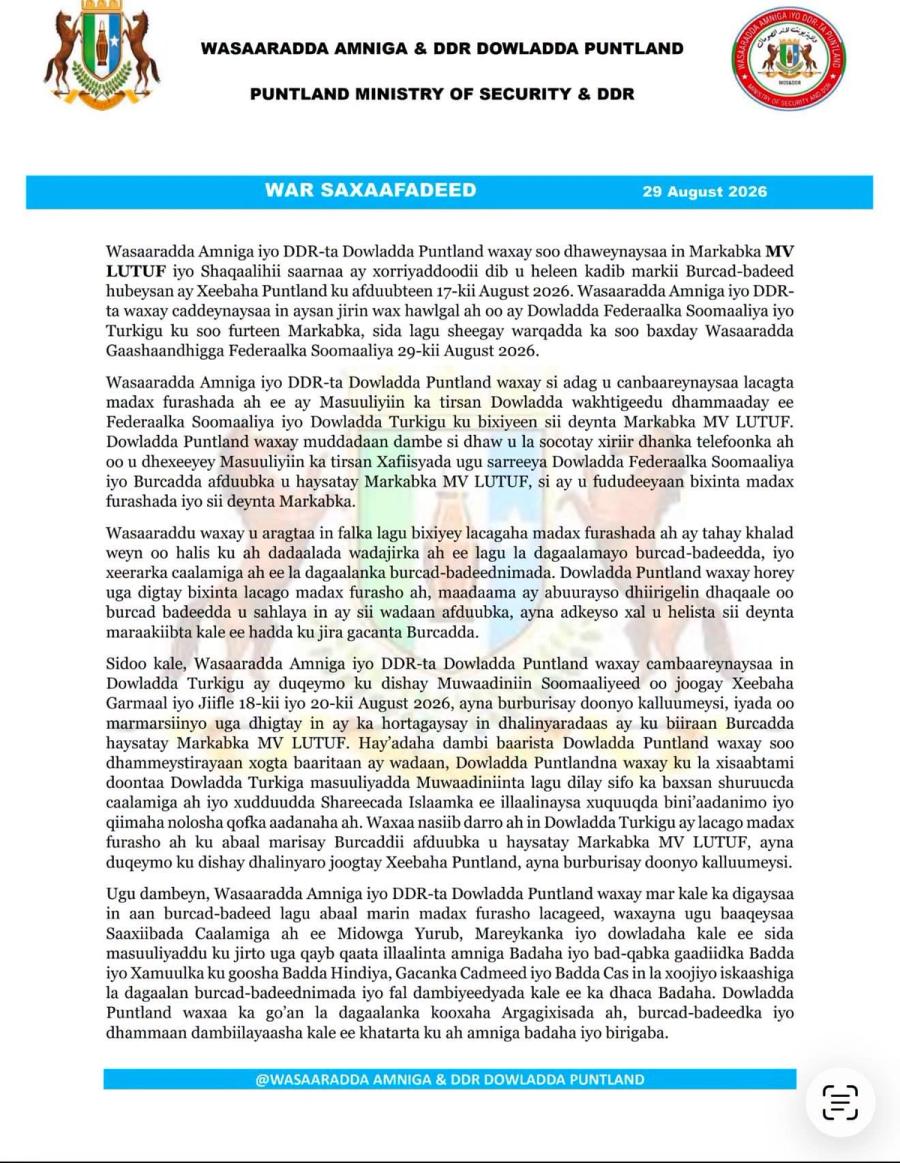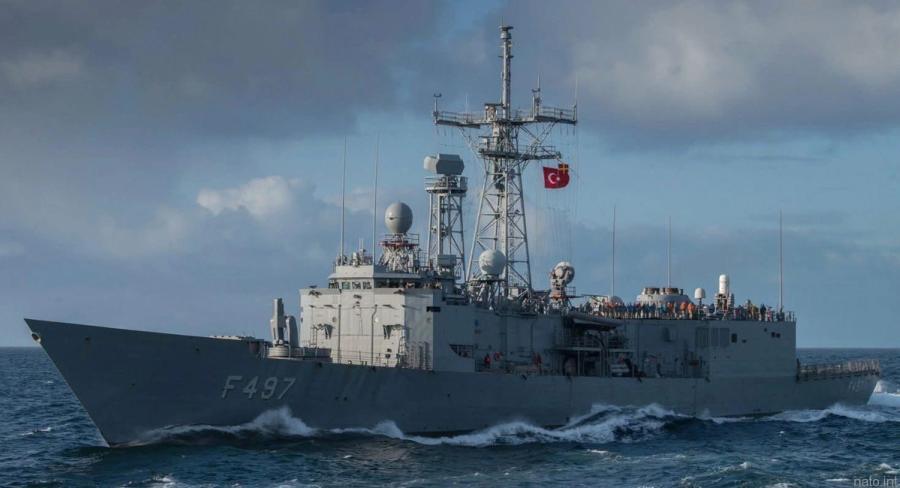
GAROWE, Somalia — August 30, 2026 — Puntland has accused Somalia’s Federal Government and Turkey of paying a ransom to secure the release of the MV LUTUF, a Turkish-owned cargo vessel hijacked off its coast, warning that any payment to pirates could undermine efforts to combat a renewed surge in maritime crime.
Puntland alleges ransom payment
In a statement issued Saturday, the Puntland administration strongly condemned the alleged ransom payment, describing it as damaging to years of Somali and international counter-piracy operations.
Puntland did not disclose the amount allegedly paid, identify those who negotiated with the hijackers or provide evidence supporting its claim. Neither the Somali Federal Government nor Turkey had publicly addressed the ransom allegation at the time of publication.
Somalia’s Defence Ministry presented a different account of the vessel’s release. It said Somali and Turkish forces recovered the ship in a joint operation conducted under the two countries’ defence cooperation agreement.
According to the ministry, four boats used by the suspected pirates were destroyed and 14 alleged pirates were killed. It said the remaining hijackers fled, allowing security forces to take control of the vessel. The ministry did not mention a ransom payment or provide details about the condition of the crew.
The Cameroon-flagged MV LUTUF was hijacked on August 17 off the Nugaal coast in Puntland. The vessel was reportedly carrying Turkish military equipment to Mogadishu when armed men seized it near Marraya in Eyl district and moved it towards the Garmaal area.
The crew included six Indian nationals, one Turkish citizen, one Georgian and two Serbian security personnel, according to reporting at the time of the hijacking. Their current condition has not been fully detailed by Somali authorities.
A community elder from Jiifle, Abdullahi Warsame, confirmed that the vessel and its crew had been freed, according to The Associated Press.
Puntland said paying money to hijackers, if confirmed, would provide criminal groups with an incentive to seize more vessels and hold their crews for ransom.
“Pirates should not be rewarded with ransom payments,” the administration said, urging international partners to support enforcement operations, coastal surveillance and the prosecution of piracy suspects.
Allegations over coastal airstrikes
Puntland also renewed its accusation that Turkey conducted airstrikes near Garmaal and Jiifle between August 18 and 20, killing Somali civilians and destroying fishing boats.
The regional administration claimed the strikes were carried out on the grounds that the targeted boats were being used to support or recruit young men into piracy.
Puntland previously said four civilians were killed near Garmaal and nine others near Jiifle. Those casualty figures and responsibility for the reported attacks have not been independently verified.
Reporting after the hijacking confirmed that an airstrike hit a small boat after it allegedly delivered supplies to the pirates, killing four men and injuring two others. However, responsibility for that strike and the identities of those killed were not established.
Turkey has not publicly responded to Puntland’s airstrike allegations.
Ankara is one of the Federal Government’s closest security partners. The two countries signed a 10-year defence and economic cooperation framework in 2024 that includes assistance with maritime security, protection of Somalia’s coastline and efforts to combat piracy and illegal fishing.
Puntland has previously raised objections to maritime agreements negotiated by Mogadishu that affect waters off its territory, arguing that the regional administration should be consulted on security and resource-related decisions.
Appeal to international partners
Puntland called on the European Union, the United States and other international partners to strengthen cooperation with Somali authorities fighting piracy and other maritime offences.
The administration said counter-piracy efforts should prioritise coordinated law enforcement and protection for coastal communities. It warned that unverified military operations resulting in civilian casualties could weaken public trust and complicate security cooperation.
Piracy off Somalia declined sharply after reaching its height between 2009 and 2011, following the deployment of international naval forces, the use of armed security teams aboard commercial vessels and the prosecution of suspected hijackers.
Attacks began increasing again in late 2023. Piracy off Somalia reached its highest level since 2013 during 2026, with at least 15 attacks reported by late August, according to an AFP analysis of International Maritime Organization data.
The European Union’s Operation Atalanta continues to deter piracy, protect vulnerable vessels and monitor illicit maritime activity off Somalia and across the western Indian Ocean. The mission lists the prevention and repression of piracy among its principal responsibilities.