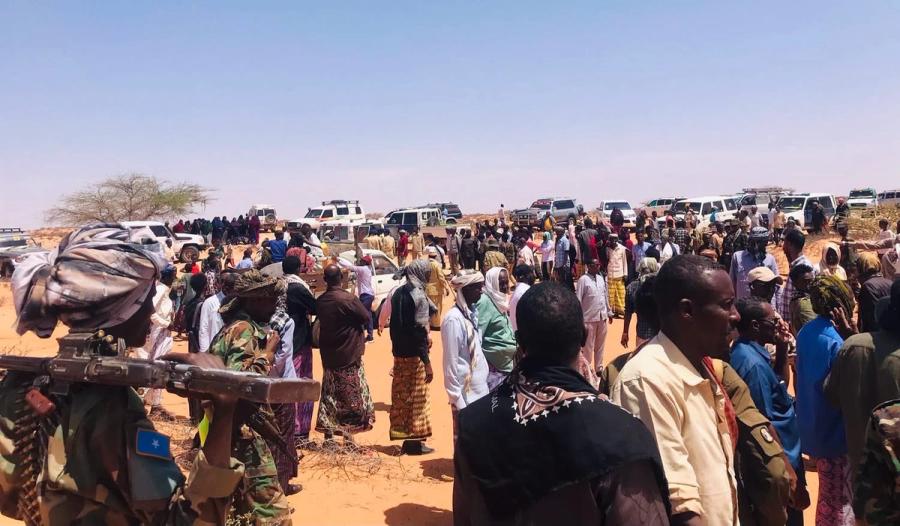
JARIIBAN, Somalia — July 17, 2026 —Puntland authorities on Friday carried out the execution of Ibrahim Ahmed Kooshin, who had been convicted of killing Jariiban District Police Commander Lt. Col. Guuleed Abdulkadir Ali Kadleeye, in a case that attracted significant attention across the semi-autonomous state. Officials said the death sentence was implemented after the completion of judicial proceedings under the principle of qisas, or retaliatory justice.
The execution was carried out by firing squad in Jariiban, a district in Somalia’s Mudug region, according to Puntland officials.
Authorities said Kooshin had been found guilty by a competent court of the fatal shooting of Lt. Col. Guuleed Abdulkadir Ali Kadleeye, who served as the commander of the Jariiban District Police.
The sentence was implemented after legal procedures had been completed and the ruling became enforceable, officials said. Puntland authorities did not immediately release additional details regarding the final stage of the judicial process.
The execution marks the conclusion of one of the most closely followed criminal cases in the district in recent days, following the killing of a senior police officer while on duty.
Lt. Col. Guuleed Abdulkadir Ali Kadleeye was fatally shot in Jariiban earlier this week in an incident that shocked local residents and security officials.
Following the killing, Puntland police launched an investigation and announced the arrest of Ibrahim Ahmed Kooshin, identifying him as the primary suspect in the case.
According to Puntland security officials, prosecutors presented evidence before the court, which later convicted Kooshin of murder and imposed the death penalty.
Authorities said Friday’s execution was carried out in accordance with the court’s final judgment.
The victim, Lt. Col. Guuleed Abdulkadir Ali Kadleeye, was the commander of the Puntland Police in Jariiban district and was responsible for overseeing local law enforcement and security operations.
The convicted man, Ibrahim Ahmed Kooshin, had been taken into custody shortly after the incident before being prosecuted through Puntland’s judicial system.
Puntland police and judicial authorities supervised the implementation of the court’s ruling, according to officials.
Puntland authorities have not announced any additional security measures following the execution, but officials have previously stated that attacks targeting members of the security forces would be investigated and prosecuted under the law.
Security officials said the implementation of the sentence reflects the completion of judicial procedures following the court’s verdict.
No statement was immediately issued by federal authorities regarding the case.
The killing of Lt. Col. Guuleed Abdulkadir Ali Kadleeye prompted a swift response from Puntland security agencies.
Police announced the arrest of the suspect soon after the commander was killed, saying investigators had gathered evidence linking him to the shooting.
The case moved rapidly through Puntland’s judicial system before the court issued a death sentence based on its findings.
Capital punishment remains part of Puntland’s legal system and has been used in cases involving murder and serious security-related offences after court convictions.
The principle of qisas, recognized in Somali legal practice alongside statutory law in some jurisdictions, allows for the death penalty in murder cases when ordered by the courts and carried out following legal procedures.
With the execution completed, the criminal case is considered legally concluded.
Security officials are expected to continue monitoring the situation in Jariiban, while local authorities are likely to maintain efforts aimed at strengthening public security and protecting law enforcement personnel.
The killing of a district police commander has also renewed attention on the security risks faced by officers working in remote districts of Puntland.
The execution concludes a high-profile criminal case involving the killing of a senior police commander, an incident that highlighted the security challenges facing law enforcement officers in parts of Puntland.
The case also demonstrates the speed with which Puntland’s police and judicial institutions handled the investigation, prosecution, and implementation of the court’s ruling, according to official accounts.
For local communities, the case underscores the authorities’ commitment to pursuing suspects accused of attacks on security personnel through the judicial process. At the same time, security analysts note that preventing future attacks will depend not only on prosecutions but also on continued investment in policing, intelligence gathering, and community cooperation.