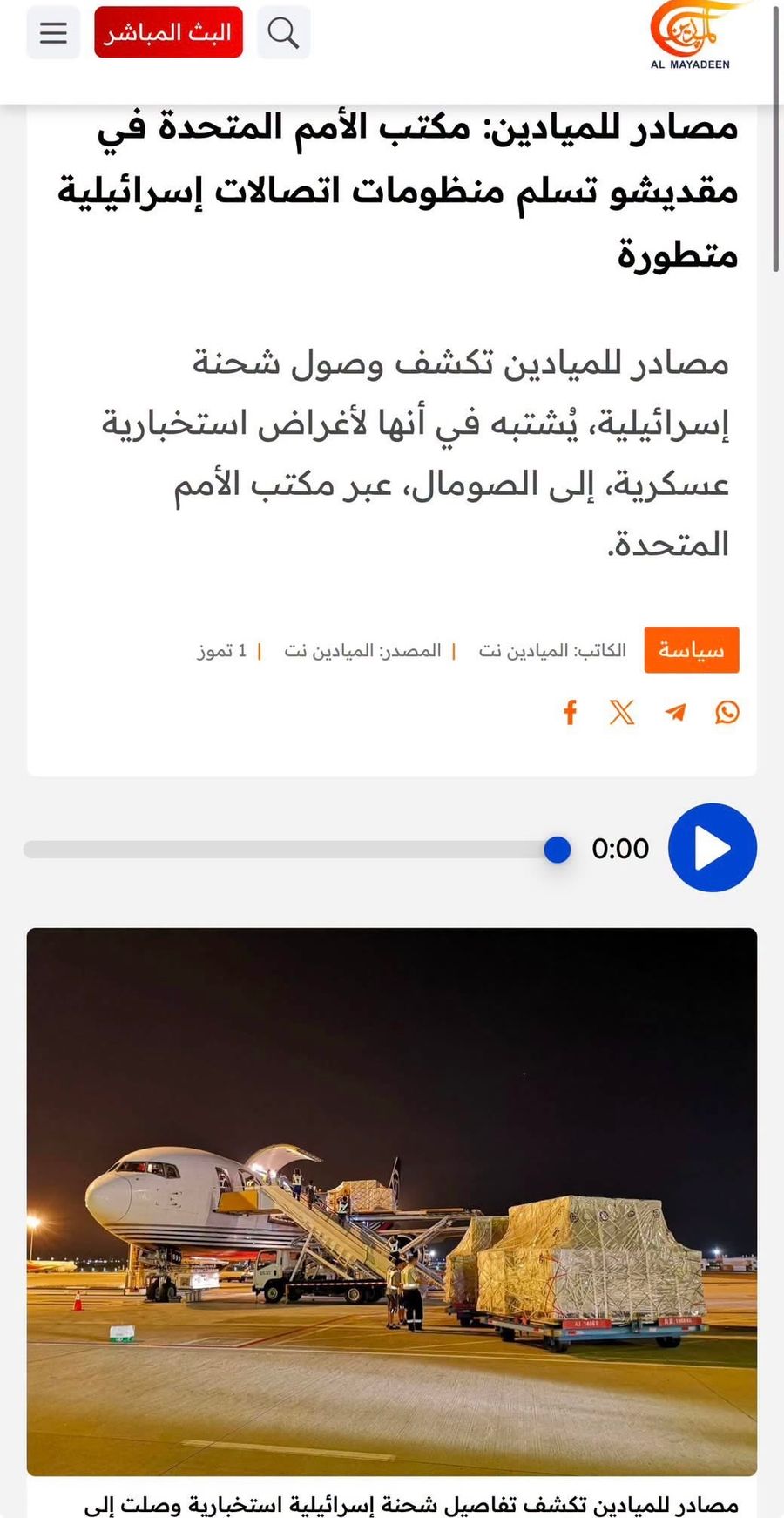
MOGADISHU, Somalia — July 2, 2026 —A Lebanon-based television network has alleged that a shipment of advanced communications and surveillance equipment originating from Israel was delivered to Somalia’s capital, Mogadishu, last month under the name of the United Nations.
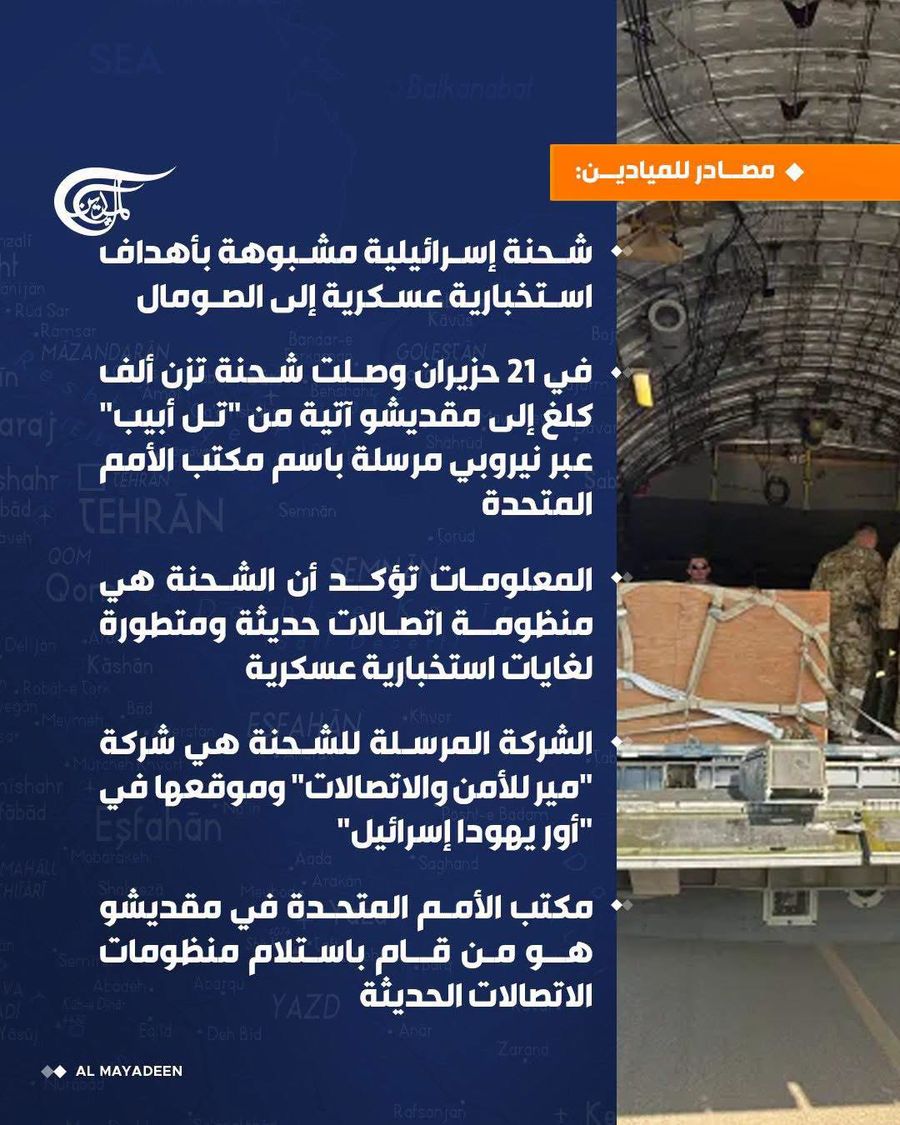
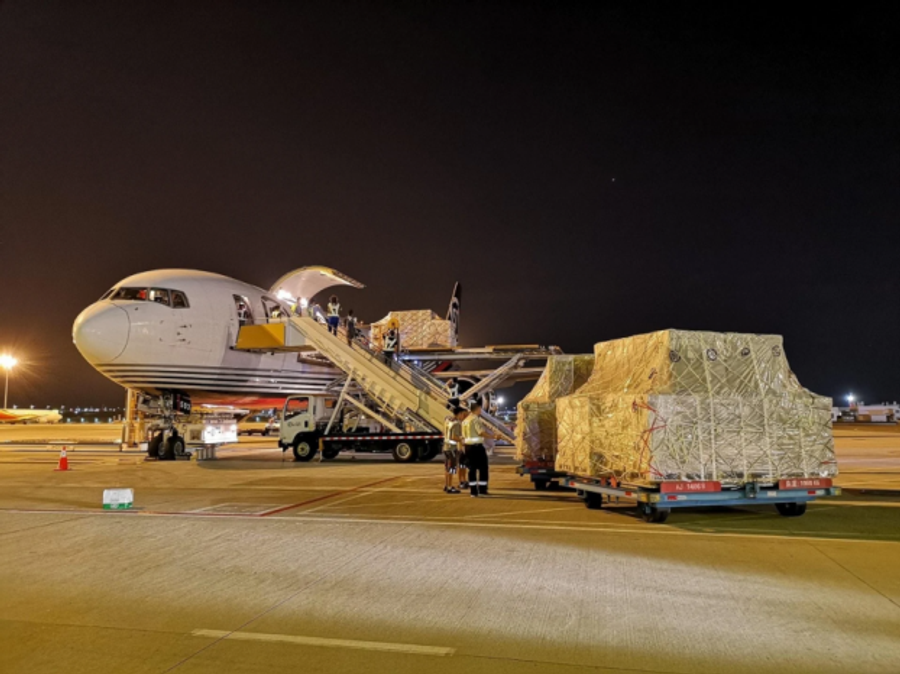
According to a report published by Al Mayadeen, the shipment weighed approximately one tonne and arrived in Mogadishu on June 21 after transiting through Nairobi, Kenya. The broadcaster cited unnamed sources who claimed the equipment was subsequently received by intelligence officials at a United Nations facility located within the Aden Adde International Airport complex.
The allegations have not been independently verified, and no documentary evidence has been publicly released to support the claims.
Neither the Federal Government of Somalia, Israel, nor the United Nations has issued a public response to the report as of Thursday.
Al Mayadeen reported that the shipment contained advanced communications systems, intelligence-gathering technology, and surveillance equipment allegedly intended for security and intelligence operations.
The broadcaster said the cargo was transported under the name of the United Nations before arriving in Mogadishu. It further alleged that Somali intelligence personnel later took possession of the equipment at a UN office situated within the airport compound.
The report did not specify the exact nature of the equipment, its intended operational use, or the identities of the individuals allegedly involved in the transfer.
No official documents, photographs, customs records, or statements from government agencies were included in the report.
Government Response
There has been no official reaction from Somali authorities regarding the allegations. Officials from the Federal Government of Somalia have not publicly confirmed or denied the report, and no statement has been issued by the National Intelligence and Security Agency (NISA).
Similarly, Israeli authorities have not commented on the claims.
The United Nations has also not publicly responded to the allegations concerning the reported use of its name in the transportation of the shipment.
Without official confirmation from any of the parties named in the report, the allegations remain unverified.
Regional and Political Context
The Horn of Africa occupies a strategically important position linking the Red Sea, the Gulf of Aden, and the Indian Ocean. The region has become an area of increasing geopolitical competition involving regional and international powers seeking influence over maritime security, trade routes, and counterterrorism operations.
Somalia continues to face security challenges linked to the militant group Al-Shabaab, prompting the government to strengthen cooperation with a range of international partners in intelligence, surveillance, and military operations.
The United Nations maintains a significant presence in Somalia through humanitarian, development, and political missions. UN facilities at Aden Adde International Airport serve as key operational hubs for international agencies working across the country.
Al Mayadeen, the broadcaster that published the allegations, is headquartered in Lebanon and was founded by former Al Jazeera journalist Ghassan Ben Jeddou. The outlet is often described by analysts as being politically close to Hezbollah and Iran, although it identifies itself as an independent media organization.
Analysis and Developments
Attention is likely to focus on whether Somali authorities, the United Nations, or Israeli officials choose to address the allegations publicly. Security analysts say any official confirmation or denial could help clarify the circumstances surrounding the reported shipment and determine whether further investigation is warranted.
Observers will also be watching for any additional evidence that may emerge to support or contradict the claims made by Al Mayadeen.
At present, the report remains based solely on unnamed sources cited by the broadcaster, and its allegations have not been independently verified by international media organizations or official institutions.
The claims may also attract attention because they involve the reported use of the United Nations’ name in transporting equipment. Any suggestion that international organizations were used, knowingly or unknowingly, in the transfer of sensitive cargo would likely prompt calls for clarification.
For Somalia, the report comes at a time when the government is seeking to strengthen national security capabilities while maintaining relationships with international partners supporting stabilization and counterterrorism efforts.
The absence of official responses from the parties involved means the story remains at an early stage. Future statements, investigations, or evidence could significantly affect how the allegations are understood by policymakers, security experts, and the wider public.
Relations between Israel and Somalia are already highly sensitive, particularly after Israel’s recognition of Somaliland as an independent entity, a move rejected by Mogadishu. Against this backdrop, it remains unclear how advanced communications and surveillance equipment allegedly originating from Israel was transported to Somalia’s capital, or whether it was intended for use by a United Nations office in Somalia for internal operational purposes.