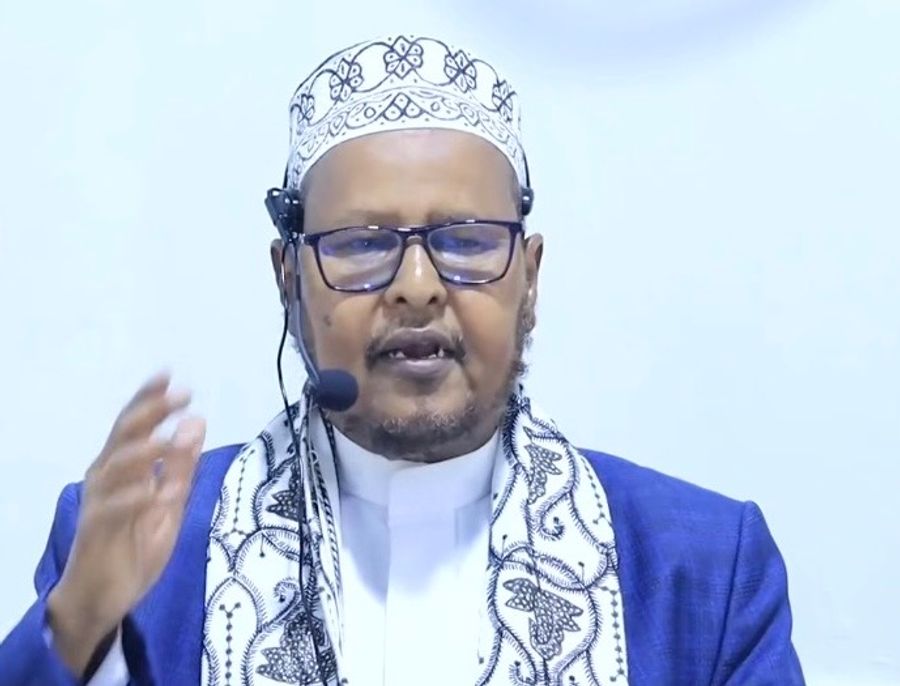
MOGADISHU, Somalia — June 26, 2026 —Sheikh Bashir Ahmed Salad, the Chairman of the Somali Scholars Council, has strongly criticized the security situation in Mogadishu, saying it does not reflect genuine public safety. His remarks, made in a public statement, coincided with reports of a prison sentence against Sacdiya Macalin Ali Bajaj and the detention of journalist Abdullahi Abuukar Cali Diirshe in Mogadishu, raising renewed concerns over governance and civil liberties.
Sheikh Bashir Ahmed Salad said the security situation in Mogadishu has created conditions where citizens feel restricted rather than protected. He described the situation as a form of control that limits freedom of movement and expression, according to his public remarks.
He stated that real security should protect the rights and dignity of citizens. He further claimed that some residents in Mogadishu face arrest, detention, and legal action in ways that, in his view, undermine public trust in state institutions.
His comments also contrasted areas under government administration with regions controlled by armed opposition groups, arguing that safety should not be measured only by the absence of attacks but also by respect for civil rights.
According to local residents and community observers, the remarks have circulated widely in Mogadishu and triggered debate on social media and within civil society groups.
According to court information cited by local sources, Sacdiya Macalin Ali Bajaj was sentenced to three years in prison earlier this week. The case has drawn attention from activists who say the conviction relates to criticism of government actions. Court officials have not issued a detailed public statement explaining the ruling in full detail.
Separately, according to colleagues and local journalists, Abdullahi Abuukar Cali Diirshe has been held in detention for a second day at a facility in Yaaqshiid district in Mogadishu. The reasons for his arrest have not been independently verified, and authorities have not released an official explanation at the time of reporting.
Government security officials have not yet provided a comprehensive response to the allegations raised by the scholar or the detention cases.
As of publication, Somali federal authorities have not issued an official statement directly addressing Sheikh Bashir Ahmed Salad’s remarks. Security agencies in Mogadishu routinely state that arrests and legal actions are carried out under due process, but specific responses regarding these recent cases have not been made public.
Judicial authorities also have not released detailed documentation regarding the sentencing of Sacdiya Macalin Ali Bajaj beyond confirmation of the court ruling reported by local sources.
Mogadishu has experienced fluctuating security conditions in recent years, with government forces maintaining control of the capital while facing continued threats from armed groups. Security operations in the city often involve arrests linked to suspected security threats, criminal activity, or political tensions.
At the same time, civil society organizations and media groups have periodically raised concerns about freedom of expression and due process in Somalia. Detentions of journalists and activists have previously sparked debate over the balance between national security and civil liberties.
The Somali Scholars Council, led by Sheikh Bashir Ahmed Salad, has previously issued statements on governance, law enforcement practices, and public accountability, often positioning itself as a moral and social advisory body.
The remarks by Sheikh Bashir Ahmed Salad add to ongoing public debate in Somalia over how security is defined and implemented in Mogadishu. His criticism highlights a broader tension between state security operations and concerns over individual freedoms.
The reported detention of a journalist and the sentencing of a political or social critic may intensify scrutiny from local and international observers focused on media freedom and judicial transparency. However, full details of these cases remain limited at this stage.
If such cases continue without clear public communication from authorities, analysts say it could deepen mistrust between parts of the public and state institutions, particularly in urban areas where political awareness and media activity are high.