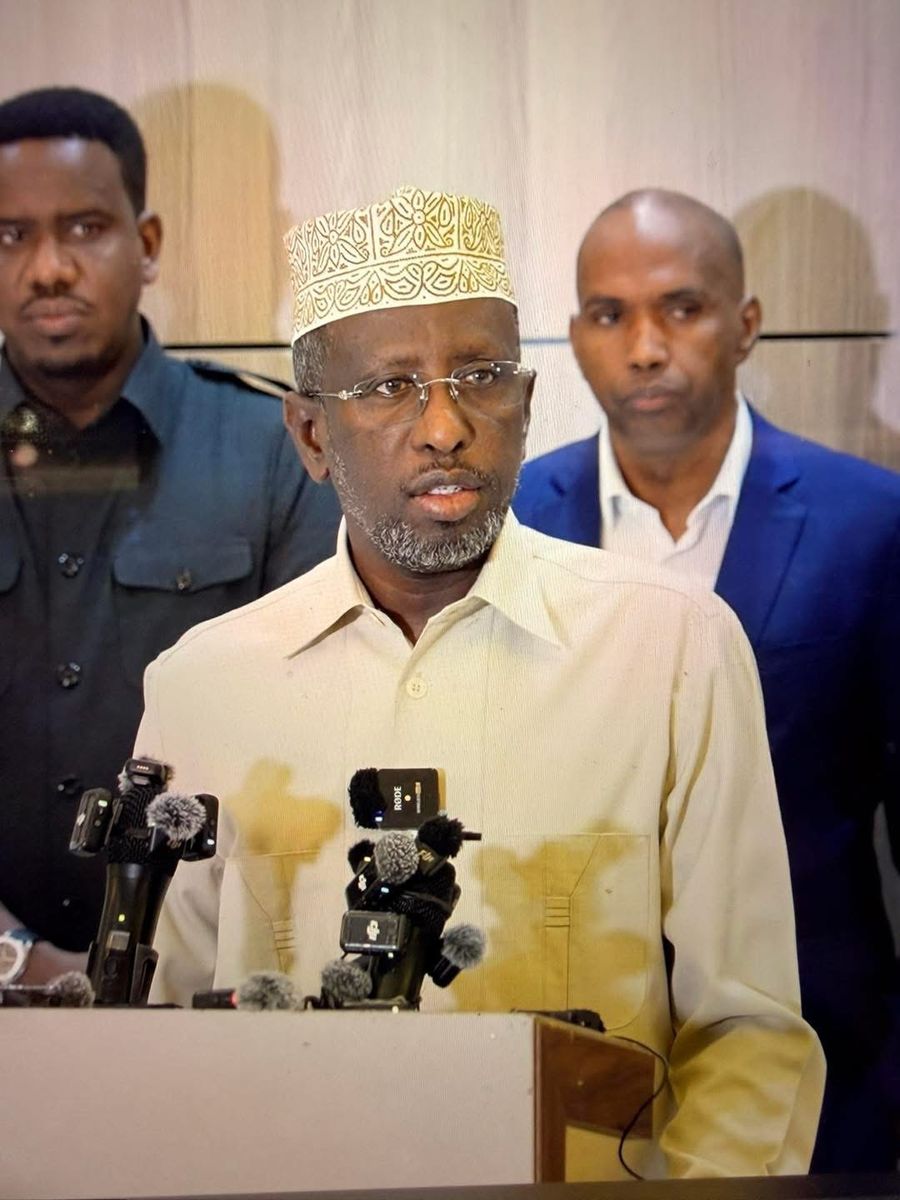
MOGADISHU, Somalia — May 24, 2026 —Former Somali President Sheikh Sharif Sheikh Ahmed has warned that the country is heading into a period of “high political and security uncertainty,” accusing the current leadership of operating beyond what he described as its legitimate constitutional mandate.
In remarks addressing the ongoing political situation, Sheikh Sharif said the president’s mandate had expired, and urged citizens to prepare for what he described as a growing period of instability linked to governance and security practices.
Sheikh Sharif stated that Somalia’s current political direction is contributing to increased public frustration and instability, particularly in the capital, Mogadishu.
“The president’s mandate has expired,” he said, adding that continued governance under the current framework risks deepening political tensions.
He also warned that misuse of political authority could have long-term consequences, stating that “any dictator will eventually face punishment,” while emphasizing accountability in leadership.
According to his remarks, the current situation reflects widening political disagreements between opposition figures and the federal leadership over constitutional interpretation and governance legitimacy.
The former president also highlighted the daily challenges faced by residents in Mogadishu, including insecurity, economic pressure, and restrictions on movement due to numerous security checkpoints.
Security and Governance Concerns in Mogadishu
Sheikh Sharif said residents of Mogadishu have lived for years under difficult security conditions, including heavy security operations and widespread checkpoints.
He argued that while security measures are necessary, the current system has negatively affected daily life and business activity.
According to him, excessive checkpoints have contributed to economic disruption, limited freedom of movement, and increased hardship for civilians already facing financial challenges.
He called for urgent reforms in the management of security infrastructure, stating that checkpoints should be regulated, transparent, and strictly limited to legitimate security purposes.
He further suggested that some checkpoints risk being misused for purposes beyond security, including control over civilians or revenue collection, although he did not provide specific evidence.
Government Response
There was no immediate official response from the Federal Government of Somalia regarding Sheikh Sharif’s latest remarks at the time of reporting.
In previous statements, government officials have defended ongoing security operations in Mogadishu, saying they are necessary to counter threats from armed groups and maintain public order.
Authorities have also previously rejected similar claims by opposition leaders regarding constitutional legitimacy, maintaining that political and electoral processes are guided by legal frameworks and institutional procedures.
Somalia has been engaged in long-standing political debate over constitutional interpretation, electoral systems, and power-sharing between federal and regional administrations.
Former President Sheikh Sharif Sheikh Ahmed has been a prominent opposition figure, frequently raising concerns over governance, elections, and security management.
Mogadishu has experienced ongoing security operations for years, including a dense network of checkpoints aimed at preventing attacks from militant groups. However, these measures have often been criticized by residents and political figures for affecting mobility and economic activity.
The current political climate is shaped by disputes over electoral timelines, constitutional amendments, and competing interpretations of presidential mandates.
Political tensions are expected to continue as opposition leaders maintain pressure on the federal government over governance and constitutional issues.
Security operations in Mogadishu are likely to remain in place, according to current government policy.
Further political statements from both opposition figures and government officials are expected in the coming days as debates over legitimacy and governance continue.
No formal dialogue process addressing the latest political disagreements has been announced.
Sheikh Sharif’s remarks add to a growing political dispute over constitutional authority and the legitimacy of current governance structures in Somalia.
The disagreement between opposition leaders and the federal government highlights ongoing challenges in reaching consensus on electoral and constitutional frameworks.
Security management in Mogadishu remains a sensitive issue, with competing views on the balance between public safety and civilian mobility.
If political tensions continue without structured dialogue, analysts warn it could deepen mistrust between political actors and increase pressure on governance institutions.