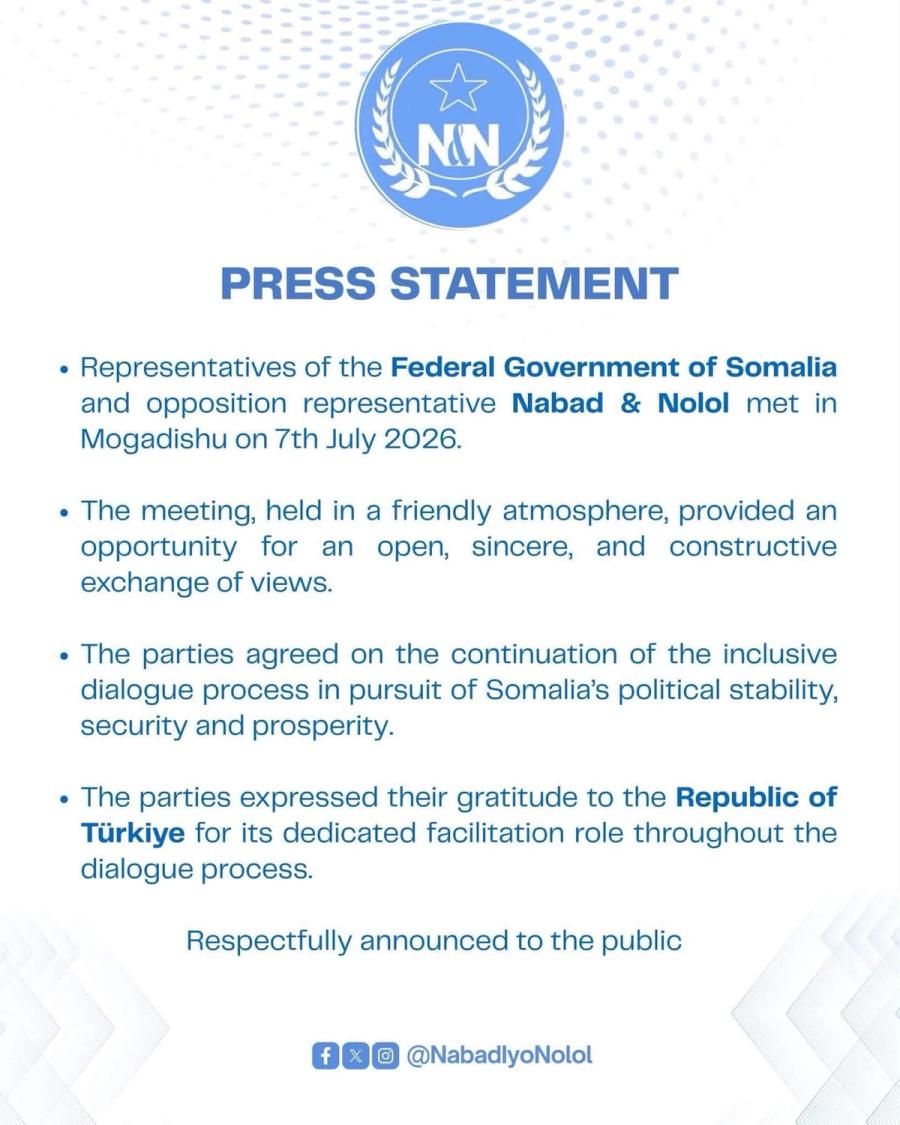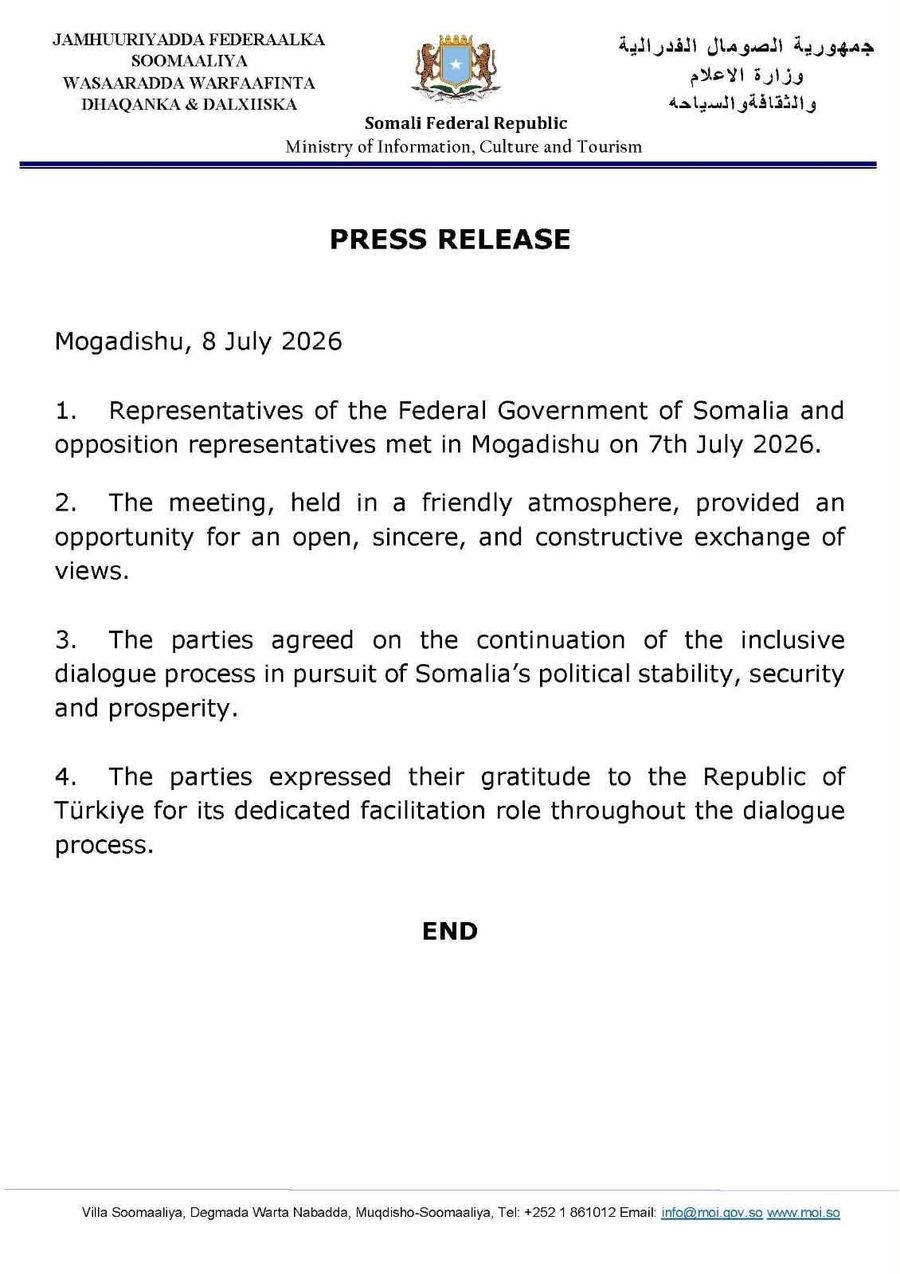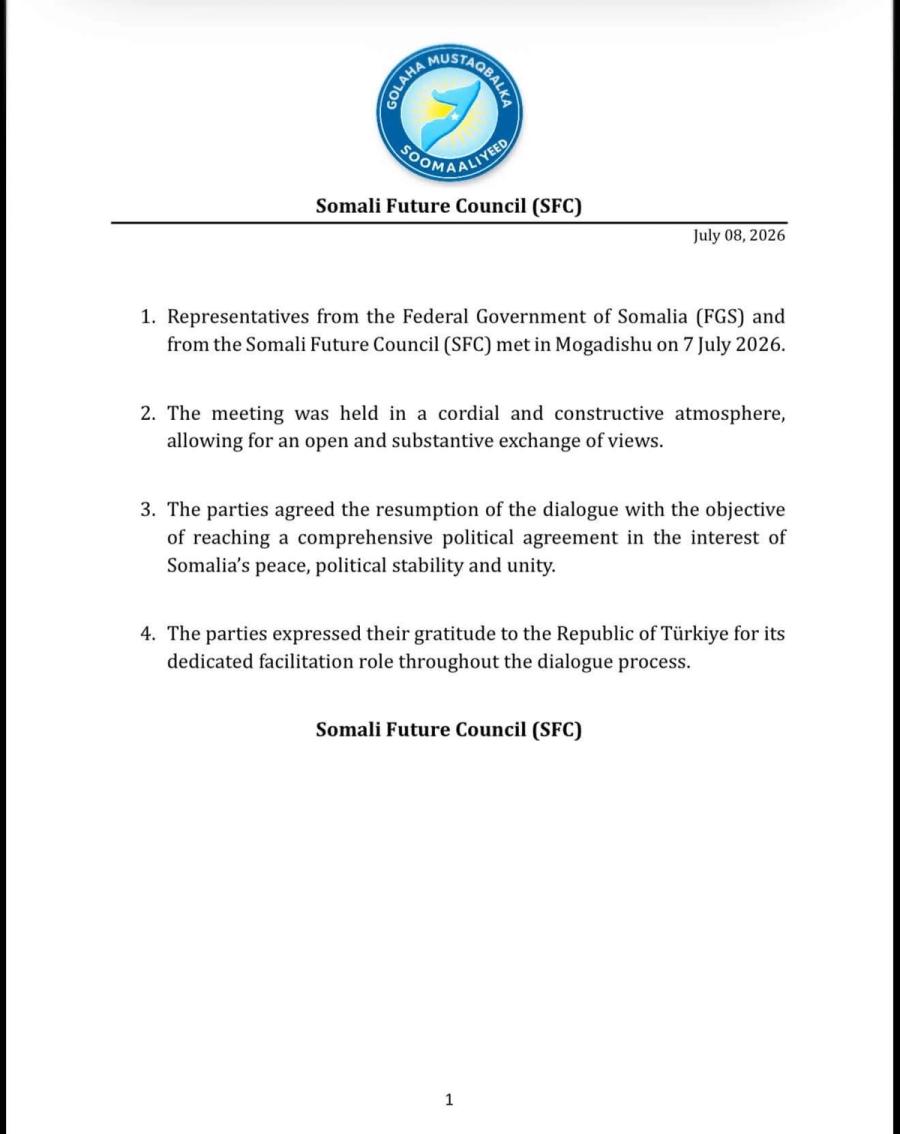
MOGADISHU, Somalia — July 8, 2026 — Turkey has reportedly sought support from Somali political stakeholders to strengthen its role as a mediator in Somalia’s ongoing political dialogue, as statements issued by the federal government, opposition groups, and supporters of former President Mohamed Abdullahi Mohamed Farmaajo appeared nearly identical in wording and tone.
The statements, released separately in Mogadishu, praised Turkey’s engagement in Somalia’s political process and highlighted Ankara’s efforts to facilitate dialogue between Somali political actors. The similarity of the messages has drawn attention among observers, who have questioned whether they were independently prepared or coordinated.
Latest Developments
According to sources familiar with the discussions, Turkey has been seeking a stronger role in facilitating talks between Somalia’s federal government and opposition groups ahead of planned political negotiations.
The reported effort comes as Somali political stakeholders prepare for direct talks aimed at addressing disagreements over the country’s political transition and electoral process.
Three statements issued by Somali opposition groups in Mogadishu, the Federal Government of Somalia, and supporters of former President Mohamed Abdullahi Mohamed Farmaajo have attracted attention after observers noted similarities in their language and structure.
The statements expressed appreciation for Turkey’s engagement in Somalia and its involvement in supporting political dialogue. However, no official explanation has been provided by the groups regarding the similarity of the statements.
Sources familiar with the matter said Ankara has been working to demonstrate its relationship with Somalia’s major political stakeholders and present itself as a trusted partner capable of helping facilitate dialogue.
Concerns Over Turkey’s Mediation Role
Turkey’s increasing involvement in Somalia’s political discussions has faced criticism from some federal member states, particularly Puntland and Jubaland.
Representatives from Puntland and Jubaland reportedly raised concerns during discussions within the Future Council, arguing that Ankara’s involvement in Somalia’s internal political affairs should remain within accepted diplomatic limits.
The representatives maintained that Turkey should not serve as an intermediary on electoral matters between Somali political stakeholders, according to people familiar with the discussions.
The position has reportedly caused dissatisfaction in Ankara, which has continued efforts to maintain a role in supporting Somalia’s political dialogue.
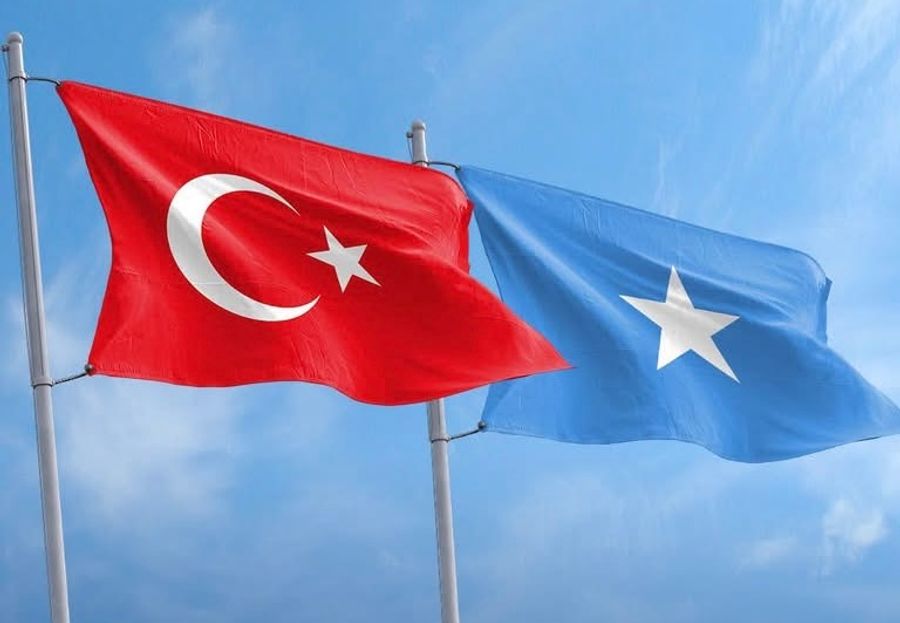
Turkey has been one of Somalia’s closest international partners for more than a decade, providing development assistance, humanitarian support, security cooperation, and diplomatic engagement.
Background to Turkey’s Role in Somalia
Turkey expanded its presence in Somalia following the 2011 humanitarian crisis, when Ankara increased aid and development programs in the country.
Since then, Turkey has become a major partner of the Somali federal government, supporting infrastructure projects, economic programs, and security cooperation, including the training of Somali security forces.
Ankara has also played diplomatic roles in regional and political matters involving Somalia, including efforts to encourage dialogue between different Somali actors.
However, its close relationship with the federal government has led some political groups and regional administrations to question whether Turkey can act as a neutral mediator in domestic political disputes.
What Happens Next
The first day of direct talks between representatives of the Somali federal government and opposition groups is expected to begin in Mogadishu.
International partners, including representatives from Western countries such as the United States and the United Kingdom, are expected to participate or follow the discussions closely.
The talks are expected to focus on Somalia’s political future, including disagreements surrounding elections, constitutional issues, and relations between the federal government and federal member states.
Analysis: Why This Matters
The debate over Turkey’s role highlights the wider challenges facing Somalia’s political dialogue, where questions over neutrality, external influence, and trust between political actors remain major issues.
If Turkey continues its mediation efforts, its ability to maintain confidence among both the federal government and opposition groups could determine whether it is viewed as a facilitator or as a participant in Somalia’s political process.
The involvement of international partners in the upcoming talks reflects the importance of reaching political agreements that are accepted by Somalia’s main stakeholders.