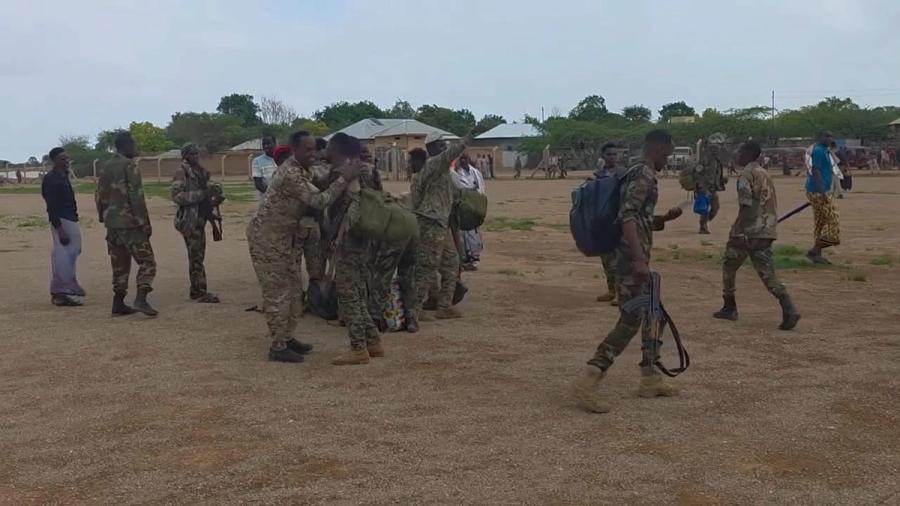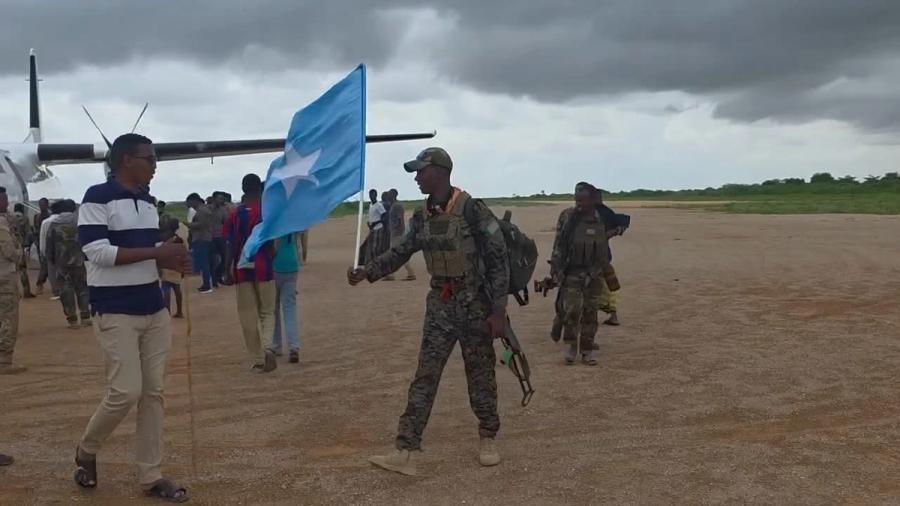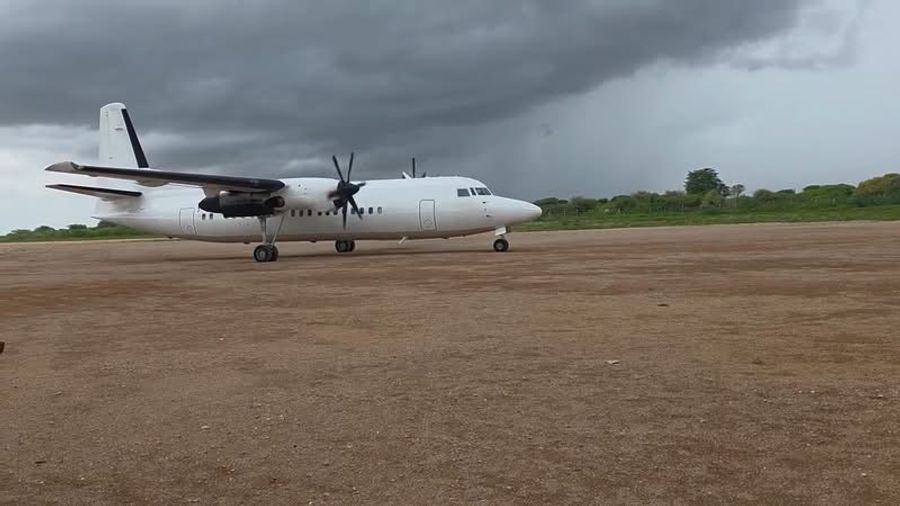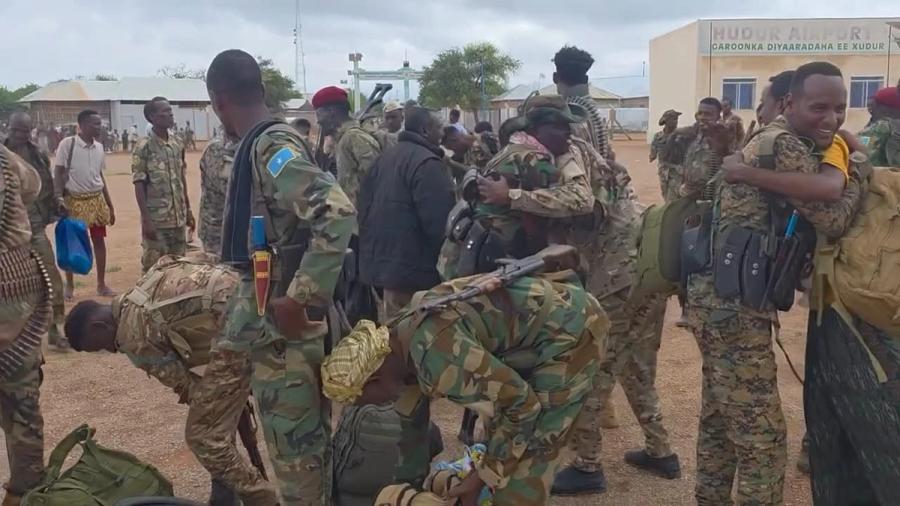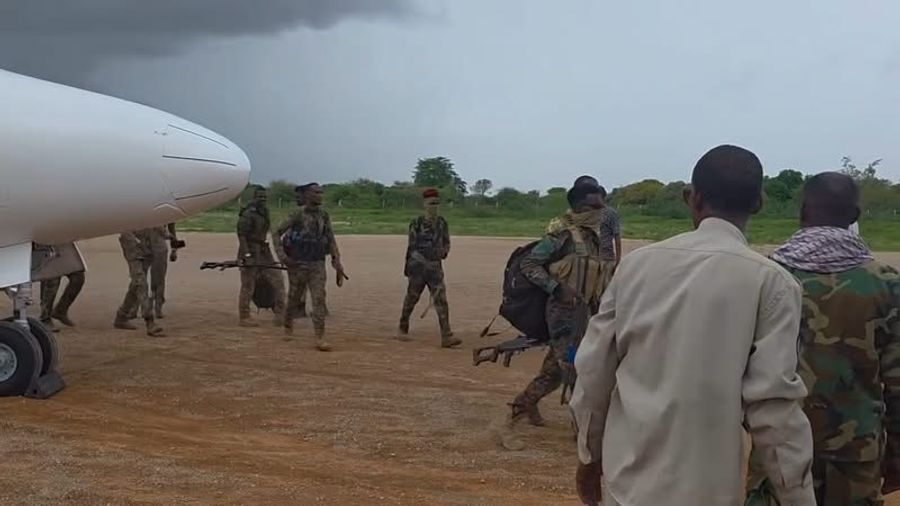
HUDUR, BAKOOL REGION, SOMALIA — October 24, 2026-Somalia’s Federal Government has reportedly reinforced its military presence in Hudur, the administrative capital of Bakool region, amid growing fears of a possible armed confrontation with forces loyal to former Southwest State President Abdiaziz Hassan Mohamed Laftagareen.
The reported deployment comes as political and military tensions continue to intensify across Southwest Somalia, where rival forces are competing for control of strategically important towns and districts.
Local reports indicate that additional government troops have been assembled in Hudur under the command of senior officers from the Somali National Army (SNA). The forces reportedly include personnel from different military units, although their exact numbers and operational responsibilities have not been independently established.
The developments have raised concerns that Hudur could become another flashpoint in the widening confrontation between federal government-aligned forces and armed units supporting Laftagareen.
Somali National Army Reinforces Positions in Hudur
Military preparations in Hudur have intensified as federal authorities seek to strengthen their security presence in Bakool.
Reports published on October 23 and 24 indicate that the mobilization involves the 6th Brigade of the Somali National Army’s 60th Division, which maintains a presence in Hudur.
On Friday, October 23, military officers and regional officials reportedly assembled hundreds of soldiers near the town in a demonstration of military readiness.
The deployment comes amid reports that Laftagareen-aligned forces have been moving toward strategically important locations in Bakool following their recent advances in neighboring Bay region.
There are fears that the assembled government troops could be used in operations against Laftagareen-loyal forces reportedly positioned near Hudur.
However, Somali authorities have not publicly confirmed an offensive against those forces, and the precise objectives of the military preparations remain unclear.
Fears Grow Over Possible Military Confrontation
Hudur’s security situation has attracted increased attention as the political confrontation between Somalia’s Federal Government and Laftagareen’s supporters expands beyond Bay region.
The presence of opposing armed forces in and around strategically important towns has heightened concerns about the possibility of further clashes.
A confrontation near Hudur could create additional security challenges for Bakool, a region already affected by years of conflict involving Al-Shabaab militants.
Military activity around the town could also complicate civilian movement, commercial transportation and humanitarian access if fighting breaks out.
Bakool Officials Outline Security Priorities
Regional officials have publicly emphasized the importance of strengthening Hudur’s defenses and conducting operations against Al-Shabaab.
According to Somali media reports, Bakool Governor Mohamed Ahmed Mohamed addressed assembled troops on October 23 and discussed plans to secure areas of the region currently affected by militant activity.
His remarks suggested that regional authorities were preparing for broader security operations, including efforts involving areas such as Rab Dhuure and Tiyeglow.
The governor also expressed concern about possible movements by forces loyal to Laftagareen toward Hudur.
These statements underline the competing security considerations facing government commanders, who must address the continuing Al-Shabaab threat while navigating an increasingly volatile political confrontation.
Laftagareen Forces Expand Their Presence in Southwest Somalia
The latest developments in Hudur follow significant territorial changes in neighboring Bay region.
During October, forces aligned with Laftagareen advanced into several districts, including Qansahdhere, Diinsoor, Berdaale and Buurhakaba.
The reported capture have increased pressure on the federal government-backed Southwest State administration and raised questions about the future security balance across the region.
Buurhakaba, situated along the important route connecting Mogadishu and Baidoa, became a major focus of the confrontation following fighting in mid-October.
Reports of further movements toward Waajid and other locations in Bakool have added to concerns that the conflict could spread into additional districts.
The changing military situation has made Hudur increasingly important to the broader security calculations of both sides.
Political Dispute Fuels Growing Military Tensions
The confrontation is rooted in a prolonged political dispute involving Somalia’s Federal Government, the current Southwest State administration and Laftagareen’s political movement.
Laftagareen, who previously led Southwest State, has opposed the political transition that brought a new administration to power with federal government support.
His supporters have challenged the legitimacy of the transition and accused federal authorities of interfering in Southwest State’s political affairs.
Federal authorities and the current regional leadership, meanwhile, have defended their security and administrative positions while raising allegations against armed groups aligned with the former regional president.
On October 21, Laftagareen publicly called for the withdrawal of federal troops from Bay, Bakool and Lower Shabelle and urged renewed political negotiations.
The rival positions have complicated efforts to resolve the dispute peacefully.
As military deployments continue, concerns are growing that political disagreements could develop into a wider armed confrontation affecting multiple districts.
Al-Shabaab Threat Complicates the Security Situation
The growing tensions come at a particularly sensitive time for security operations in southern Somalia.
Bakool remains affected by the presence of Al-Shabaab, which has conducted attacks and maintained influence in parts of the region.
The possibility of fighting between rival government-aligned and regional forces creates additional security risks.
A prolonged confrontation could divert military resources away from counterterrorism operations and potentially create opportunities for militant groups to exploit instability.
Security analysts have warned that continued competition for territorial control in Southwest Somalia could contribute to displacement, local conflict and further insecurity.