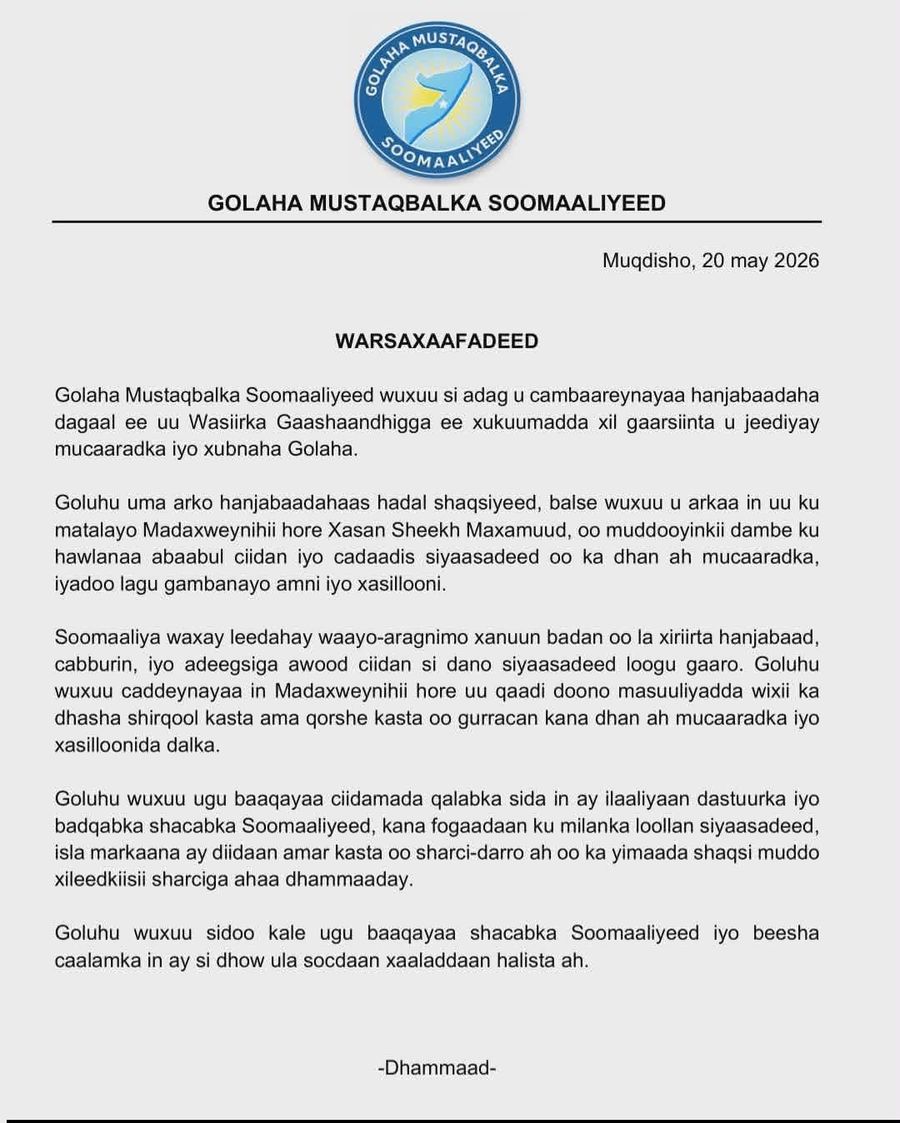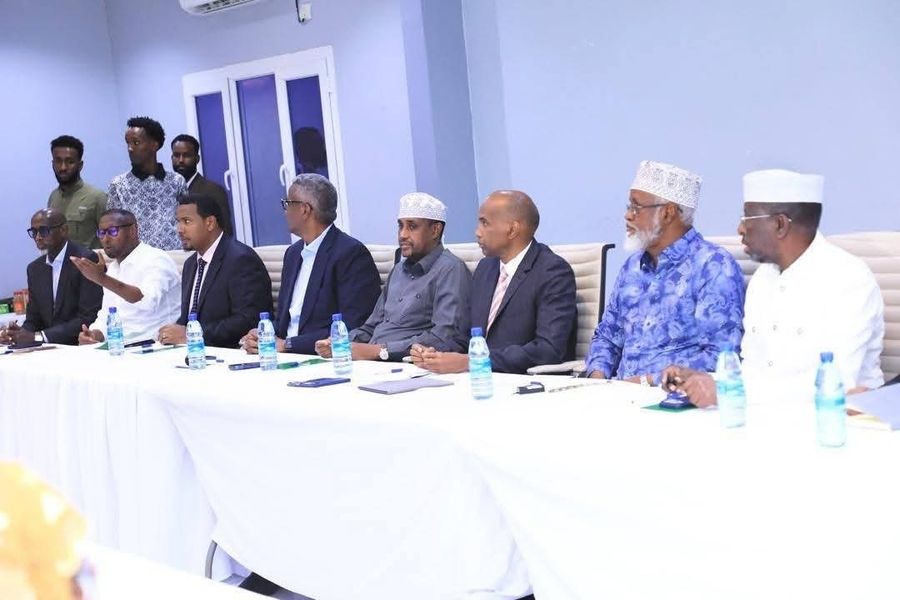
Wednesday, May 20, 2026- The Somali Future Council has strongly criticized remarks attributed to Somalia’s Defence Minister, accusing the government of escalating political tensions and directing threats toward opposition figures. The statement comes amid growing political disagreements in Mogadishu and renewed debate over the relationship between state institutions and opposition groups.
In a statement issued on Friday, the Somali Future Council condemned what it described as “war threats” made by the Minister of Defence against opposition politicians and members of the Council.
According to the Council, the remarks should not be viewed as isolated political comments but as part of a broader pattern of pressure against opposition groups.
The Council alleged that military mobilization and political actions targeting government critics have been carried out under the justification of maintaining national security and stability. The allegations have not been independently verified.
The statement also linked the developments to former President Hassan Sheikh Mohamud, claiming he would bear political responsibility for any consequences resulting from what the Council described as unlawful actions against opposition actors.
No evidence supporting those allegations was presented in the statement.
The latest exchange comes against the backdrop of increasing political tensions between government officials and opposition groups.
In recent weeks, disagreements over public demonstrations, political participation, security operations, and governance issues have generated heated debate among political leaders and civil society organizations.
According to political observers, concerns have been growing over the tone of political discourse, with both government supporters and opposition figures exchanging accusations regarding responsibility for instability and political polarization.
The Somali Future Council said Somalia’s history includes periods marked by political repression, threats, and the use of force in political disputes.
The group warned against any return to practices that could undermine constitutional governance and political stability.
A significant portion of the Council’s statement focused on Somalia’s security institutions.
The Council called on members of the Somali National Armed Forces and other security agencies to uphold the constitution and maintain neutrality in political disputes.
According to the statement, security personnel should prioritize the protection of civilians and avoid involvement in political conflicts.
The Council also urged members of the security forces to reject what it described as illegal orders issued outside constitutional authority.
The statement did not provide specific examples of such orders.
As of publication, neither the Ministry of Defence nor the Federal Government of Somalia had publicly responded to the allegations raised by the Somali Future Council.
Government officials have previously maintained that security measures undertaken by state institutions are intended to preserve public order, national security, and constitutional governance.
No official statement addressing the Council’s latest claims had been released on Friday.
Somalia’s political landscape has frequently been shaped by disputes between incumbent governments and opposition movements.
Political disagreements have often intensified during periods involving constitutional debates, elections, security challenges, and discussions about governance reforms.
Civil society organizations and international partners have repeatedly emphasized the importance of dialogue, peaceful political competition, and adherence to constitutional processes as key components of long-term stability.
The latest dispute emerges at a time when Somalia continues to face security challenges while also navigating complex political questions regarding governance and state-building.
Political analysts expect further reactions from opposition leaders, civil society groups, and government officials in the coming days.
Observers say a formal response from the Ministry of Defence or senior federal authorities could help clarify the government’s position regarding the allegations.
Attention is also likely to focus on whether political actors pursue dialogue or continue escalating public rhetoric.
The statement from the Somali Future Council reflects the increasingly tense political environment in Mogadishu.
Disputes involving senior government officials and opposition groups can influence public confidence in political institutions and affect efforts aimed at national consensus.
Calls for neutrality by security forces are particularly significant in Somalia, where maintaining public trust in state institutions remains a critical issue.
The manner in which both government officials and opposition leaders manage these disagreements may play an important role in determining whether tensions ease through political dialogue or continue to deepen in the coming months.