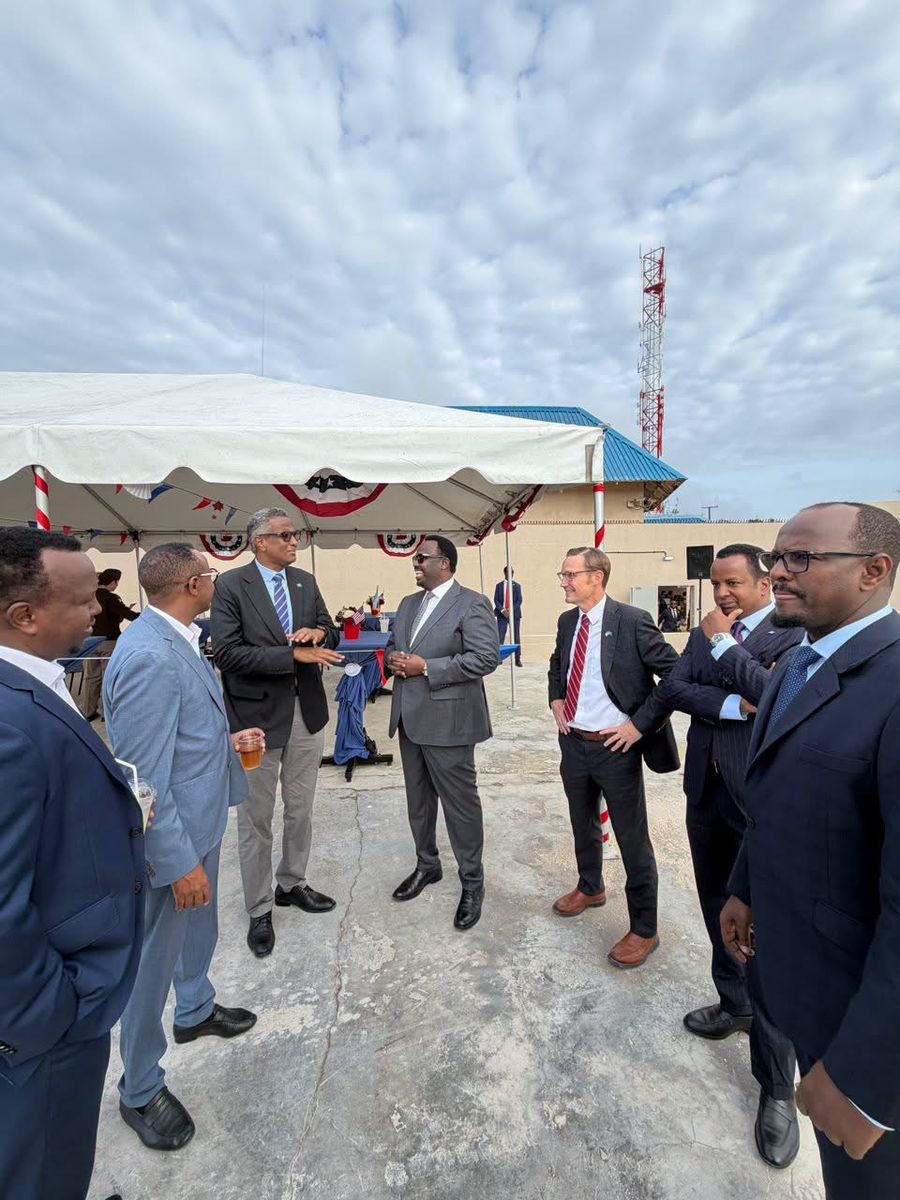
MOGADISHU, Somalia — July 2, 2026 —Senior Somali government officials, opposition leaders, and members of the international community gathered at the U.S. Embassy in Mogadishu on Thursday evening to commemorate the 250th anniversary of the United States, in a rare event that brought together prominent figures from across Somalia’s political spectrum.
The reception was attended by President Hassan Sheikh Mohamud, the Deputy Prime Minister, cabinet ministers, members of parliament, opposition leaders, diplomats, and representatives of international organizations operating in Somalia. The event underscored the longstanding relationship between Somalia and the United States while providing a platform for engagement among key political stakeholders.
The reception, held at the U.S. Embassy compound in Mogadishu, attracted a broad cross-section of Somalia’s political leadership.
Among the notable attendees was former President Sharif Sheikh Ahmed, who appeared alongside President Hassan Sheikh Mohamud at the gathering. Their presence at the same event drew attention amid ongoing political discussions and tensions that have characterized Somalia’s political landscape in recent months.
Opposition leader Abdirahman Abdishakur Warsame was also present, along with several other opposition figures and senior political personalities. Diplomats, representatives of international partners, and members of the diplomatic corps joined Somali leaders at the celebration.
According to participants, the event focused on commemorating America’s 250-year history and strengthening diplomatic engagement between the United States and Somalia.
The United States remains one of Somalia’s most significant international partners, providing support in areas including security cooperation, humanitarian assistance, governance reforms, economic development, and counterterrorism efforts.
Government and Opposition Figures Attend Together
The gathering was notable for bringing together leaders from both the Federal Government of Somalia and opposition groups at a time when political disagreements continue over issues including governance, constitutional reforms, electoral processes, and national security.
Political observers noted that such diplomatic events often serve as opportunities for informal engagement between rival political actors outside formal government settings.
Although the reception was primarily ceremonial, the presence of senior officials and opposition leaders reflected the importance attached to U.S.-Somalia relations by various political stakeholders.
No major political announcements were reported during the event.
U.S.-Somalia Relations
The United States and Somalia have maintained close diplomatic ties for decades, particularly in efforts to support Somalia’s stabilization, state-building initiatives, and the fight against the militant group Al-Shabaab.
Washington has been a key partner in supporting Somalia’s security sector, humanitarian response programs, and institutional development efforts.
The U.S. Embassy in Mogadishu regularly hosts diplomatic events involving Somali officials, international partners, civil society representatives, and members of the business community.
Thursday’s reception formed part of broader celebrations marking the 250th anniversary of the founding of the United States, a milestone being commemorated by American diplomatic missions around the world.
The event comes against the backdrop of ongoing political debate in Somalia over governance reforms, electoral arrangements, and federal-state relations.
Recent months have seen disagreements between government officials and some opposition leaders on a range of political issues. Despite those differences, diplomatic gatherings frequently provide opportunities for engagement among political actors from different camps.
The appearance of President Hassan Sheikh Mohamud and former President Sharif Sheikh Ahmed at the same event attracted particular attention, given recent political tensions and public exchanges among various political leaders.
Somalia continues to navigate security challenges, economic pressures, and efforts to strengthen state institutions while preparing for future political and electoral processes.
International partners, including the United States, remain closely involved in supporting Somalia’s development and stabilization efforts.
Somalia’s political leaders are expected to continue discussions on key national issues in the coming months, including governance reforms, security priorities, and preparations related to future elections.
Diplomatic engagement between Somalia and its international partners is also expected to remain active as the country seeks continued support for security operations, economic recovery, humanitarian assistance, and institutional development.
Events such as Thursday’s reception provide opportunities for dialogue among government officials, opposition figures, and international stakeholders as Somalia continues its efforts toward political stability and national development.
The reception demonstrated the continued importance of U.S.-Somalia relations at a time when Somalia faces significant political and security challenges. The presence of senior government officials, opposition leaders, and international representatives highlighted broad recognition of the strategic partnership between Mogadishu and Washington.
The attendance of both government and opposition figures at the same event also carried political significance. While the gathering was diplomatic in nature, it offered a rare setting where leaders from different political camps interacted in a less formal environment.
For international partners, the event reflected continued engagement with Somalia’s political leadership during a period of ongoing reforms and national debate. Such engagements can help maintain communication channels between stakeholders with differing political positions.
For Somalia, sustained cooperation with international partners remains important for security operations, economic assistance, humanitarian support, and long-term institution-building efforts aimed at strengthening stability across the country.