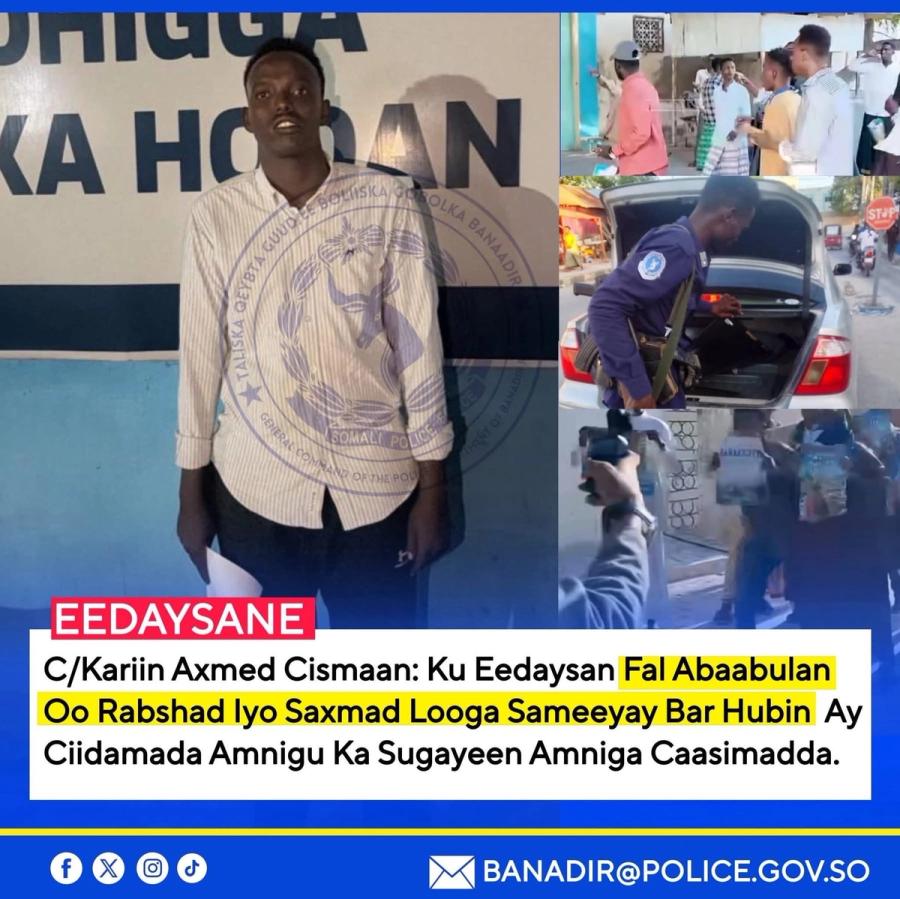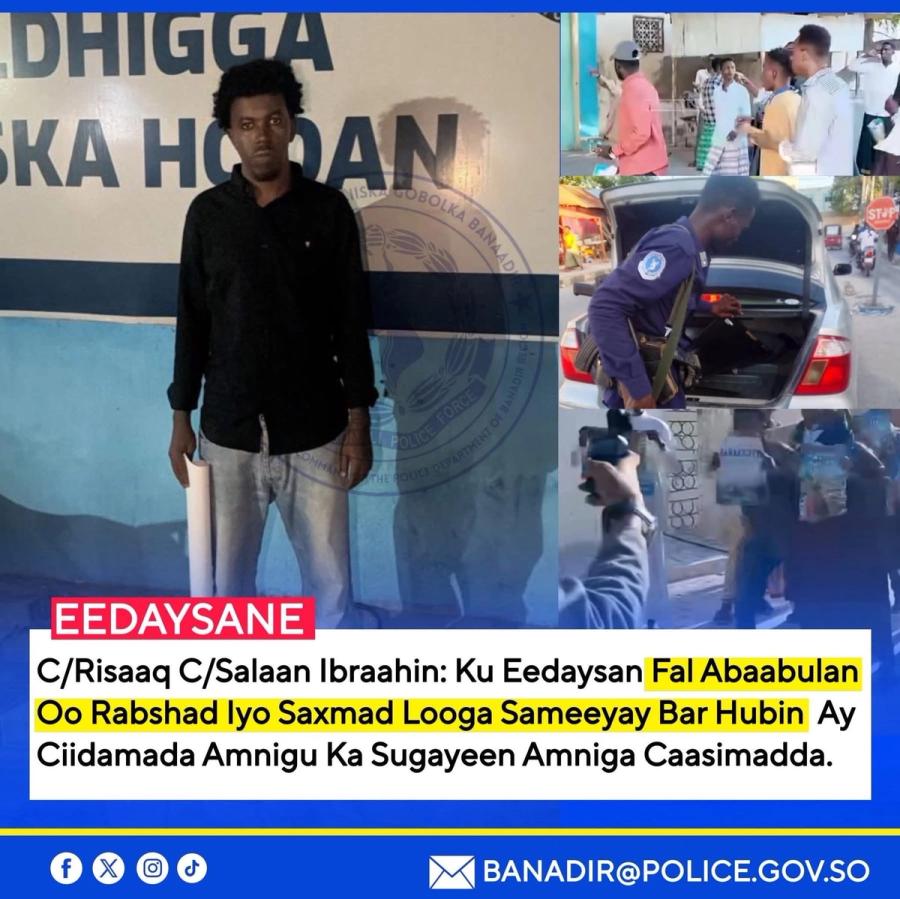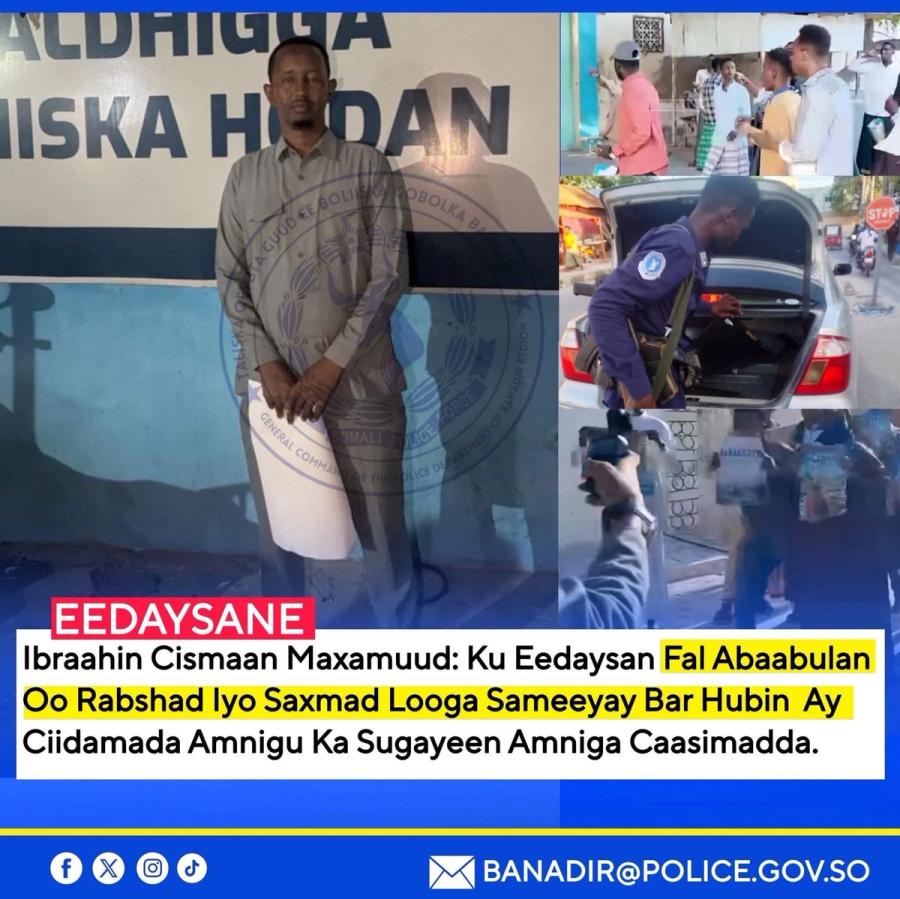
MOGADISHU, Somalia — May 23, 2026 —Security tensions have increased in Somalia’s capital Mogadishu after the Somali Police Force accused groups of young demonstrators of participating in riots and activities described as a threat to national security, as political tensions continue to rise in the city.
The developments come amid reports of growing political disputes involving opposition groups that have been raising concerns about the country’s governance and political transition, including claims that the government’s mandate has expired.
According to security officials, law enforcement agencies are taking measures to prevent any actions that could destabilize public order in the capital. However, local residents and eyewitnesses have presented a different account, alleging that security forces used forceful methods to disperse largely peaceful demonstrations.
According to statements attributed to the Somali Police Force, authorities have accused some groups of youths who gathered in Mogadishu of engaging in activities linked to unrest and public disorder.
Security officials said the measures taken are part of efforts to maintain stability and prevent what they describe as attempts to disrupt national security. They did not provide detailed evidence supporting the claims at the time of reporting.
According to witnesses in Mogadishu, groups of young people had assembled to express grievances related to the current political situation and broader governance concerns. Residents said the gatherings were largely peaceful before security forces intervened.
Local residents in several districts reported seeing increased security deployments, roadblocks, and restrictions on public gatherings in areas considered sensitive or likely protest locations.
Government Response and Security Operations
Security authorities have maintained that their operations are necessary to safeguard public order in the capital, especially amid calls for demonstrations by opposition-aligned groups.
Officials have warned against unauthorized gatherings, stating that any actions deemed a threat to stability will be addressed under national security protocols.
However, critics of the government have accused security forces of using excessive measures to suppress dissent and restrict freedom of expression. These claims have not been independently verified.
Government supporters, meanwhile, argue that the heightened security presence is necessary to prevent unrest and maintain stability in Mogadishu during a politically sensitive period.
Mogadishu has experienced periodic political demonstrations and security crackdowns in recent years, often linked to disputes between opposition groups and the federal government over elections, governance, and political legitimacy.
Tensions have previously escalated during periods of political transition, with protests often centered around calls for electoral reforms, power-sharing arrangements, and governance accountability.
Security operations in the capital are frequently intensified during periods of political uncertainty, particularly when opposition groups announce plans for public demonstrations.
Somalia continues to face a complex security environment where authorities balance public order concerns with constitutional rights to assembly and expression.
Opposition groups are expected to continue mobilizing supporters for planned demonstrations in the coming days, according to political sources.
Security agencies are also expected to maintain heightened alert levels across Mogadishu, particularly in central districts and key government zones.
No official casualty reports or arrests have been independently confirmed at the time of publication.
Further developments are expected as both political and security actors respond to the evolving situation.
The situation highlights the fragile balance between security enforcement and political expression in Somalia’s capital, where demonstrations often intersect with broader political disputes.
If tensions continue to escalate, there is a risk of further confrontations between security forces and civilians, which could deepen mistrust between authorities and segments of the public.
The developments also reflect ongoing political polarization in Mogadishu, where opposition groups and government institutions remain divided over governance and electoral legitimacy.