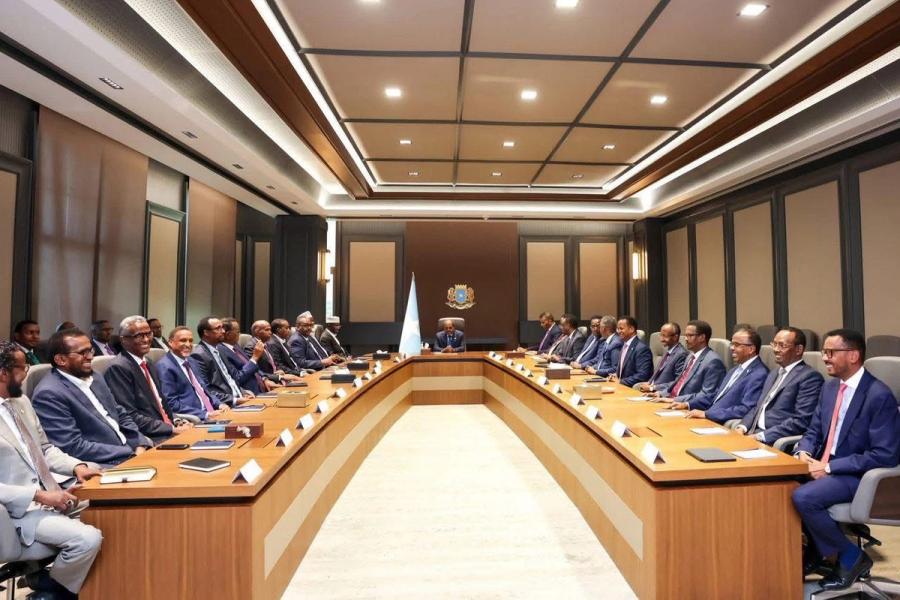
MOGADISHU, Somalia, June 22, 2026 — Somalia’s political uncertainty continues to grow as a prolonged dispute over the country’s electoral framework remains unresolved in Mogadishu. The Federal Government and opposition political groups have maintained competing positions on how future elections should be conducted, raising concerns about delays to the electoral process and the potential impact on political stability.
The political standoff between Somalia’s Federal Government and opposition leaders has entered a new phase, with both sides continuing to advocate for different electoral models ahead of upcoming national elections.
Government officials have repeatedly expressed support for implementing a direct electoral system that would allow citizens to vote for their representatives through a broader one person, one vote framework. Authorities argue that expanding public participation would strengthen democratic governance and move Somalia away from the indirect clan-based system that has dominated elections for decades.
Opposition leaders, however, have voiced concerns over the feasibility of such a transition within the current political and security environment. They have called for a consensus-based electoral arrangement that they say would ensure broader political agreement and avoid disputes over election administration, voter registration, and representation.
The disagreement has prevented meaningful progress toward finalizing an electoral roadmap, according to political observers and participants involved in ongoing consultations in Mogadishu.
Several meetings between government representatives, opposition politicians, and regional stakeholders have taken place in recent months. However, no comprehensive agreement has emerged regarding the structure, timeline, or management of the electoral process.
According to political sources, discussions have focused on issues including voter registration, electoral commissions, constitutional matters, representation of federal member states, and mechanisms for resolving election-related disputes.
Government Position
Federal authorities have continued to promote electoral reforms aimed at increasing direct public participation in the political process.
Government officials have argued that Somalia must gradually establish a modern electoral system that reflects democratic standards and allows citizens to directly choose their leaders.
Supporters of the government’s approach say the country cannot indefinitely rely on indirect voting mechanisms and that electoral reform is necessary for long-term political development.
Officials have also stated that preparations for electoral reforms have been underway for several years, including legal and institutional measures intended to support future nationwide voting.
Opposition Concerns
Opposition groups have maintained that major electoral changes require broad national consensus before implementation.
Several opposition figures have questioned whether current security conditions and institutional capacities are sufficient to support a nationwide direct vote. They have also expressed concerns about transparency, inclusiveness, and the management of the electoral process.
According to opposition leaders, any electoral framework should be agreed upon through dialogue involving federal institutions, federal member states, political parties, and civil society representatives.
Some opposition figures have warned that moving forward without broad consensus could create additional political tensions and undermine confidence in the electoral process.
Background to Somalia’s Electoral Debate
Somalia has struggled for years to establish a permanent electoral system following decades of conflict and state collapse.
Recent national elections have largely relied on indirect voting arrangements involving clan delegates, elders, and elected representatives rather than universal suffrage.
The issue of transitioning toward direct elections has been debated for more than a decade. Successive governments have pledged to implement broader electoral reforms, but progress has often been slowed by political disagreements, security challenges, constitutional disputes, and logistical constraints.
Political disagreements over election models have frequently generated tensions between federal authorities and opposition groups. Similar disputes have accompanied previous election cycles, often requiring lengthy negotiations to reach compromise agreements.
Analysts note that unresolved constitutional questions regarding power sharing, federalism, and electoral administration continue to complicate efforts to establish a universally accepted electoral framework.
Political observers say continued dialogue will be critical if Somalia is to avoid further delays in the electoral process.
Several stakeholders have called for renewed negotiations aimed at reaching a compromise that balances electoral reform ambitions with practical political realities.
International partners have also repeatedly encouraged Somali leaders to resolve disputes through dialogue and consensus-building mechanisms while maintaining constitutional and institutional stability.
The timing and format of future negotiations remain unclear, although political consultations are expected to continue in Mogadishu in the coming weeks.
The electoral dispute extends beyond a disagreement over voting procedures. It reflects broader questions about Somalia’s political future, state-building process, and the balance of power among federal institutions, opposition groups, and regional administrations.
A prolonged deadlock could delay electoral preparations, create uncertainty among political stakeholders, and increase tensions ahead of future political milestones. Such uncertainty may also affect governance priorities at a time when Somalia continues to face security challenges and economic pressures.
The outcome of the current negotiations will likely influence not only the next election cycle but also the long-term direction of Somalia’s democratic transition. Whether leaders can reach a compromise may determine the credibility, inclusiveness, and stability of the country’s future electoral process.