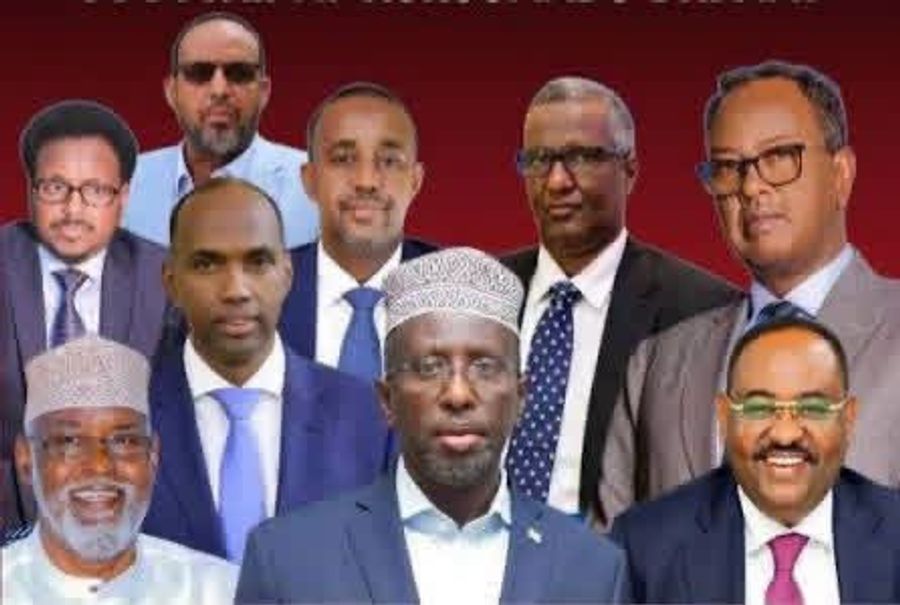
MOGADISHU, Somalia — July 7, 2026 — Senior officials from Somalia’s Federal Government and the Future Forum convened in Mogadishu on Tuesday for high-level talks aimed at resolving disputes over elections and the country’s political transition, with Turkey and Western diplomatic partners participating in the process.
The closed-door meeting brings together representatives from the Federal Government, Puntland, Jubaland, and opposition figures in what is being viewed as a significant effort to narrow political differences and build consensus on Somalia’s future electoral framework.
The talks follow months of consultations and diplomatic engagement intended to ease tensions between Somalia’s federal leadership and key political stakeholders over the direction of the country’s governance and election process.
According to participants and political sources, discussions are focused on electoral arrangements, management of the ongoing political transition, and mechanisms for implementing any agreements reached during the negotiations.
Representatives from the Turkish government are participating in a facilitation and support role, while Western diplomats are attending as observers, reflecting continued international interest in Somalia’s political stability and democratic process.
The meeting is taking place behind closed doors, with officials seeking candid discussions on some of the country’s most contentious political issues.
Key Participants
The Federal Government delegation is being led by First Deputy Prime Minister Salah Ahmed Jama, alongside senior cabinet officials, including the ministers responsible for justice, interior affairs, and education.
The Future Forum delegation includes prominent political figures such as Mohamed Dhabancad, Abdirashid Jire, opposition leader Abdirahman Abdishakur Warsame, former minister Abdirahman Aynte, and former intelligence chief Abdullahi Mohamed Ali Sanbaloolshe.
Political observers note that the presence of senior figures from both government and opposition camps highlights the importance of the discussions.
Focus on Elections and Political Transition
A central objective of the talks is to bridge differences over Somalia’s electoral model and the broader political transition process.
Disagreements surrounding election arrangements have remained a recurring source of tension between the Federal Government, some federal member states, and opposition groups.
According to political sources, participants are seeking common ground on how future elections should be organized and how political agreements can be implemented through an inclusive process.
Discussions are also expected to address the role of international partners in supporting and guaranteeing the implementation of any agreements reached.
International Involvement
Turkey has expanded its diplomatic and development engagement in Somalia over the past decade and has increasingly played a role in supporting dialogue between Somali stakeholders.
The participation of Turkish representatives in Tuesday’s talks reflects Ankara’s continuing involvement in efforts aimed at fostering political consensus.
Western diplomats attending the meeting are expected to encourage compromise and support dialogue among the parties, according to diplomatic sources.
International partners have repeatedly stressed the importance of inclusive political engagement as Somalia works toward strengthening democratic institutions and governance structures.
Relations between Somalia’s Federal Government and some federal member states have experienced periodic tensions over constitutional issues, elections, and power-sharing arrangements.
Puntland and Jubaland have previously expressed concerns regarding electoral reforms and governance decisions, while opposition groups have called for broader consultation on major national issues.
The Future Forum was formed to coordinate positions among several influential political actors regarding elections, governance, and the country’s political future.
The latest meeting marks one of the most significant direct engagements between the parties in recent months and is being closely watched by domestic and international observers.
What Happens Next
No immediate outcome has been announced, and officials have not indicated whether a formal agreement will emerge from the current round of talks.
Participants are expected to evaluate areas of agreement and disagreement before determining whether additional negotiations will be required.
The outcome of the discussions could influence Somalia’s electoral roadmap and broader political trajectory in the months ahead.
The talks bring together key political actors whose cooperation is widely viewed as essential for reaching consensus on Somalia’s electoral future and governance framework.
The talks in Mogadishu are being closely watched as a key test of whether Somalia’s political stakeholders can bridge long-standing differences through dialogue and compromise. While no outcome has yet been announced, the gathering of federal officials, regional leaders, opposition figures, Turkish representatives, and international partners reflects renewed efforts to find common ground on elections and the country’s political transition.
The outcome of the discussions could have significant implications for Somalia’s political trajectory in the months ahead. Whether the meeting produces a breakthrough agreement or paves the way for further negotiations, it underscores the growing recognition among Somali leaders and international partners that consensus-building remains essential to maintaining political stability and advancing the country’s democratic process.