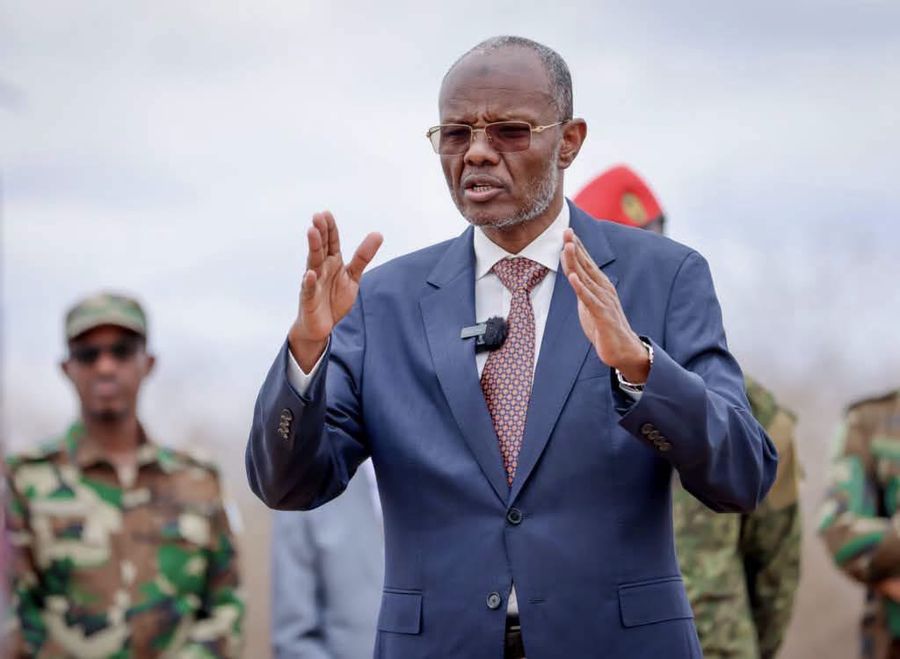
MOGADISHU, Somalia — September 11, 2026 — Somalia’s federal government has reportedly frozen domestic bank accounts belonging to former South West State President Abdiaziz Hassan Mohamed Laftagareen and some members of his family, extending its confrontation with the regional leader from the battlefield to the financial sector.
The federal Cabinet approved the financial restrictions during a meeting on Friday, according to information obtained by local media. The decision reportedly followed a recommendation submitted by Somalia’s National Anti-Money Laundering and Countering the Financing of Terrorism Committee.
The measure covers accounts held by Laftagareen at banks operating inside Somalia, as well as accounts associated with some of his relatives, according to the reports.
The number of affected accounts, the banks involved and the amount of money frozen have not been disclosed. It is also unclear whether the restrictions extend to businesses, organisations or political allies associated with the former regional president.
The government did not publicly announce the reported Cabinet decision. No document setting out the legal grounds for the restrictions had been released by the Office of the Prime Minister, the Ministry of Finance or the Financial Reporting Center at the time of publication.
Laftagareen and members of his family have not publicly responded to the reported account freeze. The banks said to be affected have also made no public statements.
The federal government has previously frozen accounts suspected of being connected to Al-Shabaab and other illegal financial networks. However, the reported action involving Laftagareen comes during a domestic political and military dispute, raising questions about the specific evidence and legal procedures supporting the decision.
Laftagareen governed South West State from December 2018 until March 2026. His administration broke relations with the federal government in March after opposing constitutional amendments promoted by President Hassan Sheikh Mohamud’s administration.
The dispute centred on constitutional changes, elections and the division of authority between Mogadishu and Somalia’s federal member states. Laftagareen’s administration accused the federal government of attempting to remove regional leaders who opposed its political programme.
Federal forces entered Baidoa, the administrative capital of South West State, on March 30. Laftagareen announced his resignation after the takeover, days after regional lawmakers had re-elected him for another five-year term.
The federal Information Ministry accused his former administration of creating political conflict. Laftagareen’s supporters rejected the federal intervention and continued to claim political legitimacy in parts of South West State.
The confrontation later developed into armed conflict. On August 17, federal troops fought forces aligned with Laftagareen in and around Baidoa. Hospital officials reported that four civilians were killed and nearly 100 people were wounded, while the government and Laftagareen’s camp issued conflicting accounts of battlefield casualties.
Another round of fighting erupted on September 3 between government troops and Laftagareen-aligned forces on the outskirts of Baidoa. Bay Regional Hospital reported receiving 71 wounded people, including 15 women, and the body of one civilian.
The Defence Ministry alleged that Al-Shabaab fighters participated in the attack alongside Laftagareen’s forces. The allegation was not independently verified, and Laftagareen’s supporters have denied any connection to the militant organisation.
Baidoa is a major political and humanitarian centre about 245 kilometres northwest of Mogadishu. The city hosts hundreds of thousands of people displaced by drought, food insecurity and armed conflict.
The reported account freeze marks a new stage in the confrontation. Federal authorities have relied mainly on political pressure and security operations against Laftagareen’s camp, but financial restrictions could limit his ability to fund political activities and maintain forces outside Baidoa.
The decision could also intensify debate over the use of national financial institutions in political disputes between Mogadishu and federal member states. A lack of publicly available evidence or legal explanation may lead opponents to describe the measure as politically motivated.
Renewed tensions could have direct consequences for civilians in Baidoa and surrounding districts. Previous clashes have caused deaths, injuries and displacement while placing additional pressure on health facilities and humanitarian organisations already responding to drought and food insecurity