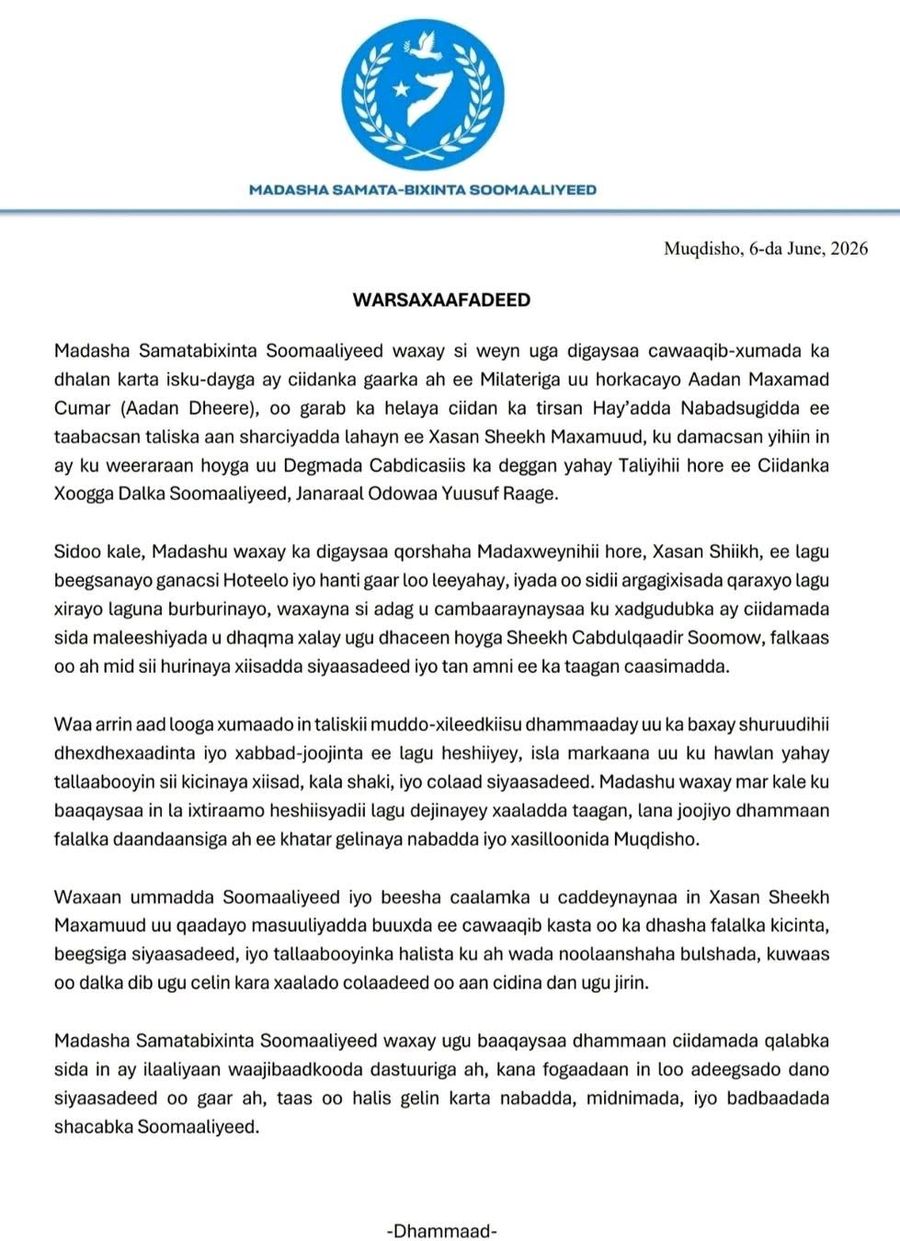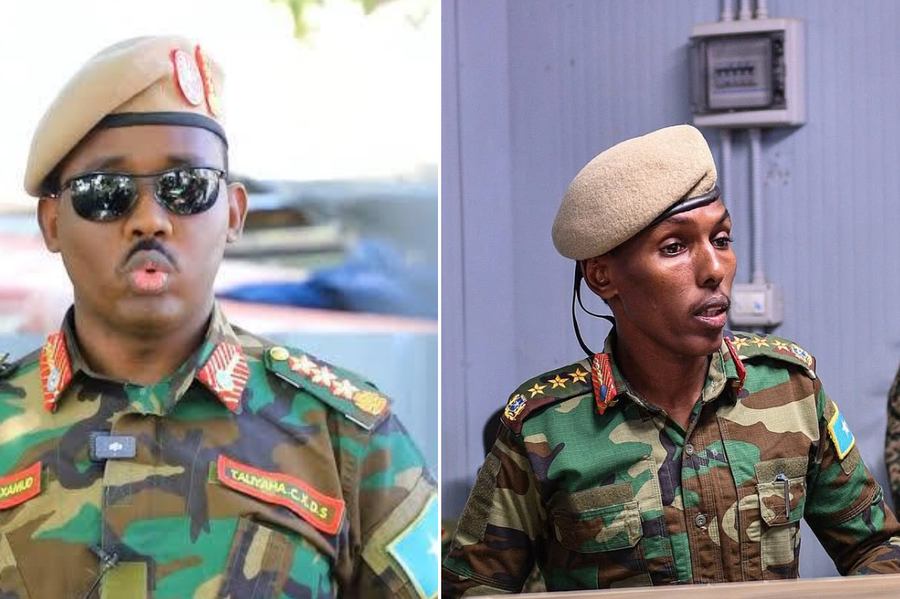
MOGADISHU, Somalia — June 6 2026 —Opposition figures in Somalia have accused the Federal Government (FGS) of targeting a former Chief of the Somali National Army, along with privately owned businesses and residential properties in Mogadishu, allegations that have added to political tensions in the capital. The government has rejected suggestions of politically motivated actions, saying its ongoing operation is focused on recovering weapons allegedly hidden in the Cabdicasiis district as part of efforts to improve security.
Opposition leaders said the reported operation has affected individuals who previously served in senior government positions as well as civilians whose homes and businesses are located in the area.
According to opposition figures, the developments have raised concerns over both the political climate and the security situation in Mogadishu. They argued that actions directed at former officials and privately owned properties risk increasing tensions at a time when Somalia continues to face significant security challenges.
The opposition did not publicly present evidence supporting claims that the operation specifically targeted the former military commander or civilian properties for political reasons. However, they called for transparency regarding the objectives and conduct of the security operation.
Government authorities have not announced any arrests linked to the allegations raised by opposition leaders.
The Federal Government of Somalia said the security operation is part of an ongoing campaign to recover weapons that authorities believe were hidden in the Cabdicasiis district of Mogadishu.
According to government officials, the operation is intended to prevent potential security threats and strengthen public safety in the capital. Officials said security agencies continue to carry out measures aimed at removing unauthorized weapons from residential areas and limiting risks posed by illegally stored arms.
Authorities rejected suggestions that the operation was designed to target political figures or former officials, maintaining that the security measures are based on law enforcement priorities rather than political considerations.
Government officials have not released further details regarding the quantity of weapons allegedly sought or whether any weapons had been recovered during the operation.
The dispute emerged after opposition figures accused the Federal Government of carrying out actions against a former Chief of the Somali National Army while also affecting privately owned businesses and homes in Mogadishu.
According to the opposition, the operation involved properties connected to individuals who previously held senior government positions as well as civilian-owned assets. The allegations have fueled debate over whether security operations are being implemented impartially.
The Federal Government has maintained that the operation is solely intended to locate and recover weapons believed to be concealed in the district.
Security operations remain ongoing in parts of the Cabdicasiis district, according to government officials.
Authorities have not announced when the operation will conclude, while opposition leaders continue to call for greater accountability and clarification regarding the scope of the security measures.
Residents have been closely monitoring developments as security forces continue their activities in the area. Local residents have not reported any official evacuation orders related to the operation.
Mogadishu has experienced repeated security operations in recent years as Somali authorities attempt to improve stability and reduce the circulation of unauthorized weapons.
The Federal Government has periodically launched campaigns aimed at strengthening security across the capital, particularly in districts viewed as vulnerable to criminal activity or militant threats. Such operations often involve searches for illegal weapons and increased deployments of security personnel.
At the same time, relations between the Federal Government and sections of the political opposition have periodically been marked by disagreements over security policies, governance, and the conduct of state institutions.
Political disputes surrounding security operations have previously drawn attention from civil society groups and community leaders, who have called for law enforcement measures to be carried out transparently and in accordance with the law while safeguarding civilian rights and property.
Somalia continues to face persistent security challenges, including threats posed by the militant group Al-Shabaab, prompting authorities to maintain heightened security measures in parts of the country, particularly in the capital.
Government authorities are expected to continue the security operation in Cabdicasiis as part of broader efforts to recover unauthorized weapons and strengthen security in Mogadishu.
Opposition figures are likely to continue pressing the government for explanations regarding the operation and its reported impact on former officials and privately owned properties.
It remains unclear whether additional official statements or independent assessments will be issued regarding the allegations raised by the opposition or the outcome of the government's security operation.
The dispute highlights the delicate balance Somalia faces between maintaining security and preserving public confidence in state institutions. Security operations in the capital are considered an important part of efforts to prevent violence, but allegations of politically motivated enforcement can quickly deepen political divisions if left unresolved.
The developments also come at a time when Somalia continues to prioritize counterterrorism efforts and broader security reforms. Any disagreement between the government and opposition over the conduct of security operations has the potential to affect political dialogue and cooperation on national security issues.
For civilians in Mogadishu, concerns over the protection of private property and transparency in security operations remain significant. Clear communication from authorities and adherence to legal procedures are likely to remain central issues as the operation continues.