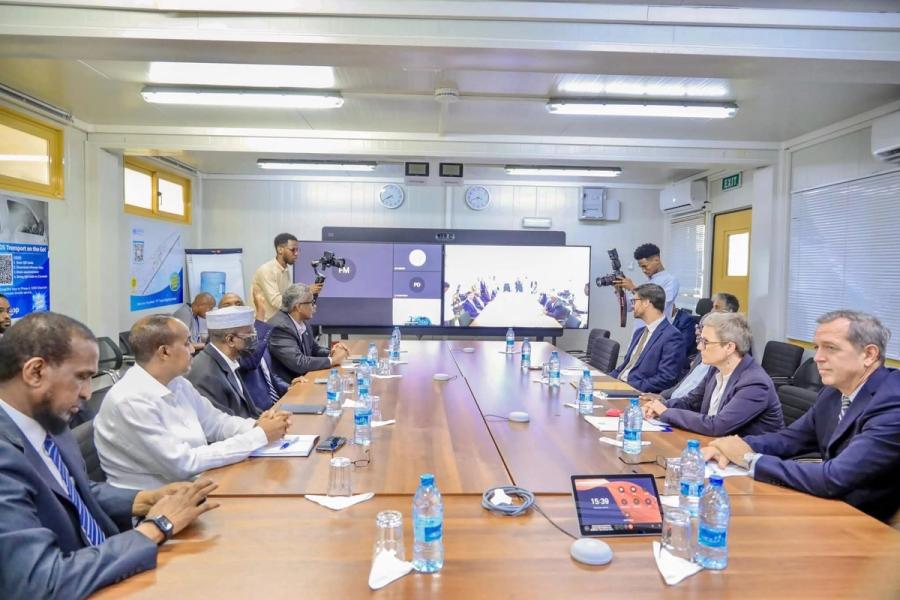
Monday, May 18, 2026 (Baidoa Online) -Somalia is facing renewed political uncertainty after high level consultations held at the Xalane compound between international envoys and members of the opposition aligned Mustaqbal political bloc ended without a final agreement on the country’s electoral framework and transitional governance arrangements. The talks highlighted ongoing divisions over the political roadmap and election management.
According to sources familiar with the discussions, international envoys and opposition representatives held intensive consultations in Mogadishu’s Xalane compound aimed at narrowing differences on Somalia’s electoral process and political transition.
The talks did not produce a conclusive agreement, although participants reportedly acknowledged progress on some key principles while major disagreements remained unresolved.
According to diplomatic sources, one area of emerging understanding relates to the interpretation of Somalia’s current political status and the structure of the ongoing transition period. However, these views have not been independently confirmed by all parties involved.
The discussions also focused on how future elections should be organized, with emphasis on preventing unilateral control of the process by any single political actor, according to individuals familiar with the negotiations.
Key Political Positions and Concerns
According to sources close to the talks, international representatives emphasized that Somalia’s political situation requires an inclusive framework involving all major political stakeholders.
They also stressed that the electoral process must be based on negotiation and consensus, rather than decisions taken independently by any one institution or political group.
Diplomatic participants reportedly warned that continued political disagreements could increase tensions if not managed through dialogue.
Opposition aligned figures from the Mustaqbal bloc are said to have raised concerns regarding governance arrangements during the transition period, while also pushing for broader participation in decision making structures.
Risk of Political Escalation
According to diplomatic sources, envoys expressed concern that unresolved political disagreements could lead to increased tension between political actors.
They urged opposition groups and federal institutions to maintain engagement in dialogue and avoid actions that could escalate political confrontation.
No official public statement has yet been released by the Federal Government of Somalia or the Mustaqbal political bloc detailing their positions on the outcome of the talks.
Ongoing Diplomatic Efforts
Diplomatic sources indicated that consultations are still ongoing with both federal government representatives and opposition figures in an effort to bridge remaining gaps.
The international community is reportedly working to facilitate further rounds of dialogue aimed at reaching a comprehensive agreement on electoral governance and the transition framework.
According to sources familiar with the process, discussions are expected to continue in the coming days as stakeholders attempt to prevent a deeper political crisis.
Somalia has faced repeated political disagreements over its electoral model, including debates on direct elections versus indirect selection processes involving federal member states and political stakeholders.
The Xalane compound in Mogadishu has often hosted high level political and diplomatic meetings involving Somali leaders, opposition figures, and international partners.
Previous electoral cycles in Somalia have been marked by delays, disputes over representation, and disagreements on constitutional interpretation regarding political transitions.
International partners have consistently called for inclusive political agreements to ensure stability and avoid institutional deadlock during electoral periods.
The failure to reach an agreement in the Xalane talks reflects ongoing divisions within Somalia’s political landscape at a critical stage of the country’s electoral planning process.
Unresolved disagreements over transition governance and election management risk prolonging political uncertainty, which can affect state institutions and public confidence.
According to political observers, continued deadlock may also complicate relations between federal authorities, opposition groups, and international partners involved in supporting Somalia’s political process.