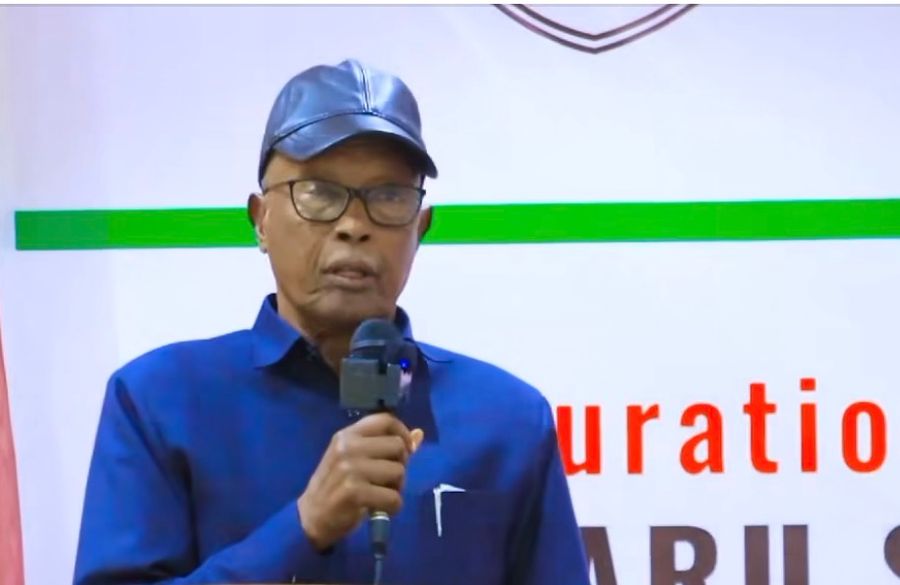
MOGADISHU, Somalia - May 23, 2026 -Former Somali military commander and opposition politician Abdi Hassan Awale Qeybdiid has declared that Somalia has “no sitting president,” arguing that President Hassan Sheikh Mohamud no longer holds legitimate authority following what he described as the expiration of the constitutional mandate.
Speaking in an interview with Shabelle Media Network, Qeybdiid also accused federal security forces of targeting opposition figures in what he termed an illegal and politically motivated operation. His remarks come amid rising political tensions in Mogadishu ahead of planned opposition demonstrations and ongoing disputes over governance and electoral arrangements.
According to Qeybdiid, the federal government has lost both legal and political legitimacy after the reported expiration of the president’s term on May 15, 2026. He claimed the country has entered a constitutional crisis and argued that state authority is no longer valid under the current leadership.
“We were attacked illegally in recent days,” Qeybdiid said in the televised interview. “Hassan Sheikh is no longer responsible for the country. Let him bring the troops on June 4 when they are needed. Yesterday he had power, today he no longer has it.”
His comments were made in reference to recent security operations targeting opposition figures in Mogadishu, which he described as an abuse of state power. He did not provide independently verifiable evidence for the claims, and federal authorities have not publicly responded in detail to the specific allegations raised in the interview.
According to political observers in Mogadishu, tensions have been escalating between opposition groups and federal institutions over planned protests expected in early June, as well as broader disagreements over the electoral framework and the extension or expiration of political mandates.
Federal government officials have maintained that Somalia’s constitutional and administrative institutions remain operational despite political disagreements. Authorities have not publicly confirmed any loss of legitimacy claims raised by opposition figures.
Security officials in Mogadishu, according to local sources, have increased monitoring of opposition gatherings in recent days due to concerns over public order and potential unrest linked to planned demonstrations.
The federal government has repeatedly stated in previous communications that all political processes are being managed through constitutional mechanisms, though opposition groups continue to dispute this position.
Somalia has experienced recurring political disputes over electoral processes and constitutional interpretation, particularly regarding the timing and legitimacy of presidential and parliamentary mandates.
The current dispute follows growing divisions over electoral arrangements and governance frameworks in the capital and federal member states. Opposition leaders have accused the federal government of overreach, while officials insist that ongoing institutional processes remain within legal boundaries.
Tensions intensified following disagreements over the expiration timeline of the current presidential term and how transitional governance arrangements should be handled.
According to political analysts in Mogadishu, disputes over constitutional interpretation have historically contributed to instability and strained relations between the federal government and opposition coalitions.
Opposition Claims and Security Concerns
Qeybdiid, who is considered a senior opposition figure with long-standing influence in Somali politics and security circles, also accused the federal administration of using security forces to suppress dissent.
He linked recent security operations to what he described as attempts to silence critics ahead of planned anti-government demonstrations.
According to local residents in parts of Mogadishu, security presence has increased in key areas of the capital, although independent verification of specific incidents remains limited.
Opposition groups have continued to call for demonstrations, arguing that political grievances and governance disputes require public expression, while authorities have emphasized maintaining stability and preventing unrest.
With opposition demonstrations reportedly planned in the coming days, security arrangements in Mogadishu are expected to remain heightened.
Political actors on both sides are continuing consultations, though no formal agreement has been announced regarding the disputed electoral and constitutional issues.
Observers say the situation remains fluid, with the potential for further escalation if political dialogue does not resume.
The remarks by Qeybdiid highlight deepening political divisions in Somalia over constitutional legitimacy and electoral authority. His declaration that there is “no sitting president” reflects a broader opposition narrative challenging the current administration’s mandate.
The dispute underscores the fragility of Somalia’s political settlement, where disagreements over constitutional interpretation have repeatedly triggered institutional standoffs and street-level tensions in Mogadishu.
If the situation escalates further, it could increase pressure on security forces and heighten risks for civilians in the capital, particularly during planned demonstrations.
The outcome of the current standoff may also shape future negotiations between the federal government and opposition groups over electoral timelines and governance structures.
Somalia’s political system has long relied on negotiated power-sharing arrangements between the federal government and regional administrations. Disputes over electoral timing and constitutional authority have been recurring challenges.
In previous cycles, disagreements over term limits and electoral procedures have led to political deadlock, protests, and mediation efforts involving domestic stakeholders and international partners.
The current tensions reflect unresolved questions about institutional authority and the legal framework governing political transitions.
As Mogadishu approaches a period of planned opposition mobilization, political uncertainty remains high. The federal government continues to assert institutional continuity, while opposition figures challenge its legitimacy, raising concerns about potential escalation in the capital.